

Moving out of state is one of life’s most significant transitions, far beyond packing boxes and changing your mailing address. It is a profound shift in your environment, culture, lifestyle, and community all at once. Whether you are relocating for a career opportunity, family reasons, education, or personal growth, this guide will help you prepare both logistically and emotionally so you can begin your new chapter with real confidence.
Understanding the Broader Impact of an Out-of-State Move
Unlike moving within a city or even within the same state, crossing state lines means adapting to entirely new seasons, cultural norms, food landscapes, and community dynamics. Many people focus exclusively on the physical logistics and underestimate how deeply a new environment shapes daily life. Addressing these dimensions early makes the difference between a stressful relocation and a genuinely exciting one.
- Weather and Climate Adjustment: If you are moving from a mild coastal climate to a region with harsh winters or intense summer heat, your wardrobe, home setup, and daily routines all need to shift. This can mean investing in weather-appropriate clothing, upgrading your heating or cooling appliances, and learning new safety practices such as driving on icy roads.
- Cultural and Social Integration: Every state and city nurtures its own distinct culture, from local accents and social etiquette to annual festivals and recreational habits. Making a genuine effort to engage with that culture, rather than simply observing it from the outside, is what transforms a new place into a home.
- Food and Lifestyle Changes: New markets, dining options, and culinary traditions are waiting for you. Visiting local farmers’ markets, exploring ethnic grocery stores, or joining a cooking class are small steps that can ease the transition and connect you with your neighbors.
- Community and Relationships: Building new friendships and professional networks takes time, but it is essential for long-term emotional well-being. Attending neighborhood events, volunteering locally, or joining clubs and interest groups are proven ways to establish lasting bonds in unfamiliar territory.
- Recreational and Outdoor Opportunities: Every region has parks, trails, sports leagues, or community centers that are unique to it. Engaging actively with those resources promotes physical health and creates natural opportunities for social connection.
Planning and Researching Your New State
Start planning 8 to 12 weeks in advance to avoid last-minute decisions and unnecessary stress. Researching your new state thoroughly is the single most important step in a successful relocation. You should evaluate far more than just the job market; a clear picture of how your daily life will change is what prepares you to thrive, not just survive.
- Cost of Living: Before you pack a single item, compare your current living expenses to those at your destination. Costs in cities like Los Angeles are substantially higher than in places like Oklahoma City, and that gap affects everything from your grocery budget to your housing choices. Review the latest States Ranked by Cost of Living to understand how far your income will stretch in your new home.
- Safety and Environment: Feeling safe where you live is a foundational need, not a luxury. Spend time reviewing the States Ranked by Safety to identify secure areas for your family. You should also explore the Quality of Life and Environment rankings to confirm that your new home offers the outdoor access and air quality you value.
- Family Well-Being: If you are moving with children, school quality and proximity to quality healthcare should be top priorities in your research. The States Ranked for Children’s Well-Being provides a useful starting point for identifying the regions that best support your children’s development and future.
If at all possible, visit your prospective new city in person before committing. Walking neighborhoods, testing the commute, and getting a feel for local amenities gives you information that no online research fully replicates.
Ready to Move? Get a Professional Quote
Once you have identified the right state, do not let logistics slow you down. We connect you with licensed long-distance movers at the best available prices so your 2026 relocation is safe and within budget.
Get Your Free Moving Quote
Speak with a coordinator today to compare prices and book your move.
Preparing for Your Out-of-State Move
Careful preparation keeps your move organized and significantly reduces the risk of damage, loss, or financial surprises. The steps below form the core of a solid preparation plan, and each one builds on the last.
- Create a Realistic Budget: Full-service movers typically cost between $2,500 and $5,500 for a one-bedroom home on a long-distance move, while packing supplies run between $100 and $300, and storage units average $80 to $300 per month if you need temporary housing between moves. Travel expenses, including flights, fuel, and hotel stays during a cross-country drive, should also be factored in from the beginning.
- Declutter Before You Pack: Out-of-state moves are priced largely by weight and distance, so every unnecessary item you ship costs you real money. Selling, donating, or discarding furniture, seasonal decorations, and unused appliances before the move is one of the most practical ways to reduce your total bill.
- Pack With a Strategy: Use sturdy double-walled boxes, adequate bubble wrap for fragile items, and high-quality packing tape. Prepare a clearly labeled “Open First” box that travels with you and contains the essentials you will need immediately upon arrival, including toiletries, a change of clothes, phone chargers, and important documents. You can find detailed guidance on how to pack fragile items properly to avoid breakage during transit.
- Inventory Your Belongings: Creating a written or photographic inventory of everything being moved gives you a reliable record for insurance purposes and makes it far easier to identify missing or damaged items when you unpack at your destination.
Comprehensive Planning: Logistics and Personal Readiness
Emotional and cultural adaptation matters enormously, but solid logistical planning is what makes the physical move itself manageable. The two go hand in hand, and treating them as separate concerns often leads to gaps in preparation.
- Research Before You Leap: Dig deep into your new city or town. Look into crime statistics, school ratings, healthcare facility access, public transportation options, and housing costs. This research is not just practical; it shapes your expectations and reduces the anxiety that comes from the unknown.
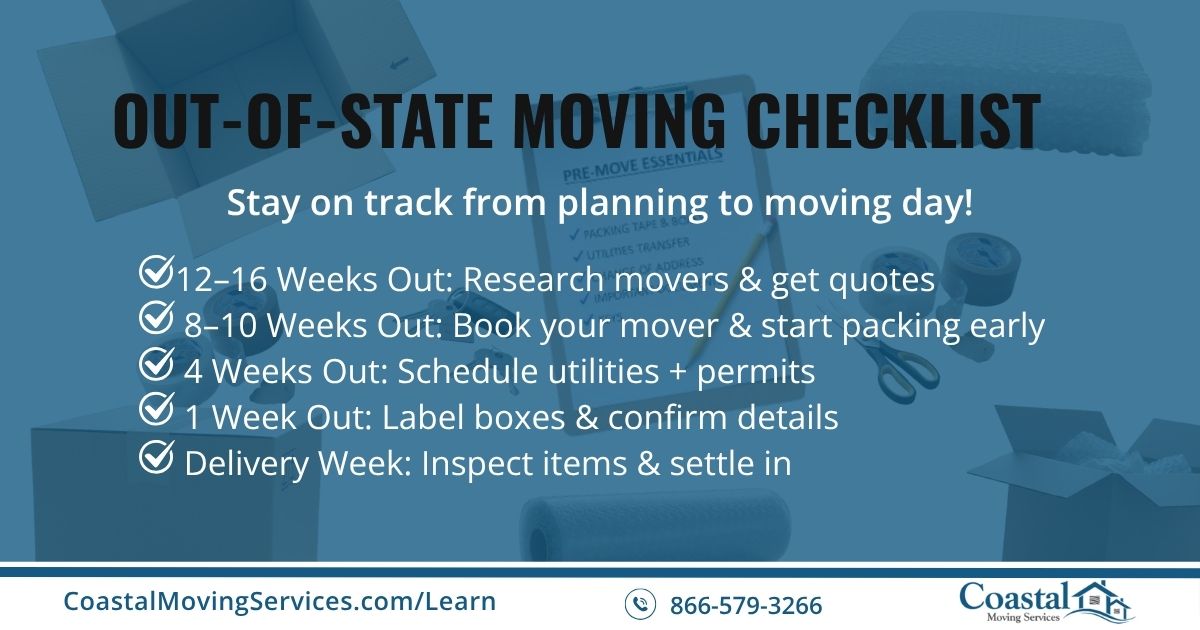
- Build a Detailed Timeline: Work backward from your move date and set firm deadlines for every major task, from booking movers and scheduling utility transfers to submitting your change of address. A written timeline is far more reliable than trying to manage everything mentally.
- Declutter With Intention: Unlike a local move where costs are relatively low regardless of volume, an out-of-state move charges by weight and distance. Prioritize items that are truly essential or irreplaceable, and find responsible ways to rehome the rest through donation centers, estate sales, or online marketplaces.
- Choose the Right Moving Service: Full-service movers, portable storage containers, and rental trucks each have distinct advantages and trade-offs depending on your budget, timeline, and the volume of your belongings. If you hire professionals, always verify their licensing and insurance credentials before signing any contract.
- Update Documents and Registrations: Changing your address with the postal service, transferring your driver’s license, updating your vehicle registration, and refreshing your voter registration are all required steps after an interstate move. You can find a full breakdown in our complete change of address checklist for 2026.
- Prepare Your Family and Pets: Children and pets experience the stress of relocation differently from adults, and preparing them emotionally in advance makes a measurable difference. Research new pediatricians, schools, and veterinary services before you arrive so that those transitions happen smoothly rather than urgently.
Moving Options for an Out-of-State Move
Choosing the right moving service is one of the most consequential decisions in your relocation process. The right choice depends on your budget, how much flexibility you need, and how much physical effort you want to take on yourself.
| Service Type | Cost (Estimate) | Features | Best For |
|---|---|---|---|
| Full-Service Movers | $2,500 to $5,500 | Packing, transport, and unloading handled entirely by professionals | Long-distance moves where convenience and time savings justify the cost |
| Portable Storage Containers | $100 to $300 per month | Container delivered to your driveway, packed on your schedule, then transported | Moves that require flexibility or a gap between leaving and arriving |
| Rental Trucks | $800 to $2,150 | You load, drive, and unload the truck yourself | Budget-conscious moves with fewer belongings and available help |
Full-service movers offer the most complete hands-off experience and are often worth the premium for long-distance relocations where the complexity and distance make self-managed moves genuinely difficult. Portable containers provide a middle ground by letting you pack at your own pace while professionals handle the transportation. Rental trucks keep costs low but require you to do the heavy lifting, literally and figuratively. Coastal Moving Services works with you to identify and coordinate the option that fits your situation best.
Managing Moving Day and Settling In
Moving day will almost certainly feel chaotic regardless of how well you have prepared, but having a clear plan in place transforms manageable chaos into a productive process rather than a stressful one.
- Keep your keys, identification, travel documents, and essential items packed separately in a bag that travels with you and never goes on the truck.
- Supervise the loading process, cross-reference items against your inventory list, and document any pre-existing damage to furniture before it leaves your old home.
- If you are driving a long distance, plan your route in advance, schedule rest stops, book accommodations ahead of time, and avoid driving when fatigued.
Once you arrive, resist the urge to unpack everything at once. Start with the essentials box you set aside during packing, get your sleeping space functional first, and give yourself permission to settle in gradually over the first week. After that initial period, make a deliberate effort to introduce yourself to neighbors, explore your new neighborhood on foot, and identify the local spots that will become part of your regular routine.
Embracing Your New Adventure
Moving out of state is as much an emotional journey as it is a physical one, and treating it that way from the start sets a healthier tone for the entire process. Relocation researchers have found that the stress of moving accumulates from multiple simultaneous changes, which means giving yourself adequate time to adjust is not a luxury but a genuine necessity. Approach your new environment with curiosity rather than comparison, be patient with yourself during the adjustment period, and seek support from friends, family, or a mental health professional if the transition feels overwhelming.
Legal and Administrative Tasks
Interstate moves come with a set of legal and administrative obligations that, if overlooked, can result in fines, service gaps, or coverage lapses. Treating these tasks with the same priority as your physical packing is essential.
- Update Your Address: Submit a Change of Address form with the USPS at least 14 days before your departure date so that mail forwarding activates before you leave. You should also notify the IRS, your bank, your employer, and any subscription services directly, since mail forwarding does not replace direct address updates with those institutions.
- Transfer Utilities: Contact your electricity, water, gas, and internet providers to set stop dates at your current address and, where possible, coordinate start dates at your new one. Doing this three to four weeks in advance gives providers enough lead time to schedule service activation.
- Register Your Vehicles: Most states require you to update your vehicle registration and obtain a new driver’s license within 30 days of establishing residency, though some states allow up to 60 days. Requirements vary by state, so check your destination’s DMV website directly for the specific timeline and documentation needed.
- Review and Adjust Your Insurance: Health insurance networks, auto insurance rates, and homeowners or renters insurance policies are all tied to your location. Contact your insurance providers as early as possible to understand what changes are required and whether your existing policies remain valid in your new state.
Frequently Asked Questions About Moving Out of State
How much does an out-of-state move cost?
The cost ranges from roughly $800 for a DIY rental truck to $5,500 or more for full-service professional movers handling a one-bedroom home. The final price depends heavily on the distance, the total weight of your shipment, the time of year, and the specific services you require. Moving during peak season (late spring through summer) typically costs more than scheduling your move in the fall or winter.
How far in advance should I plan my move?
Most relocation experts recommend beginning the planning process 8 to 12 weeks before your intended move date. This timeline gives you enough space to research movers, collect binding estimates, handle administrative tasks, and book your movers before their availability fills up, which happens quickly during peak moving seasons.
Should I visit my new state before moving?
Visiting in person before committing to a specific neighborhood or property is strongly advisable whenever circumstances allow. Physical exploration gives you information about noise levels, commute times, walkability, and neighborhood character that online research and photos simply cannot provide.
What should I pack first for an interstate move?
Begin with items you use least frequently, including seasonal clothing, holiday decorations, and rarely used appliances. Wrap all breakable items carefully, and use our guide on packing fragile items for best practices that protect glassware and valuables during long-distance transport.
How do I handle pets during an out-of-state move?
Research your new state’s requirements for pet registration and any breed-specific regulations before moving. Arrange pet-friendly transportation or accommodations for the journey, update your pet’s ID tags and microchip registration with your new address, and locate a veterinarian in your new area before you arrive so that any urgent care needs can be addressed immediately.
How do I adjust to a completely different climate?
Start by researching your new region’s seasonal patterns well before your move date so that you are not caught unprepared. Prepare your home with appropriate insulation or cooling equipment, update your wardrobe, and ease into local outdoor activities gradually to give your body time to acclimate. Speaking with current residents about how they manage the climate is often the most practical source of advice.
What is the best way to build a social network in a new state?
Consistent, low-pressure engagement with your new community is the most reliable path to building genuine connections. Attending local events, joining clubs or classes that reflect your interests, and volunteering are all proven methods. Digital platforms and neighborhood apps can supplement in-person efforts by helping you identify events and meet people in your immediate area before you have had time to establish routines.
How can I find local food and lifestyle resources?
Community farmers’ markets, ethnic grocery stores, and neighborhood bulletin boards are excellent starting points. Social media community groups and local event listings can surface everything from food festivals to hobby clubs that align with your interests. Taking a cooking class focused on regional cuisine is both a practical skill and a natural setting for meeting people who share a curiosity about local culture.
Moving Out of State with Clarity and Confidence
A successful out-of-state move is the result of deliberate preparation across multiple fronts: financial, logistical, legal, and emotional. Choosing the right moving option, whether that is full-service movers, portable storage containers, or a rental truck, depends on your specific budget and circumstances. Completing your administrative obligations on time protects you from avoidable complications, and approaching the cultural and social dimensions of relocation with genuine curiosity gives you the best possible foundation for building a fulfilling life in your new state.
Coastal Moving Services connects you with FMCSA-registered, licensed movers who are equipped to handle interstate relocations of every size and complexity. Verify our credentials at fmcsa.dot.gov and call +1-334-659-1878 for a free quote today.
References
- Long Distance Moving Cost Calculator
- U.S. Postal Service: Standard Forward Mail and Change of Address
- USA.gov: How to Official Change Your Address with the Government
- National Center for Biotechnology Information: Sensitive Periods of Moving on Mental Health
- Federal Motor Carrier Safety Administration: Protect Your Move – Verify Mover Credentials