
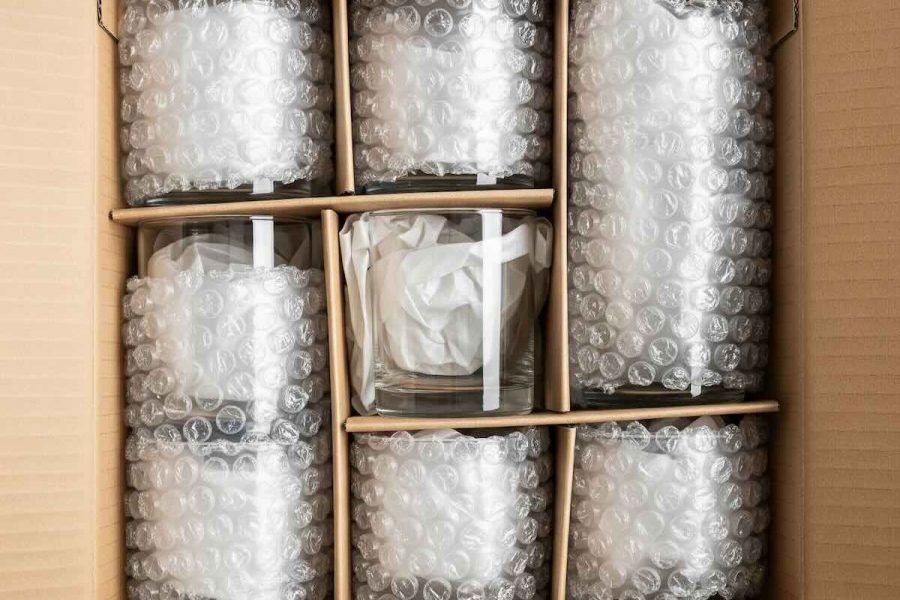

Here’s how to pack glasses for moving: wrap each one separately in packing paper, stand it in a sturdy box with enough cushioning underneath, and fill the spaces around it so the glass cannot knock against another piece. Wine glasses need extra protection around the stems, while heavy tumblers and thin crystal should go into separate compartments or boxes.
Most breakage begins with an ordinary packing mistake: two rims touching, a stem left exposed, or a half-empty box that lets everything move as the truck turns. A little preparation at the kitchen table makes the difference, whether you’re packing a handful of drinking glasses or the contents of a full china cabinet.
1. Gather Packing Paper, Boxes and Dividers
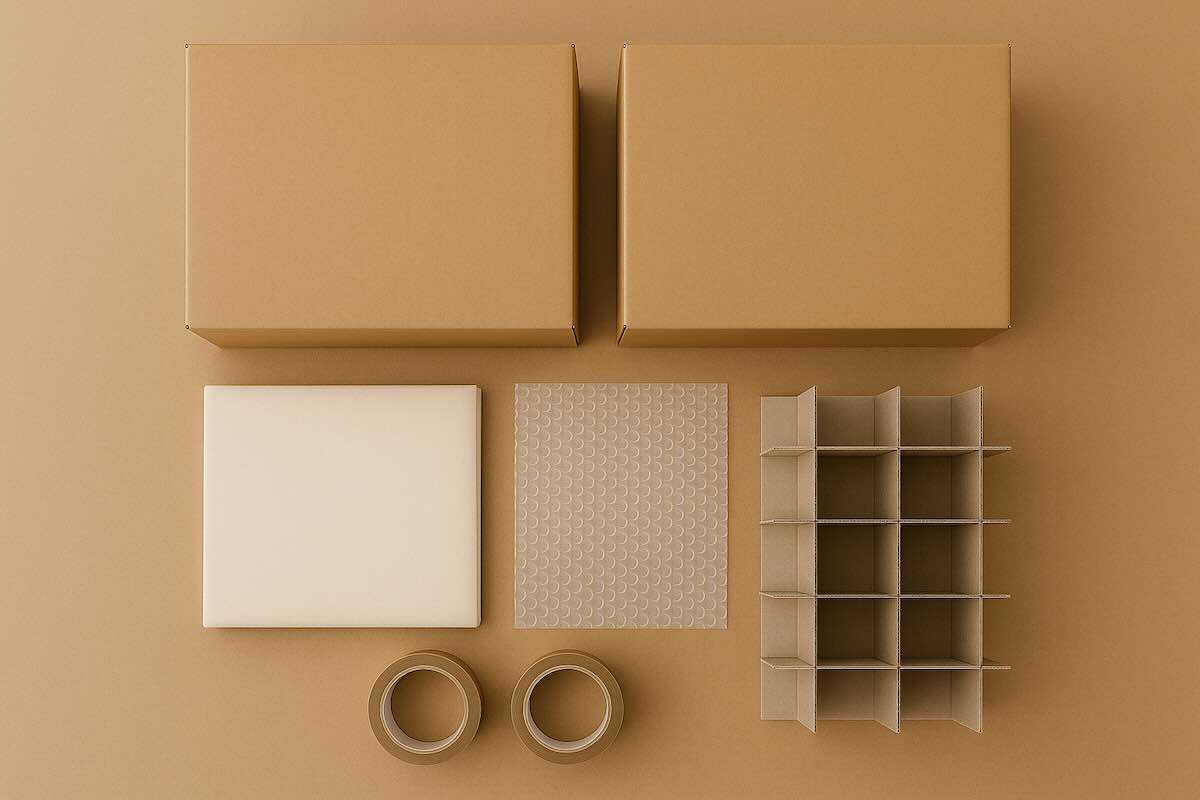
Put your supplies on a clear table before taking the glasses out of the cupboards. Unprinted packing paper is a good everyday choice because you can fold it around the bowl and rim without leaving newspaper ink behind. Keep bubble wrap for thin crystal, delicate stems and pieces that need more cushioning.
- Small or medium moving boxes, or a dish-pack box
- Unprinted packing paper
- Cardboard cell dividers for glasses and stemware
- Strong packing tape and a marker
- Bubble wrap for especially delicate pieces
You can use clean dish towels to fill space around wrapped glasses. Loose clothing and socks are less reliable around fragile stems, so keep those for sturdier items. If you’re still collecting materials, our guide to finding moving boxes covers places to look.
2. Prepare a Strong Box Before You Start Wrapping
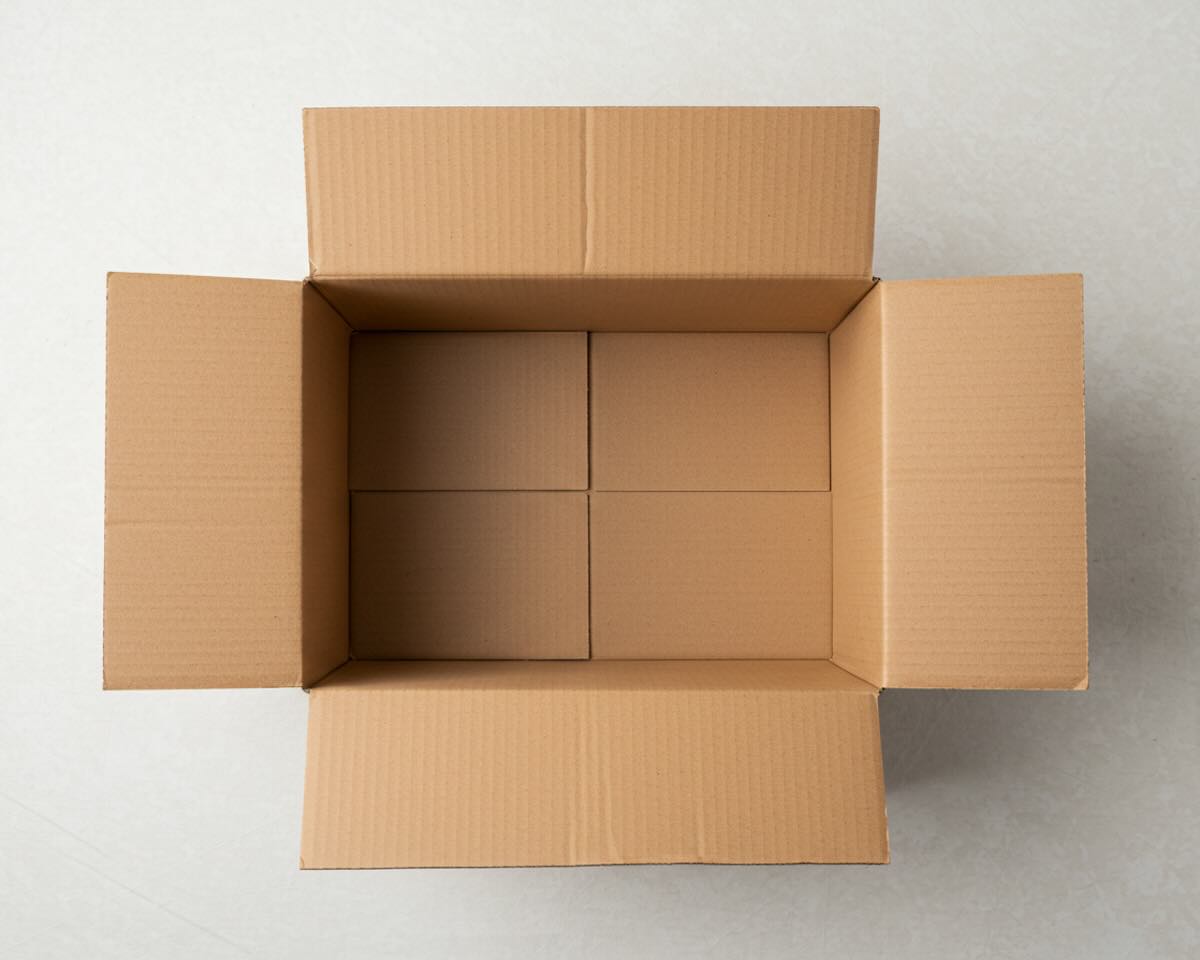
A small, sturdy box is easier to carry and less likely to sag under the weight of several drinking glasses. Tape the bottom seam and the edges where the flaps meet, then line the base with a generous layer of loosely crumpled paper. The glasses should rest on that cushion, with room left for padding above them once the box is full.
Cell dividers are especially useful for stemware because they keep each glass in its own compartment. If you’re using an ordinary box, make cardboard partitions that stand securely or wrap each piece with enough paper that the neighboring glasses cannot touch. A dish-pack box is worth considering for a large collection, but it still needs padding inside.
Leave enough room at the top for a final paper cushion. A box packed right up against the flaps gives the rims nowhere to go if another box presses down on it.
3. Wash, Dry and Sort the Glasses
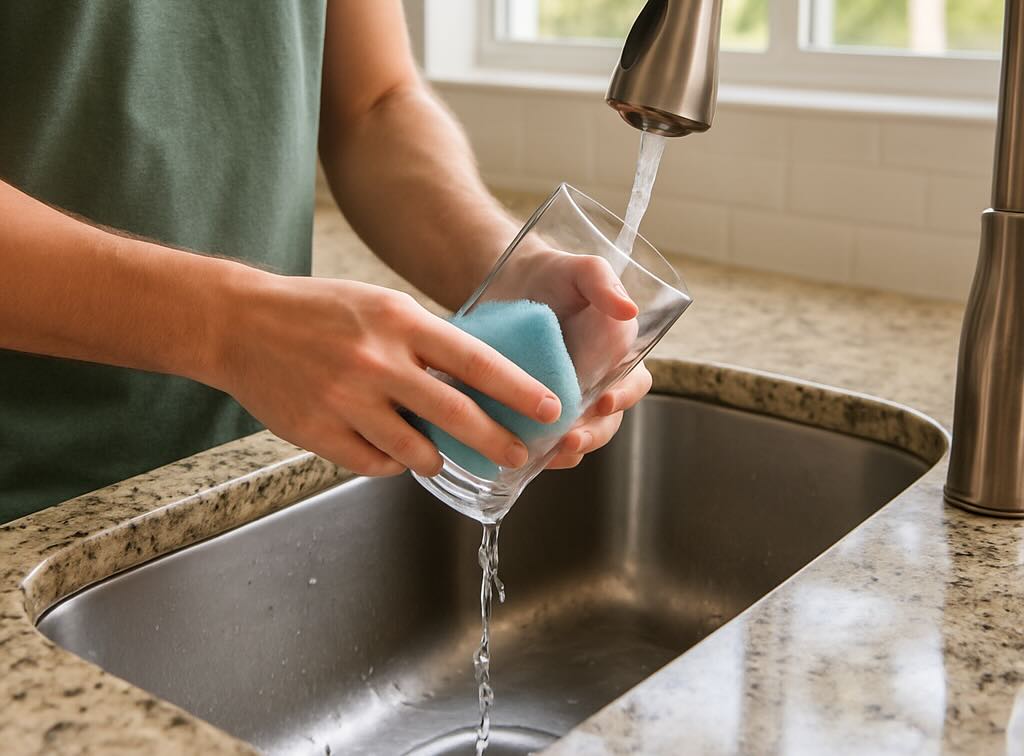
Pack clean, completely dry glassware, especially if the boxes might be stored for several weeks. Moisture trapped in a wrapped glass can leave marks and make the paper unpleasant to remove later. Set aside chipped or cracked pieces rather than wrapping them with the rest.
Separate everyday tumblers from wine glasses, champagne flutes and crystal. Thick mugs with handles also need room around the handles; slipping a mug into the gap beside a wine glass can leave both pieces vulnerable. Keep matched sets together where possible, but give delicate or unusually tall glasses their own compartments instead of forcing them into an overcrowded box.
4. Wrap Each Drinking Glass Individually
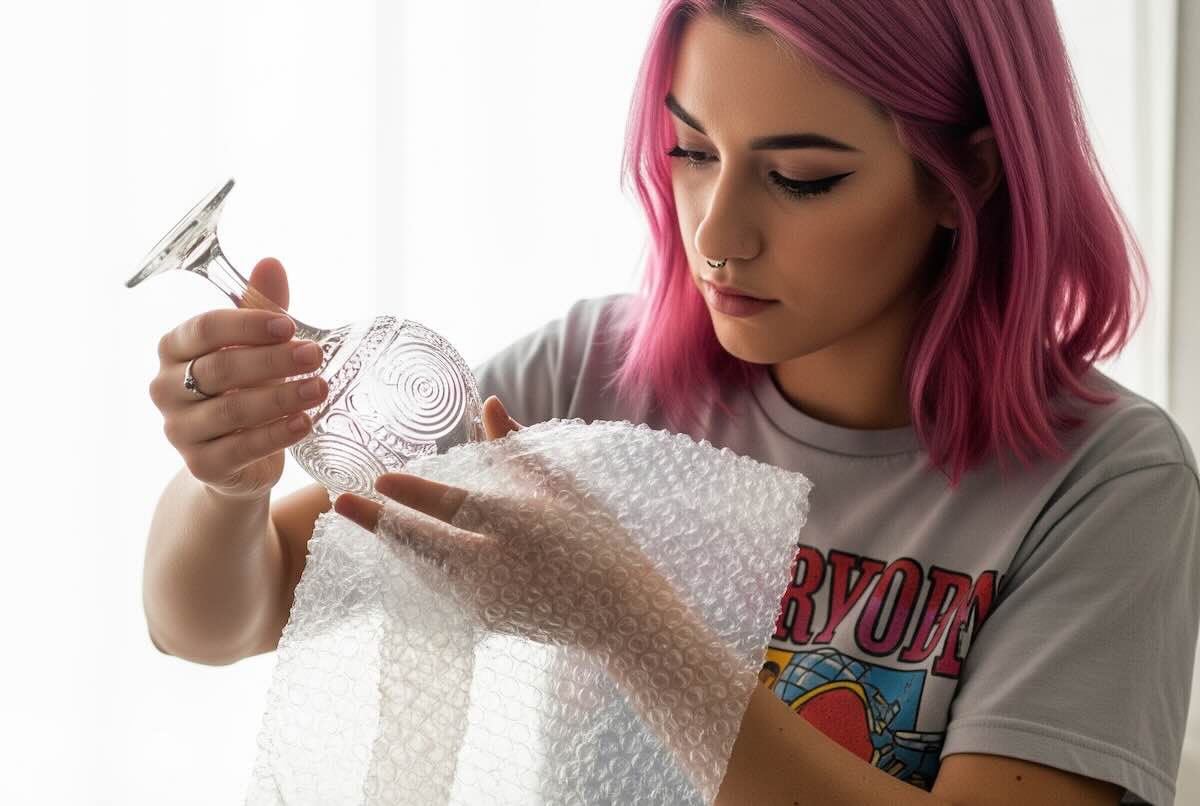
Spread a sheet of paper on the table and lay a tumbler near one corner. Tuck a little soft paper into the opening, fold the sheet across the glass and roll it until the outside is covered. Fold the excess paper over the rim and base as you go. A heavier or unusually wide glass may need a second sheet so no bare edge is exposed.
Set the wrapped glass aside with the base down while you prepare the others. Keep tape on the paper rather than against the glass, particularly on decorated or antique pieces. For wine glasses, cushion the stem and the base separately before wrapping the whole glass; the thinner stem can snap if it has room to move inside the paper.
The wrapping should stay around the glass when you pick it up. Tightening it so hard that you put pressure on the rim defeats the purpose.
5. Stand the Glasses in the Box and Fill the Gaps
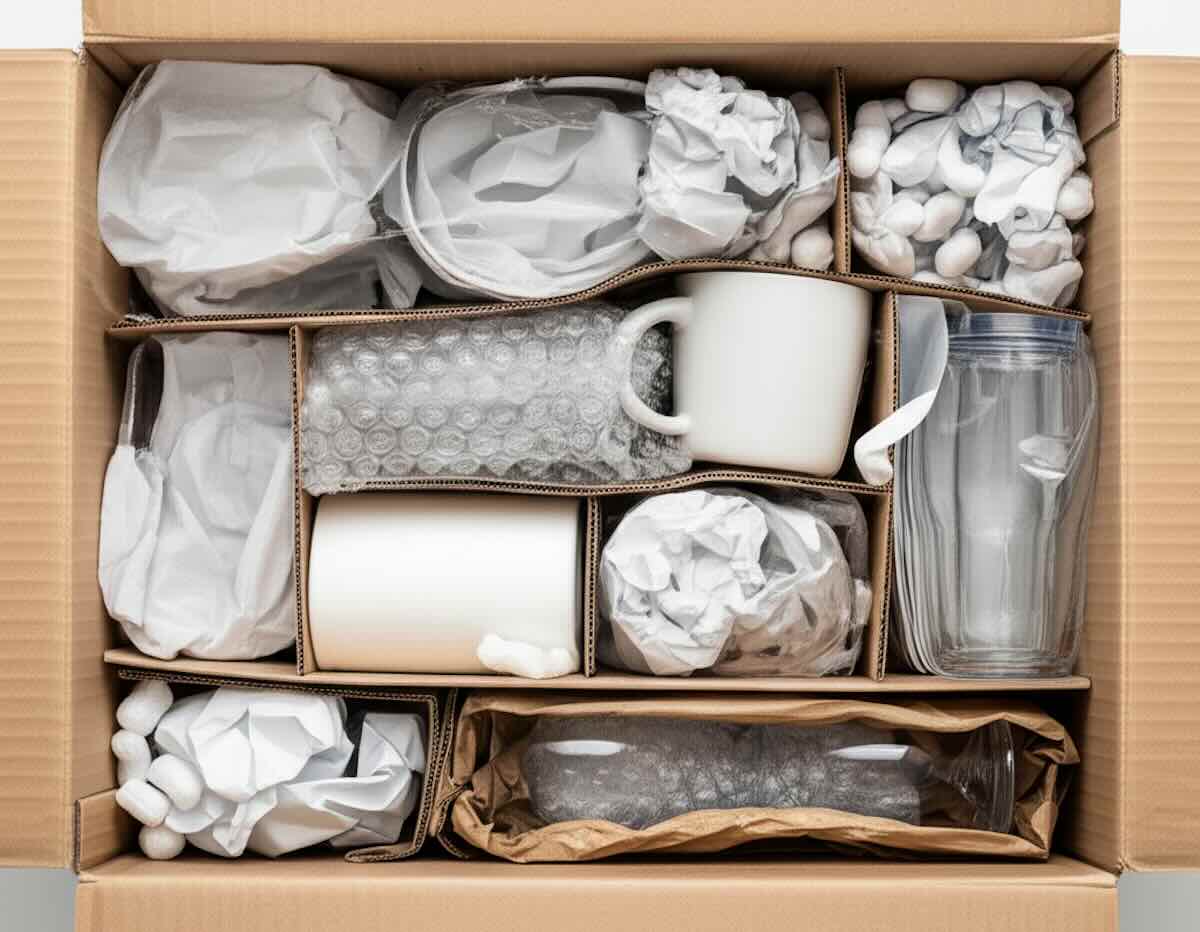
Place each wrapped glass base-down on the cushioned bottom, ideally inside its own divider cell. Pack the sturdier tumblers together and put delicate stemware into a separate box. Avoid resting a heavy tumbler directly on a wine-glass bowl, even with paper between them. If a box is deep enough for another layer, add a firm cardboard separator and plenty of cushioning, keeping heavy pieces below light ones.
Work crumpled paper between the wrapped pieces and around the box walls until there is little room for them to shift. Finish with more paper above the tallest glass. Before sealing, gently tilt the box a little in each direction. If you can feel movement or hear glass knocking, open it and add padding rather than shaking it harder.
6. Seal, Label and Keep the Box Upright
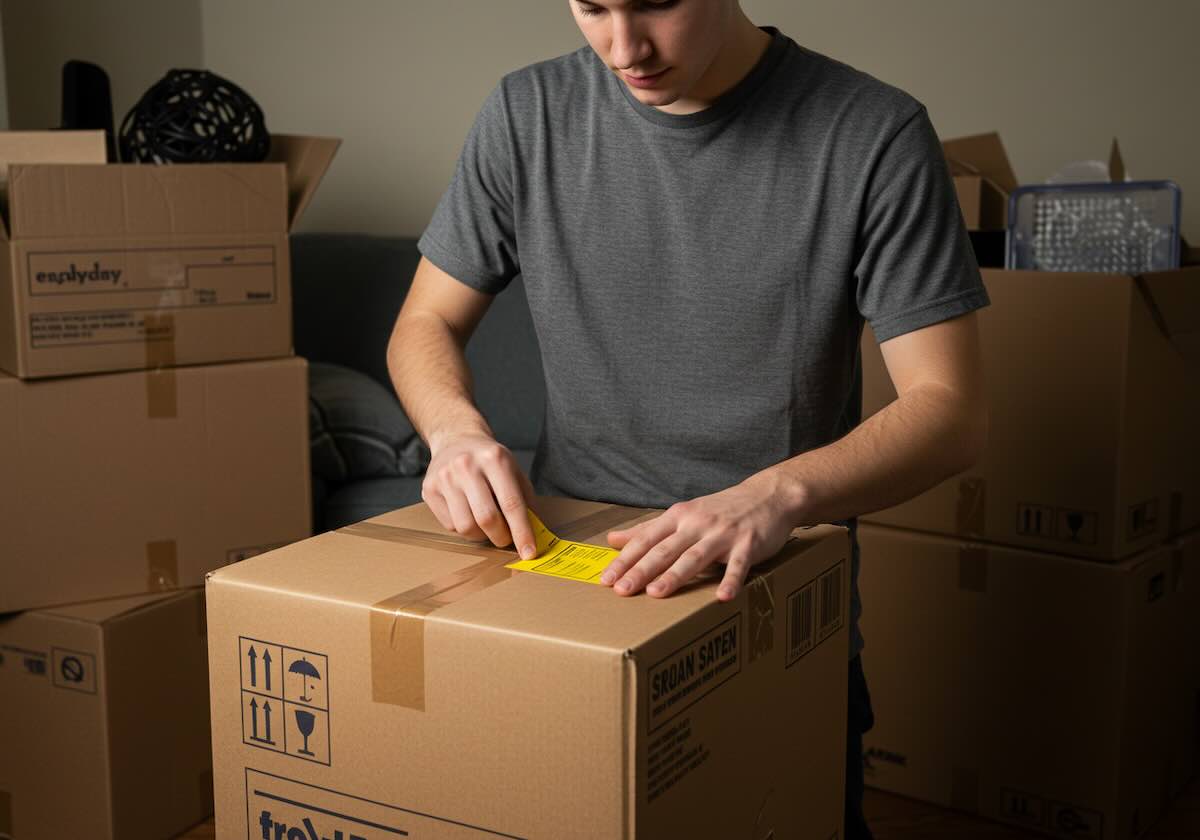
Close the flaps without pressing down on the contents, tape the top seam and write FRAGILE — GLASSES — THIS SIDE UP on the top and at least two sides. Include the destination room so you can find the box without opening every carton in the new kitchen. A separate label for crystal or a matching stemware set can make unpacking easier.
Keep the carton upright when carrying it and make sure heavy furniture or other boxes will not press on top. Labels help identify the contents, although they cannot replace a sturdy box and enough padding. If someone else will load the truck, point out the boxes of glassware when you review what is going into the shipment. Our box-labeling guide
How to Pack Wine Glasses and Crystal for Moving
Wine glasses need a little more time at the wrapping table because the stem connects two wider pieces of glass. Start by folding soft paper around the stem and the base until neither can knock against the bowl. Wrap the bowl next, then roll the whole glass in another sheet. The paper should support the shape without putting pressure on the thin rim. Champagne flutes and fine crystal benefit from an extra outer layer of bubble wrap or additional paper.
Stand each wrapped piece on its base in a cell divider, with cushioning underneath and around it. If the glass is too tall for the cell, use a deeper box rather than bending the wrapping down against the rim. Keep a set of thin wine glasses in a single protected layer where possible, with no heavier glasses stacked directly above them. For crystal passed down through the family, original fitted packaging or professional packing may be preferable to a reused grocery-store box.
How to Pack Glasses Without Packing Paper
If you’ve run out of packing paper, clean cotton dish towels and other soft, lint-free fabrics can cushion ordinary tumblers. Wrap each glass separately, fold the fabric over the rim and base, and place enough padding between the bundles to stop them touching. Small towels are better suited to filling gaps than to tightly wrapping thin wine-glass stems.
Bubble wrap can replace paper for fragile glassware, though you should still protect every rim, stem and base before placing it in the box. A divider kit remains helpful with either material. Avoid stuffing several bare glasses into a pillowcase or letting a stack of towels substitute for a firm base inside the carton; a soft layer alone cannot prevent the glasses from colliding.
Three Packing Mistakes That Break Glassware
Most trouble comes from contact and movement inside the box. A glass wrapped only around the middle can chip where its rim meets the next piece. A loosely filled box lets the glasses shift every time it is picked up. And a carton packed so tightly that the flaps press against the rims may break something when another box is set on top.
When you finish a box, you should be able to lift it comfortably, keep it level and move it a short distance without hearing the contents knock together. If it feels too heavy or too tightly packed, split the glassware between two boxes and add a little more cushioning.
Want Help Packing the Kitchen?
A kitchen full of glasses, dishes and serving pieces can take longer to pack than a room with much larger furniture. If you’d rather have professional packing arranged for delicate items, we can discuss that work as part of your move. We arrange household moving services through authorized carriers and packing providers according to the services requested. Learn more about our packing services.