
For anyone planning a move in 2026, understanding this difference can help you ask better questions, compare quotes more accurately, and avoid hiring a mover that is not properly authorized for your route. It is especially important if you are planning an out-of-state relocation, comparing local movers, or trying to understand why two quotes for similar distances may be structured differently.
Interstate vs Intrastate Moving: Quick Comparison
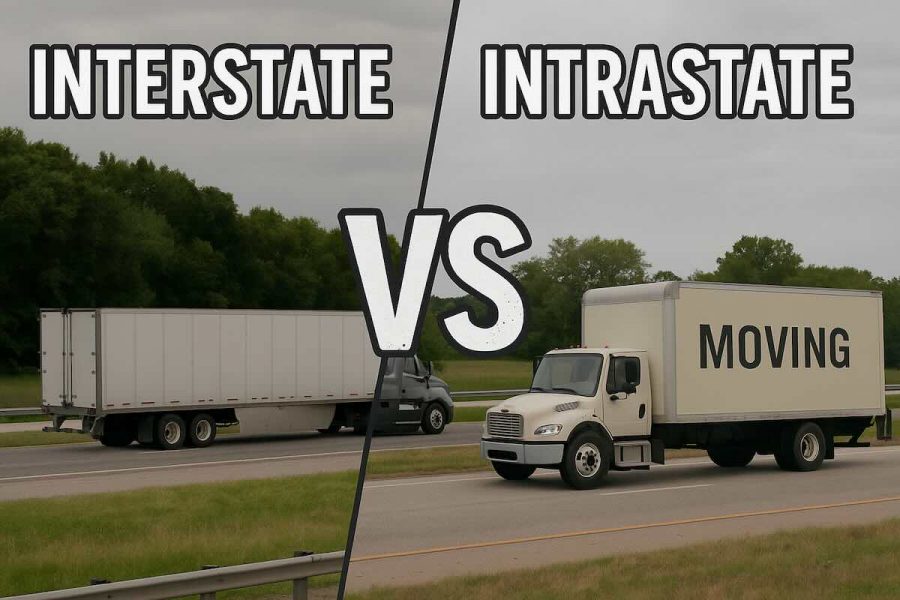
The easiest way to separate the two is to focus on the route your belongings will take. If your shipment crosses a state border, it is interstate. If the shipment starts and ends in the same state, it is intrastate. The table below explains the practical differences most customers should know before booking a mover.
| Category | Interstate Move | Intrastate Move |
|---|---|---|
| Meaning | The move crosses from one state into another. | The move starts and ends within the same state. |
| Example | Atlanta, GA to Charlotte, NC. | Dallas, TX to Austin, TX. |
| Regulation | Regulated federally by the Federal Motor Carrier Safety Administration, also known as FMCSA. | Usually regulated by state, county, or local moving rules. |
| Licensing | Interstate movers must be federally registered and have a U.S. DOT number when required. | Licensing requirements vary by state. |
| Pricing | Often based on distance, shipment size, weight or volume, services, and delivery window. | Often based on hourly labor, travel time, truck size, mileage, and state-specific rules. |
| Paperwork | Written estimate, order for service, bill of lading, inventory, valuation options, and required federal consumer materials. | Written estimate and contract terms still matter, but required paperwork depends on the state. |
What Is an Interstate Move?
An interstate move is any move where the household goods shipment crosses a state line. It does not matter whether the move is 40 miles or 2,000 miles. If the pickup address is in one state and the delivery address is in another, the move is interstate. Common examples include New York to Boston, Los Angeles to Las Vegas, Chicago to Indianapolis, Atlanta to Charlotte, and Jacksonville to Savannah.
Interstate moves are regulated at the federal level, which means the mover must follow federal household goods rules. Customers should verify that the mover or broker is properly registered, understand whether they are working with a carrier, a broker, or both, and make sure they receive written moving documents before the move begins. If your relocation crosses state lines, Coastal’s out-of-state moving checklist and interstate moving regulations guide can help you prepare before comparing quotes.
Because interstate moves often involve longer routes, multi-day scheduling, shipment coordination, and delivery windows, they are usually planned earlier than local moves. The final cost can depend on distance, shipment size, packing services, storage, access at each home, specialty items, and the time of year. If you are budgeting for this type of move, it is worth reviewing long-distance moving costs in 2026 and state-to-state moving costs.
What Is an Intrastate Move?
An intrastate move starts and ends within the same state. The shipment never crosses a state border, even if the distance is long. Examples include Orlando to Jacksonville, Miami to Tampa, Dallas to Austin, Houston to San Antonio, San Francisco to Los Angeles, Phoenix to Tucson, and Columbus to Cleveland. Some of these moves can take several hours, but they are still intrastate because the entire relocation stays inside one state.
Intrastate moving rules vary depending on the state. Some states require household goods movers to hold a state license, file tariffs, meet insurance requirements, or register with a transportation or consumer protection agency. Other states may have different local requirements. That is why customers should not assume that a mover is qualified simply because the company has a truck and good reviews. The mover should be authorized to perform the specific type of move you need.
Intrastate moves are often priced differently from interstate moves. Many local or in-state movers charge by the hour, with costs shaped by the number of movers, truck size, drive time, stairs, elevators, parking, long carries, packing materials, and minimum labor hours. If you are planning a same-state move, Coastal’s residential moving services page and average cost of hiring movers in 2026 guide are useful places to start.
Why the Difference Matters Before You Hire a Mover
The interstate or intrastate classification matters because it determines which rules apply to your move. Interstate movers are subject to federal requirements, while intrastate movers are usually governed by state or local rules. This affects the kind of license the mover needs, the documents you should receive, how estimates are handled, how liability coverage is explained, and where you can turn if something goes wrong.
It also affects how you should compare quotes. An interstate estimate may be based on shipment size, route, mileage, delivery window, and long-distance services. An intrastate estimate may be based more heavily on hourly labor, travel time, truck access, and local move conditions. A low price is not automatically a better deal if it leaves out important charges such as stairs, elevators, packing, bulky items, long carries, storage, or shuttle service.
The safest approach is to ask the mover to explain which type of move you have and why. If your shipment crosses state lines, ask for the company’s federal registration details and written moving documents. If your move stays inside one state, ask what state license or registration applies. In both cases, get everything in writing before moving day.
Interstate vs Intrastate Moving Costs
Interstate moves are often more expensive because they usually involve more distance, fuel, scheduling, and transportation coordination, but that is not always the case. A small interstate move over a short distance can cost less than a large intrastate move with heavy furniture, stairs, tight parking, packing services, and multiple movers. The move type helps explain the pricing structure, but the final price depends on the actual details of the job.
For interstate relocations, the quote may reflect the shipment size, route, distance, delivery spread, packing needs, valuation coverage, storage, and specialty items. For intrastate relocations, the quote may depend more on the hourly crew rate, travel time, truck fee, local mileage, building access, and whether the move requires extra labor. This is why two moves with similar mileage can have very different prices.
Before you choose a mover, compare estimates line by line rather than only comparing the final number. Make sure each quote includes the same inventory, same services, same pickup and delivery conditions, and the same move date. Coastal’s guides on how to find affordable movers, hidden moving costs, and how far in advance to book movers can help you avoid common pricing surprises.
How to Know Which Type of Move You Have
To identify your move type, look at the pickup state and delivery state. If they are different, your move is interstate. If they are the same, your move is intrastate. Do not rely only on distance, drive time, or whether the move feels “local.” State lines are what matter most for classification.
For example, Philadelphia to Wilmington is interstate because the shipment moves from Pennsylvania to Delaware. Denver to Colorado Springs is intrastate because both cities are in Colorado. Las Vegas to Phoenix is interstate because the shipment moves from Nevada to Arizona. San Francisco to Los Angeles is intrastate because both cities are in California.
If you are still unsure, ask the mover to classify the move in writing and explain which rules apply. A professional company should be able to tell you whether the move is interstate or intrastate, what authorization is required, and what documents you should receive before your belongings are loaded.
Questions to Ask Before Booking
Before hiring any mover, ask whether the company is acting as a carrier, a broker, or both. This matters because a carrier transports the shipment, while a broker arranges transportation through other moving companies. For interstate moves, you should also ask for the company’s U.S. DOT number and confirm that it is authorized for household goods transportation. For intrastate moves, ask what state license, registration, or local authority applies.
You should also ask how the estimate is calculated, whether the estimate is binding or non-binding, what services are included, what services cost extra, what liability coverage is provided, and what happens if the move takes longer than expected. These questions are important for both interstate and intrastate moves because many disputes come from unclear pricing or missing details.
Be cautious if a mover refuses to provide a written estimate, demands a large cash deposit, avoids licensing questions, gives a price that seems far lower than every other quote, or asks you to sign blank documents. Moving scams can happen on both local and long-distance moves, so the best protection is to verify the company and read the paperwork before signing.
Interstate vs Intrastate Moving FAQs
What is the main difference between interstate and intrastate moving?
The main difference is whether your belongings cross a state line. Interstate moving crosses state lines. Intrastate moving stays within one state.
Can a short move be interstate?
Yes. A short move can be interstate if it crosses from one state into another. Distance does not determine the category by itself.
Can a long move be intrastate?
Yes. A long move can be intrastate if the pickup and delivery are in the same state. San Francisco to Los Angeles is a good example.
Who regulates interstate movers?
Interstate household goods movers are regulated at the federal level by the Federal Motor Carrier Safety Administration.
Who regulates intrastate movers?
Intrastate movers are usually regulated by state, county, or local authorities. Requirements vary by location.
Does interstate moving always cost more?
Not always. Interstate moves often cost more because they involve more transportation coordination, but a large or complicated intrastate move can still be expensive.
How early should I book movers?
For interstate moves, booking earlier is usually better because long-distance scheduling and delivery windows require more planning. For intrastate moves, lead time still matters, especially during weekends, summer, and month-end dates.
Final Thoughts: Know the Move Type Before You Compare Quotes
The difference between interstate and intrastate moving is simple, but it affects nearly every part of the relocation process. If your belongings cross a state line, you are planning an interstate move. If your belongings stay within one state, you are planning an intrastate move. Once you know the difference, it becomes easier to compare movers, understand pricing, verify licensing, and protect yourself from avoidable problems.
Coastal Moving Services helps customers plan local, intrastate, interstate, and long-distance relocations by connecting them with moving options that fit their route and service needs. If you are ready to compare options, request a moving estimate or call +1-334-659-1878.
long distance moves
as low as $1748
Long-distance moving all across the United States. Experienced and insured, residential and commercial.
4.9/5 AVERAGE RATING