


Summer is the busiest moving season in the United States, with more than 60 percent of all residential moves taking place between Memorial Day and Labor Day, which means higher prices, tighter mover availability, and the added physical challenge of moving heavy furniture and boxes in temperatures that regularly exceed 90 degrees Fahrenheit. The ten tips below address the specific logistical, physical, and cost challenges that separate a well-planned summer move from an exhausting and expensive one.
Key Points: Summer Moving Tips
- Secure your move 6 to 8 weeks in advance. While many assume a one-month window is sufficient, summer demand is unforgiving. Booking 8 weeks out not only guarantees your preferred dates with a reputable carrier but prevents the 20 to 30 percent price premiums commonly charged to last-minute, peak-season clients.
- Prioritize early morning load-ins. Avoid the thermal peak between noon and 4 p.m. by scheduling your move to begin before 7 a.m. This keeps the heaviest physical work in the cooler morning hours, protects your crew, and ensures your items are on the road well before the day’s most dangerous temperatures set in.
- Hydrate ahead of thirst. Physical labor in summer heat is deceptive; by the time you feel thirsty, you are already dehydrated. Maintaining physical and cognitive output requires a proactive approach—drinking a full glass of water every 30 minutes and supplementing with electrolytes to replenish lost minerals.
- Keep electronics in climate-controlled transit. Electronics, batteries, and screens are highly susceptible to irreversible heat damage when left in a non-ventilated moving truck. These items should never be left in a cargo hold; they must travel with you in your air-conditioned personal vehicle to remain stable.
- Safeguard heat-vulnerable household goods. Items such as vinyl records, candles, adhesives, and certain plastics will warp or degrade quickly in the back of a truck. Pack these items last, place them in the most temperature-stable areas of your transport vehicle, and prioritize their unloading to avoid the peak heat window.
- Target mid-week and mid-month for better pricing. Demand clusters heavily around Fridays and month-end lease turnovers, driving up costs and straining crew availability. Opting for a Tuesday or Wednesday in the middle of the month is the most effective way to secure lower pricing and access to the best available professional crews.
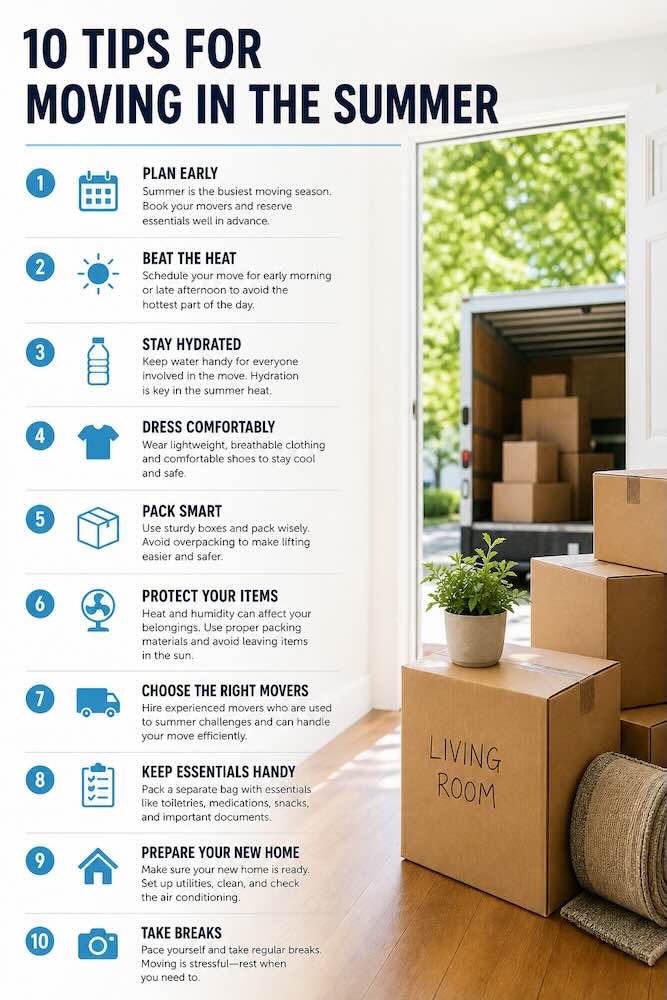
10 Tips for Moving in the Summer
1. Book Your Movers at Least 8 Weeks in Advance
Summer is peak moving season across the United States, and the window from Memorial Day through Labor Day concentrates more than 60 percent of annual residential moves into roughly 14 weeks. Professional moving companies fill their most desirable dates weeks in advance during this period, and the pricing structure shifts accordingly. A household that requests quotes in April for a June move has access to competitive pricing and a wide selection of available dates. A household that requests quotes two weeks before a July move is choosing from whatever capacity is left, frequently at significantly higher prices and with fewer carrier options to compare.
Request binding estimates from at least three FMCSA-verified carriers no later than 8 weeks before the target move date. Verify each carrier’s USDOT and MC numbers at protectyourmove.gov before paying any deposit, and confirm the estimate is binding, not non-binding, before signing. The summer price premium from late booking alone can run $500 to $2,000 above what the same move would cost with adequate lead time.
2. Start the Move as Early in the Morning as Possible
Scheduling a summer move to begin at 7 or 8 a.m. is one of the highest-impact single decisions in the entire planning process. Morning temperatures in most of the United States are 15 to 25 degrees cooler than afternoon peak temperatures in summer, and loading the heaviest and most physically demanding portion of the move during morning hours reduces heat exhaustion risk for everyone involved and keeps the crew working at peak efficiency. A move that begins at noon in July puts the bulk of the loading work into the hottest part of the day, which slows pace, increases break frequency, and raises the risk of heat-related illness for the crew.
Coordinate the early start time with the moving company when booking rather than assuming the company can accommodate it. Some carriers assign start windows rather than specific start times; if a morning start is a priority, confirm it explicitly in the booking conversation and in the written contract. For a DIY move with friends, communicate the early start time clearly and provide an incentive for on-time arrival, since a moving day that starts at 7 a.m. requires friends to be up and committed by 6:30 a.m.
3. Hydrate Continuously Throughout the Day
Dehydration in summer heat during physical exertion is a genuine medical risk, not just a comfort issue. Heat exhaustion, which presents as heavy sweating, weakness, dizziness, and nausea, and heat stroke, which is a medical emergency requiring immediate intervention, both result from inadequate fluid replacement during extended outdoor physical activity in high temperatures. Moving heavy furniture and boxes for six to ten hours in summer heat places every person on the move squarely in the high-risk category for both conditions.
Set up a hydration station at both the origin and destination address on moving day. Stock it with cold water, electrolyte drinks or powder packets, and easy-to-eat snacks with high water content such as fruit. Frozen water bottles double as cold packs that thaw into cold drinks over the course of the morning. Provide the same supplies for the professional moving crew if one is hired; it is good moving etiquette and a practical contribution to the crew’s safety and performance on a hot day. Drink a full glass of water every 30 minutes regardless of whether thirst is present, since thirst is a late dehydration signal that already indicates a deficit.
4. Dress for Heat Rather Than for Modesty
Clothing choices on a summer moving day have a direct effect on heat management and physical performance. Lightweight, light-colored, moisture-wicking fabrics in loose fits allow sweat to evaporate and body heat to dissipate. Dark-colored, heavy, or synthetic fabrics that retain heat significantly raise the risk of overheating during extended physical exertion. Wear closed-toe shoes with good ankle support regardless of the temperature, since moving day involves heavy items, stairs, and unstable surfaces where open-toed footwear creates injury risk.
Apply sunscreen with an SPF of at least 30 to all exposed skin before loading begins, and reapply every two hours for any outdoor work that extends through the morning and into the afternoon. A broad-brimmed hat and UV-blocking sunglasses reduce direct sun exposure during the loading and unloading phases of the move. Keep a change of dry clothing in the family vehicle so that the first hours at the new address are not spent in soaked moving clothes while unpacking begins.
5. Protect Electronics From Heat at All Stages
Consumer electronics have manufacturer-specified operating and storage temperature ranges that most standard moving scenarios exceed during a summer move. Leaving a laptop, television, gaming console, or camera in an enclosed car for 30 minutes on an 85-degree day can raise the device’s internal temperature to well above safe limits. Doing the same in the cargo area of a moving truck, which is unventilated and reaches significantly higher internal temperatures than a parked car, produces heat damage to lithium batteries, screen panels, hard drives, and circuit board components that is often permanent and always expensive to repair.
Every electronic device that can travel in the air-conditioned family vehicle should do so on a summer move, without exception. For large electronics that must travel in the truck, load them last so they spend the minimum time in the unventilated cargo area, and unload them first at the destination address so they are not sitting in the truck during unloading while the household contents are being carried in. Allow all electronics to reach room temperature slowly and passively before powering them on if they have been exposed to heat during transit, since turning a heat-stressed device on before it has cooled can cause short circuits on components where heat-induced condensation has formed.
6. Identify and Protect Heat-Sensitive Items Before Loading Day
A significant number of common household items sustain damage or are destroyed in the heat conditions of a summer moving truck. Pillar and jar candles melt into unusable shapes. Vinyl records warp permanently at temperatures above 140 degrees Fahrenheit, which a closed truck reaches on an 85-degree day. Certain plastics, particularly thin plastics used in storage bins and children’s toys, deform under sustained heat. Wooden furniture and hardwood floors in the new home are susceptible to cracking and splitting when moved from a hot truck into a strongly air-conditioned interior. Items containing adhesives, including assembled flat-pack furniture, can develop joint failures when adhesives soften under prolonged heat exposure.
Walk through the home before packing begins and identify every item in these categories. Pack them last so they spend the minimum time in the heat. Load them in the coolest available section of the truck, typically toward the front near the cab. Transport the highest-priority heat-sensitive items in the family vehicle rather than the truck. For vinyl record collections and archival materials, climate-controlled storage is worth considering as a bridge between the origin and destination address if the transit window extends beyond a single day in summer heat conditions.
7. Cool Down Both Homes Before the Move Begins
Running the air conditioning in the origin address to the lowest comfortable setting for an hour before loading begins cools the interior environment for the crew and for the items being loaded, reducing the immediate heat exposure of both from the first minute of the job. At the destination address, arrange for the air conditioning to be active before the first truck arrives, either through remote thermostat access, a property manager, or by arriving at the new address in advance of the truck to turn on the system.
Moving into a home where the air conditioning has been off for days requires time for the interior to cool to a comfortable temperature, and the first hours of unloading into a hot home are among the most physically punishing conditions of a summer move. If the new home cannot be pre-cooled before arrival, bring portable fans to set up in the primary entry and staging areas immediately on arrival to create airflow while the HVAC system catches up to the set temperature. Confirm before move-in day that the air conditioning unit at the new address is operational, since discovering a non-functional HVAC system on moving day in July is a problem with a very limited same-day solution.
8. Choose the Right Moving Date to Avoid Peak Summer Pricing
Summer moving pricing is driven by supply and demand, and demand is not uniform across the season. The final weekend of each month, when most residential leases expire, is the single highest-demand moving window of any given summer month. Fridays and Saturdays are higher demand than weekdays regardless of the date. The weeks immediately following Memorial Day and immediately before Labor Day represent the most compressed demand windows of the entire summer season as households rush to complete moves before school starts in late August and early September.
The lowest-cost summer moving dates are mid-month Tuesdays, Wednesdays, and Thursdays. A move scheduled for the second Wednesday of July rather than the last Friday of July with the same carrier typically produces a cost difference of 10 to 25 percent on the total binding estimate. For households with flexible move dates, the financial case for a mid-week mid-month summer move is straightforward, and the logistical case is equally compelling since crew availability and carrier responsiveness are both better when demand pressure is lower.
9. Plan for Shorter Working Periods With More Frequent Breaks
Physical performance in heat degrades measurably over time regardless of fitness level. A moving crew or a group of friends working in 90-degree heat for 10 consecutive hours without adequate breaks produces significantly more errors, physical accidents, and item damage in the final hours of the day than in the first hours, as fatigue and heat accumulate. Building frequent rest breaks into the summer moving day schedule is not a concession to weakness but a practical strategy for maintaining safe and consistent performance across the full duration of the move.
Schedule a 10 to 15 minute rest break in the shade with water and snacks every 60 to 90 minutes of active physical work. Set up a shaded rest area at the origin address before loading begins, using a canopy or large umbrella if no natural shade is available on the approach to the truck. Keep the rest area stocked with water, electrolyte drinks, cold packs, and fruit. Moving at a sustainable pace with adequate recovery windows consistently produces a better total result than working at maximum pace without breaks until the crew is exhausted and performance collapses in the afternoon heat.
10. Have a Weather and Contingency Plan Before Moving Day
Summer weather is unpredictable in most of the United States, and afternoon thunderstorms in July and August can arrive with very little warning in many regions. A sudden heavy rain during the loading phase of a move can damage cardboard boxes, soak furniture, and create hazardous conditions on wet ramps and walkways. Having a contingency plan for weather before moving day eliminates the need to make high-pressure decisions in the middle of a thunderstorm with a partially loaded truck.
Check the weather forecast daily for the week before the move date and confirm the forecast on the morning of the move. Have a supply of heavy-duty plastic bags or shrink wrap available to cover box tops and furniture if rain begins during loading or unloading. Keep moving blankets dry for as long as possible by using them only once items are under cover rather than during outdoor transport. For long-distance summer moves, plan the driving route with weather windows in mind and confirm the destination’s weather forecast for the delivery day in addition to the origin’s loading day forecast. If the forecast is severe enough to create genuine safety concerns, contact the moving company as early as possible to discuss rescheduling, since most carriers have weather delay policies that are easier to activate with advance notice than on the morning of the move.
Summer Moving Checklist
| Stage | What to Do |
|---|---|
| 8 weeks out | Request binding estimates from at least three FMCSA-verified carriers; confirm a morning start time; choose a mid-week mid-month date if flexible; verify USDOT numbers at protectyourmove.gov |
| 2 weeks out | Identify all heat-sensitive items; confirm air conditioning is functional at the new address; arrange for new address to be pre-cooled on moving day; purchase sunscreen, electrolyte drinks, and cooling supplies |
| Day before | Complete all packing; check 7-day weather forecast; confirm start time with movers; prepare hydration station supplies; freeze water bottles; set out moving day clothing; charge all portable fans |
| Morning of move | Turn AC to lowest setting at origin address; confirm new address AC is on; set up shaded rest area and hydration station; apply sunscreen before loading begins; load electronics into family vehicle only |
| During the move | Rest break every 60 to 90 minutes; drink water every 30 minutes regardless of thirst; load heat-sensitive items last and family vehicle only where possible; watch for heat exhaustion symptoms in crew members |
| Arrival | Allow electronics to reach room temperature before powering on; set up fans in staging areas while AC cools the home; unload heat-sensitive items first; confirm all items accounted for before signing bill of lading |
Planning a Summer Move With Professional Help
A professional moving company that books up fast in summer is worth securing early, and a crew that works regulated hours with adequate breaks in the heat is worth more than a cut-rate crew working unsafely in dangerous conditions. Our long-distance moving services page covers how we structure summer moves, what our booking process looks like during peak season, and how our crew scheduling handles early morning start times and weather contingencies. For households planning a local summer move who want a binding estimate before availability fills up, our free quote page takes only a few minutes to complete.
FAQ
Is summer the most expensive time to move?
Yes. Summer is consistently the most expensive season for residential moves in the United States. More than 60 percent of annual moves take place between Memorial Day and Labor Day, which concentrates demand into roughly 14 weeks and drives prices up across all carrier types. The premium for a summer move compared to an off-peak winter move with the same carrier on the same route typically runs 10 to 30 percent on the total invoice. Booking at least 8 weeks in advance, choosing a mid-week mid-month date, and requesting binding estimates from multiple carriers reduces the summer premium substantially compared to booking late or accepting the first quote received.
What is the best time of day to move in summer?
The best time to begin a summer move is as early in the morning as possible, ideally at 7 or 8 a.m. Morning temperatures are significantly cooler than afternoon temperatures in most of the country, and starting the heaviest physical loading work before 10 a.m. means the bulk of the outdoor labor is completed before the day reaches its hottest hours between noon and 4 p.m. An early start also reduces the time electronics and heat-sensitive items spend in an unventilated moving truck during the loading and transit phases.
How do you protect furniture during a summer move?
The primary heat risks to furniture during a summer move are warping in solid wood pieces from rapid temperature changes, adhesive joint failures in assembled flat-pack furniture exposed to sustained high temperatures, and fabric discoloration or deformation in upholstered pieces left in direct sun during loading. Wrap wood furniture in moving blankets before loading to buffer temperature changes, load furniture into the truck last from the staging area rather than leaving it on the driveway in direct sun, and complete delivery before the peak heat window of the day where the move schedule allows. Keep the truck shaded during loading where possible and complete the drive to the destination without overnight storage stops in an unventilated truck during summer heat.
What should you not move in summer heat?
Several categories of items should not travel in an unventilated moving truck during summer conditions: consumer electronics including laptops, TVs, cameras, and gaming consoles; candles and wax-based items; vinyl records; lithium batteries and battery packs; artwork with heat-sensitive pigments or adhesive mounting; certain medications that require temperature control; and any item with manufacturer storage specifications that exclude temperatures above 85 to 90 degrees Fahrenheit. All of these categories should travel in the air-conditioned family vehicle, be transported in a climate-controlled truck if available, or be shipped separately through a temperature-controlled carrier rather than in a standard moving truck in summer conditions.
Is it harder to move in summer than winter?
Summer and winter each present distinct challenges for residential moves. Summer moves involve heat exhaustion risk, heat damage to sensitive items, peak season pricing, and reduced mover availability. Winter moves involve snow and ice hazards, heating delays, and limited daylight in northern regions. For most households, summer moves are physically harder on the people doing the work due to heat and dehydration risk, while winter moves are logistically harder due to weather delays and road conditions. The cost advantage typically favors winter, where off-peak pricing can run 10 to 30 percent below peak summer rates with the same carriers.
References
- Ready.gov: Extreme Heat Safety and Preparedness Guidelines
- OSHA: Occupational Heat Exposure and Illness Prevention Standards
- CDC NIOSH: Worker Safety Guide for Managing Heat Stress
- Heat.gov: National Integrated Heat Health Information System
- National Weather Service: Heat Safety Tips and Warning Systems