

The move from New York to Palm Beach represents one of the most traveled retirement routes in the country, part of a decades-long migration pattern that brings retirees closer to adult children, grandchildren, and year-round warmth. For many families, this isn’t just a change of address. It’s a deliberate lifestyle shift away from NYC winters, high state taxes, and the intensity of urban life toward beach access, outdoor living, and a slower pace.
This guide walks through what changes when you make the 1,100-mile journey from New York to Palm Beach, from the practical logistics of a long-distance move to the longer-term adjustments in climate, cost of living, and daily rhythm. Whether you’re joining family already settled in South Florida or pioneering the move yourself, understanding the differences up front helps you plan better and settle in with fewer surprises.
The Story of the Move: How This Route Became a Tradition
The NYC-to-Florida pipeline started in earnest in the 1950s and 1960s, when retirees from New York City began moving to Miami Beach in large numbers. What began as a trickle of snowbirds escaping winter became a flood by the 1970s and 1980s as air conditioning, interstate highways, and Florida’s growing infrastructure made year-round living comfortable. By 1960, Florida’s population had doubled since 1940, and New York, Pennsylvania, and Ohio became the leading contributors to that growth. Today, New Yorkers represent the largest group of out-of-state transplants in Florida, a pattern that’s held steady for over six decades.
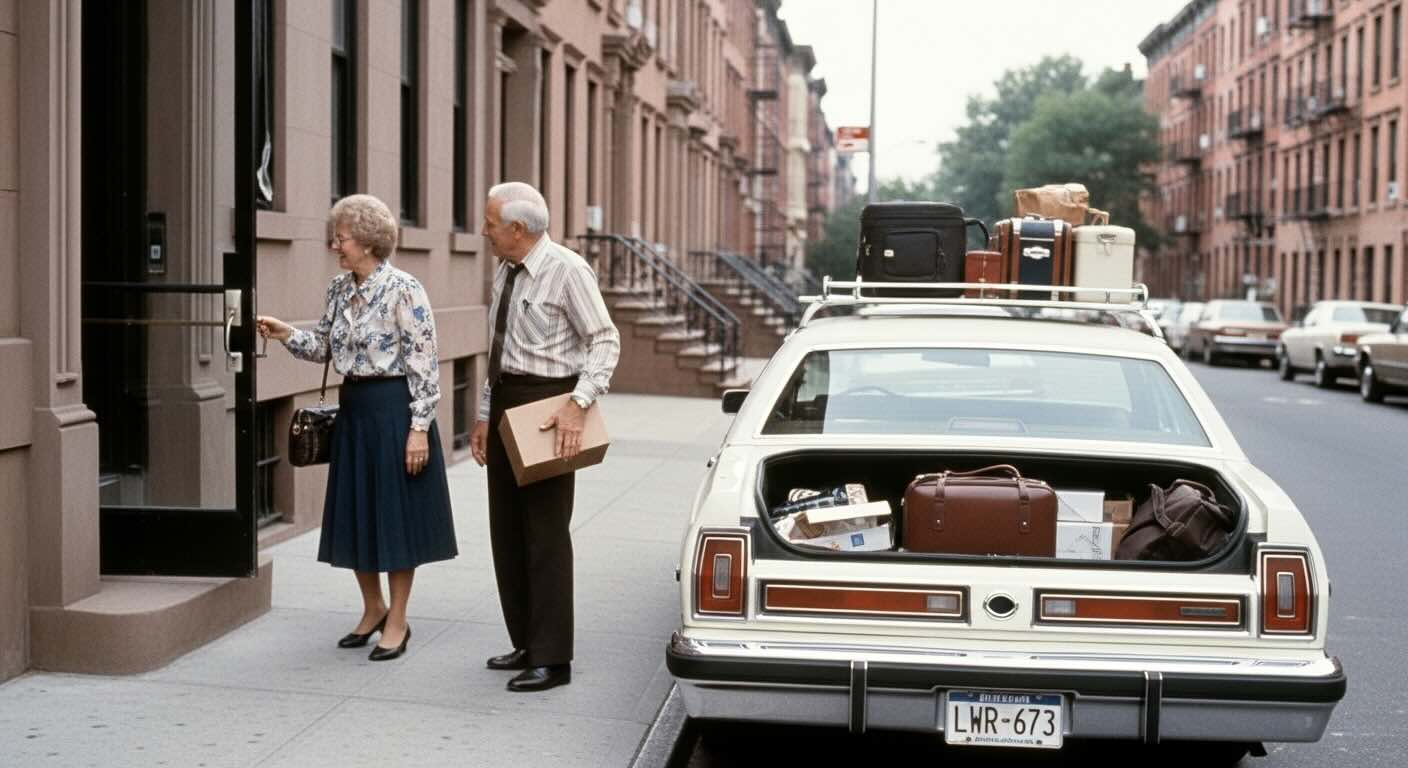
But this isn’t just about taxes or weather. It’s about watching grandchildren grow up instead of seeing them twice a year. It’s about your daughter calling on a Tuesday afternoon to ask if you can pick up the kids from school because daycare fell through, and you can say yes because you live ten minutes away instead of a thousand miles north. The financial calculation eliminating state income tax, unlocking home equity, lowering monthly expenses starts the conversation, but the deeper motivation is proximity to family and the physical ease that comes with leaving behind snow, stairs, and the relentless pace of city life.
The typical story goes like this: adult children moved to Florida years ago for jobs, affordable housing, or their own families. Grandchildren arrive. Visits become more frequent but never frequent enough. The New York apartment or house that once felt necessary starts to feel like an anchor expensive to maintain, exhausting to navigate in your 60s or 70s, and increasingly disconnected from where your family actually lives. One winter, after another canceled flight due to a nor’easter and missing yet another grandchild’s birthday, the conversation shifts from “maybe someday” to “let’s start looking.”
Palm Beach and the surrounding areas have absorbed this wave for generations. The infrastructure is built for it: entire neighborhoods where half the residents are former New Yorkers, social clubs that feel like transplanted Manhattan gatherings, delis that know what a real bagel is supposed to taste like. You’ll hear New York accents at the grocery store, see Yankees hats at the beach, and find yourself in conversations about which Brooklyn neighborhood someone left behind. It’s not quite home, but it’s close enough, and the tradeoffs, hurricanes for blizzards, car dependency for subway access, heat for cold, start to feel worthwhile when you’re sitting on your grandchild’s bedroom floor building Lego towers on a Wednesday morning in January.
The move isn’t without loss. You leave behind decades of friends, familiar streets, the energy that only New York has, and a version of yourself that was defined by that place. Some retirees visit often, keeping a foot in both worlds. Others make a clean break and never look back. Most fall somewhere in between: grateful for the change, occasionally nostalgic, and ultimately convinced they made the right choice when their grandson runs across the lawn to meet them, or when February arrives and they’re wearing shorts instead of a parka.
Key Points
- Long-distance moving costs from NYC to Palm Beach range from $4,500 to $12,000 for a typical two to three-bedroom household, depending on volume, season, and service level; add storage, packing, or vehicle transport to the upper end of that range.
- Florida has no state income tax, which saves high-earners 4 to 10.9 percent annually compared to New York; however, homeowners insurance and flood coverage in coastal Florida can run $3,000 to $8,000 per year, significantly higher than NYC.
- Palm Beach proper is one of the most expensive real estate markets in Florida, with median home prices exceeding $3 million; nearby West Palm Beach, Lake Worth, and Boynton Beach offer more accessible price points ($400,000 to $900,000) with good amenities.
- Car ownership becomes essential; Palm Beach County has limited public transit, and most errands, medical appointments, and social activities require driving in heat and traffic that feels different from NYC congestion.
- Establishing Florida residency for tax purposes requires specific steps (Florida driver’s license, voter registration, Declaration of Domicile, cutting New York ties) and typically takes 183+ days of physical presence per year to avoid New York audits.
Distance, Route, and Long-Distance Moving Logistics
New York City to Palm Beach covers approximately 1,100 to 1,150 miles depending on your exact origin and destination. The drive typically takes 18 to 22 hours in a personal vehicle spread over two to three days, following I-95 South through New Jersey, Delaware, Maryland, Virginia, the Carolinas, Georgia, and into Florida.
For professional movers, this is a multi-day interstate haul requiring a long-distance moving company licensed by the Federal Motor Carrier Safety Administration (FMCSA). Most moves load in NYC one day, travel 1 to 3 days depending on routing and other pickups/deliveries, and unload in Palm Beach within a delivery window (typically 3 to 7 business days, sometimes longer during peak season).
Timing matters significantly. Peak moving season (May through September) overlaps with Florida’s hurricane season and NYC’s busy summer rental turnover, which drives prices up and availability down. Many retirees prefer moving in late fall or winter (October through March) to avoid heat, hurricanes, and peak rates, though some want to settle before the holiday season.
Truck Access and Building Requirements
Both NYC and Palm Beach have building-specific moving requirements. New York movers expect to coordinate freight elevator reservations, certificates of insurance (COI), and possibly parking permits weeks in advance. In Palm Beach and surrounding areas, gated communities and condo buildings often have strict move-in protocols: pre-approval from HOA or property management, reserved elevator times, insurance certificates naming the building, and move-in fees ranging from $200 to $500.
Many Palm Beach area buildings also restrict moving hours (no weekends, no after 5 PM) and require advance notice (1 to 2 weeks). Confirm these requirements early to avoid delays or rescheduling charges.
What It Costs to Move from NYC to Palm Beach
Long-distance moving costs depend on household volume (measured in cubic feet or weight), services included, and time of year. Here are typical ranges for 2025:
| Household Size | Estimated Cost (Labor + Transport) | Notes |
|---|---|---|
| 1-bedroom apartment | $2,800 to $5,500 | Approximately 400 to 600 cubic feet; delivery window 3 to 7 days. |
| 2-bedroom apartment | $4,500 to $8,500 | Approximately 800 to 1,200 cubic feet; add $1,000 to $2,000 for full packing. |
| 3-bedroom house/apartment | $7,000 to $12,000 | Approximately 1,400 to 2,000 cubic feet; stairs and long carries add cost. |
| 4+ bedroom house | $10,000 to $18,000+ | Large volume; may require shuttle or special handling for oversized furniture. |
Additional costs to factor in include packing services ($800 to $2,500 depending on household size), Full Value Protection insurance (1 to 2 percent of declared value), vehicle transport if you’re shipping a car ($800 to $1,400 via open carrier), storage-in-transit if there’s a gap between move-out and move-in dates ($150 to $400 per month), and temporary housing in Florida while you finalize your purchase or rental.
Peak season rates (May through August) run 20 to 35 percent higher than off-season. Booking 8 to 12 weeks ahead gives you better crew availability and pricing, especially if you’re flexible on exact dates.
Why Palm Beach: The Draw for NYC Retirees
Palm Beach and the surrounding area have attracted New York retirees for decades. The reasons are consistent: family proximity, tax advantages, year-round warmth, and a lifestyle that emphasizes outdoor living and a slower pace.
Family Proximity and Multigenerational Living
Many NYC retirees move to Palm Beach because adult children settled there first, often for their own careers or quality of life. Being near grandchildren becomes a priority in retirement, and Florida’s population growth means entire extended families cluster in the same metro area. This proximity enables regular visits, babysitting help, and shared holidays without the cost and logistics of cross-country flights.
Tax Advantages
Florida has no state income tax, which creates significant savings for retirees with pensions, investment income, Social Security, or IRA withdrawals. New York’s state income tax ranges from 4 to 10.9 percent, and NYC adds an additional local tax (up to 3.876 percent). For a retiree with $150,000 in annual income, the savings can reach $10,000 to $15,000 per year.
Florida also has no estate or inheritance tax, and the homestead exemption (up to $50,000 off assessed value for primary residences) lowers property tax bills. However, property insurance, flood coverage, and hurricane deductibles offset some of these savings.
Climate and Outdoor Lifestyle
The appeal of year-round warmth is real, especially for people tired of shoveling snow, navigating icy sidewalks, and enduring months of gray skies. Palm Beach winters (December through March) are mild, with daytime highs in the mid-70s to low 80s and minimal rain. Outdoor activities like golf, tennis, walking, boating, and beach time are accessible year-round.
The tradeoff is summer heat and humidity. June through September brings temperatures in the upper 80s to low 90s with high humidity and frequent afternoon thunderstorms. Hurricane season (June 1 through November 30) requires preparation, insurance, and occasional evacuation.
Social and Cultural Amenities
Palm Beach offers upscale dining, cultural institutions (Kravis Center for the Performing Arts, Norton Museum of Art), golf courses, yacht clubs, and a well-established social scene. It’s not NYC in terms of scale or diversity, but it provides enough variety to keep active retirees engaged. The lifestyle emphasizes leisure, outdoor socializing, and a more relaxed pace than the constant intensity of New York.
Cost of Living: NYC vs. Palm Beach Area
The cost of living in Palm Beach depends heavily on whether you’re living in Palm Beach proper (the island town) or surrounding areas like West Palm Beach, Lake Worth, Delray Beach, or Boynton Beach. Here’s a breakdown:
| Expense Category | NYC (Manhattan/Brooklyn) | Palm Beach Area (Avg) |
|---|---|---|
| Median home price (condo/house) | $750,000 to $1.5M+ | $450,000 to $900,000 (West Palm); $3M+ (Palm Beach proper) |
| Property tax (annual, avg home) | $8,000 to $15,000 | $5,000 to $10,000 (with homestead exemption) |
| Homeowners insurance (annual) | $1,200 to $2,500 | $3,000 to $8,000 (includes wind/flood in coastal zones) |
| HOA/condo fees (monthly, if applicable) | $500 to $1,500+ | $300 to $1,200+ (varies widely by community) |
| Utilities (electric, water, internet) | $150 to $250 | $200 to $350 (A/C runs constantly May through Oct) |
| Groceries (monthly, couple) | $600 to $900 | $550 to $800 |
| Dining out (casual meal for two) | $60 to $100 | $50 to $90 |
| Car ownership (insurance, gas, maintenance) | $350 to $600/month (if you own) | $300 to $500/month (essential, not optional) |
| Healthcare (Medicare + supplement) | $200 to $400/month per person | $200 to $400/month per person (similar plans) |
Housing Costs in Context
Palm Beach proper (the barrier island town) is exclusive and expensive, with single-family homes routinely selling for $5 million to $30 million and condos starting around $1.5 million. Most NYC retirees settle in West Palm Beach, Lake Worth, Delray Beach, Boynton Beach, or Jupiter, where median home prices range from $400,000 to $900,000 for condos and single-family homes with good access to amenities.
Waterfront properties and gated communities command premiums. A two-bedroom condo in a building with amenities (pool, gym, clubhouse) runs $450,000 to $700,000 in West Palm Beach; a single-family home with a pool in a desirable neighborhood costs $650,000 to $1.2 million depending on size and location.
Insurance Reality Check
One of the biggest cost surprises for NYC transplants is insurance. Homeowners insurance in coastal Florida is significantly more expensive than in New York due to hurricane risk. Expect $3,000 to $5,000 annually for a standard policy, with wind and flood coverage adding another $1,500 to $3,000. Homes in FEMA flood zones require flood insurance, and some lenders mandate wind coverage with high deductibles (2 to 5 percent of home value).
This means a $600,000 home might carry $6,000 to $8,000 in annual insurance costs, compared to $1,500 to $2,500 for a similar home in a low-risk area of New York.
Where to Live: Palm Beach and Surrounding Areas
Choosing a neighborhood depends on budget, lifestyle priorities, and proximity to family. Here’s a breakdown of the main areas:
Palm Beach (The Island)
Palm Beach proper is the barrier island town known for Worth Avenue shopping, historic estates, private clubs, and ultra-luxury living. It’s quiet, exclusive, and expensive. Most residents are full-time or seasonal (snowbirds), and the social scene revolves around clubs, charity events, and private gatherings. This area appeals to retirees with significant wealth who want proximity to high-end amenities and a small-town feel with ocean access.
West Palm Beach
West Palm Beach sits across the Intracoastal Waterway from Palm Beach and offers a more accessible price point with good restaurants, cultural venues (Kravis Center, CityPlace), and waterfront parks. Neighborhoods like Northwood, Flamingo Park, and El Cid are walkable and popular with retirees who want urban conveniences without Manhattan density. Median home prices range from $400,000 to $800,000.
Lake Worth and Lake Worth Beach
Lake Worth offers a more laid-back, artsy vibe with a historic downtown, beach access, and lower housing costs ($350,000 to $600,000 median). It’s less polished than Palm Beach but has charm, diversity, and a strong sense of community. Many NYC retirees who value character over luxury settle here.
Delray Beach
Delray Beach is consistently ranked one of the best small cities in Florida. Atlantic Avenue offers excellent dining, galleries, and shops within walking distance of the beach. The population skews younger and more active than some other Palm Beach County towns. Housing ranges from $450,000 condos to $1.5 million single-family homes. It’s a bit farther south (20 to 30 minutes from Palm Beach) but worth considering for a more vibrant downtown scene.
Boynton Beach and Boca Raton
Boynton Beach and Boca Raton (just south of Palm Beach County) offer suburban living with good golf courses, shopping, and family-friendly amenities. These areas have large populations of retirees, active adult communities (55+), and easy access to beaches. Median prices range from $400,000 to $900,000 depending on proximity to the coast and amenities.
Jupiter and Palm Beach Gardens
North of Palm Beach, Jupiter and Palm Beach Gardens offer a quieter, more residential feel with excellent golf courses, nature preserves, and waterfront access. These areas appeal to retirees who prioritize outdoor activities and a suburban pace. Housing runs $500,000 to $1.2 million for single-family homes.
Lifestyle and Cultural Shifts
Moving from NYC to Palm Beach involves more than geography. The pace, social dynamics, and daily rhythms differ in ways that take time to adjust to.
Car Dependency
The biggest adjustment for most NYC retirees is car dependency. Palm Beach County has minimal public transit (a limited bus system called Palm Tran), and most neighborhoods aren’t walkable for daily errands. You’ll drive to grocery stores, doctors’ appointments, restaurants, and social activities. Traffic exists but feels different from NYC: wider roads, longer distances, more parking lots, and heat that makes walking uncomfortable much of the year.
Many retirees who never owned a car in NYC need to buy one (or two) upon arrival. Budget for car payments, insurance, gas, registration, and maintenance.
Social Networks and Community Building
New York’s social density means running into people you know regularly, even in a city of millions. Palm Beach feels smaller and more segmented. Social life often revolves around planned activities: clubs, HOA events, volunteer organizations, religious communities, and interest groups (book clubs, golf leagues, fitness classes).
Building a new social network takes effort. Many retirees join clubs, take classes, volunteer, or participate in community events to meet people. If you’re moving to be near family, that provides built-in connection, but you’ll still want friends outside the family circle.
Pace and Rhythm
Palm Beach operates at a slower pace than NYC. Service is more relaxed, people linger over meals, and there’s less ambient urgency. For some, this is a relief; for others, it feels frustratingly slow. Expect longer wait times at restaurants, slower checkout lines, and a general lack of the hustle that defines New York.
The daily rhythm also shifts. Mornings are active (errands, golf, beach walks) before the heat sets in. Afternoons slow down, especially in summer when thunderstorms and heat drive people indoors. Evenings pick up again for dining and socializing.
Cultural and Entertainment Options
Palm Beach has good cultural amenities for its size: the Kravis Center for performing arts, Norton Museum, seasonal theater, and live music venues. It’s not Broadway or Lincoln Center, but there’s enough variety to stay engaged. Many retirees subscribe to season tickets and build social calendars around performances.
If you’re used to NYC’s endless options, you’ll notice the limits. Fewer niche restaurants, smaller art galleries, less experimental theater. Some retirees supplement with trips back to NYC or to Miami (an hour south) for bigger cultural events.
Healthcare and Medical Services
Healthcare quality is a primary concern for retirees. Palm Beach County has strong hospital systems and medical networks, though the experience differs from NYC.
Hospitals and Medical Centers
Major hospitals include Jupiter Medical Center, Palm Beach Gardens Medical Center, Good Samaritan Medical Center (West Palm Beach), and JFK Medical Center (Atlantis/Lake Worth). These facilities offer comprehensive care, including cardiology, orthopedics, oncology, and emergency services. Specialty care is available, though some rare or cutting-edge treatments may require travel to Miami (University of Miami Health System, Jackson Memorial) or back to NYC.
Finding Doctors
Most retirees establish care with new primary care physicians, specialists, and dentists upon arrival. Florida accepts Medicare, and many doctors participate in Medicare Advantage plans. Ask family members or new neighbors for referrals, check online reviews, and confirm that providers accept your insurance before scheduling.
Wait times for specialists can be longer than in NYC due to Florida’s large retiree population. Booking appointments 4 to 8 weeks ahead for non-urgent care is common.
Prescription and Pharmacy Access
National pharmacy chains (CVS, Walgreens, Publix pharmacies) are plentiful. Transferring prescriptions from NYC is straightforward; call your Florida pharmacy with your NYC pharmacy details, and they’ll handle the transfer. If you use specialty medications or mail-order pharmacies, confirm coverage and delivery logistics before moving.
Establishing Florida Residency for Tax Purposes
If you’re moving to Florida primarily for tax reasons, establishing legal residency requires specific steps. Simply owning a home in Florida isn’t enough; you need to demonstrate intent to make Florida your permanent domicile.
Steps to Establish Florida Residency
- Obtain a Florida driver’s license or ID card within 30 days of establishing residency. Surrender your New York license.
- Register to vote in Florida and cancel your New York voter registration.
- File a Declaration of Domicile with the Clerk of Court in your Florida county. This is a sworn statement that Florida is your permanent home.
- Register vehicles in Florida and obtain Florida license plates.
- Update your address with banks, credit cards, insurance, Social Security, IRS, and Medicare.
- File for Florida homestead exemption if you own a home. This provides property tax savings and must be filed by March 1 of the year following your move.
Cutting Ties with New York
New York State aggressively audits former residents who claim Florida domicile but maintain significant ties to New York. To avoid residency audits:
- Spend more than 183 days per year in Florida (keep travel records, credit card statements, and calendar documentation).
- Sell or rent out your New York home if you own one, or at minimum, keep it as a clearly secondary residence.
- Move valuable personal property (art, jewelry, collections) to Florida.
- Close New York bank accounts or designate Florida accounts as primary.
- Join clubs, religious organizations, and community groups in Florida to demonstrate permanent ties.
- File a final New York State tax return declaring your move and file as a Florida resident going forward.
Consult a tax attorney or CPA familiar with NY-to-FL moves if you have significant income or complex assets. New York’s residency audits can be intrusive and expensive if you’re not prepared.
Climate and Weather: What to Expect
Florida’s climate is one of the main draws, but it requires adjustment if you’re coming from the Northeast.
Year-Round Heat and Humidity
Palm Beach is subtropical, meaning warm year-round with high humidity. Winter (December through March) is mild and dry, with daytime highs in the mid-70s to low 80s and nighttime lows in the 60s. This is peak season when the area feels most like paradise.
Summer (May through October) is hot, humid, and rainy. Daytime highs reach the upper 80s to low 90s with humidity making it feel like 100°F+. Afternoon thunderstorms are daily from June through September. Air conditioning runs constantly, driving up electric bills ($200 to $350/month in summer).
Hurricane Season
Hurricane season runs June 1 through November 30, with peak activity in August and September. Palm Beach County experiences hurricanes occasionally (major storms every 5 to 10 years on average), and tropical storms more frequently. Preparation includes:
- Comprehensive homeowners insurance with wind and flood coverage
- Hurricane shutters or impact-resistant windows
- Emergency supplies (water, non-perishable food, medications, batteries, generator if desired)
- Evacuation plan if you’re in a mandatory evacuation zone (coastal areas, mobile homes)
Most hurricanes result in power outages, debris cleanup, and temporary disruptions rather than catastrophic damage, but the stress and preparation are real. Many seasonal residents (snowbirds) leave Florida during hurricane season to avoid the risk.
Outdoor Living Adjustments
You’ll spend more time outdoors than in NYC, but timing matters. Early mornings (before 10 AM) and evenings (after 5 PM) are pleasant much of the year. Midday heat limits outdoor activity from June through September unless you’re at the beach or pool. Sunscreen, hats, and hydration are daily necessities, and bug spray (mosquitoes, no-see-ums) is essential in summer.
What to Bring and What to Leave Behind
Downsizing before a long-distance move saves money and helps you start fresh. Here’s what to reconsider when moving from NYC to Palm Beach:
Furniture
Heavy, dark furniture designed for NYC apartments often feels wrong in Florida’s bright, airy spaces. Consider selling large pieces and buying lighter, more tropical-appropriate furniture after you arrive. Coastal Florida favors wicker, rattan, light woods, and bright fabrics.
Measure your new home carefully. Many Florida homes have open floor plans, sliding glass doors, and different proportions than NYC apartments. Oversized sectionals or formal dining sets may not fit the new layout.
Winter Clothing
You won’t need heavy coats, snow boots, or most winter gear. Keep a light jacket or sweater for occasional cool evenings (Florida “winter” gets down to the 50s at night sometimes), but donate or store the rest. You’ll live in shorts, sundresses, sandals, and swimwear most of the year.
Kitchen and Household
Bring kitchen essentials, but skip heavy cookware if you’re downsizing. Florida living emphasizes outdoor grilling, fresh seafood, and lighter meals. If your new home has a smaller kitchen, prioritize what you actually use.
Books and Collections
Humidity and heat can damage books, paper, and certain collectibles if not stored properly. Digitize what you can, donate libraries to NYC institutions, and bring only favorites. Many retirees shift to e-readers and digital media after moving to Florida.
Car
If you own a car in NYC, bring it or sell it and buy a more Florida-appropriate vehicle (SUV, convertible, something with good A/C). If you don’t own a car, budget for purchasing one immediately upon arrival.
Pros, Cons, and Tradeoffs
- Pro: No state income tax saves high-earners $10,000 to $20,000+ annually; estate planning and estate transfer become easier.
- Pro: Year-round warmth and outdoor access make activities like golf, tennis, walking, and beach time available every month; no more snow shoveling or icy sidewalks.
- Pro: Family proximity if adult children or grandchildren already live in South Florida; easier to stay involved in their daily lives.
- Con: Homeowners insurance and flood coverage cost $3,000 to $8,000 annually, far higher than NYC, offsetting some tax savings.
- Con: Hurricane season (June through November) requires preparation, evacuation planning, and acceptance of occasional power outages and storm damage risk.
- Con: Car dependency replaces walkability; you’ll drive everywhere, which adds costs and lifestyle adjustment if you never owned a car in NYC.
- Con: Summer heat and humidity (June through September) make midday outdoor activity uncomfortable; air conditioning runs constantly, driving up utility bills.
- Con: Cultural and entertainment options are more limited than NYC; fewer niche restaurants, smaller arts scene, less diversity in daily experiences.
- It depends: Social life requires more intentional effort; you’ll need to join clubs, volunteer, or participate in organized activities to build friendships outside family.
Common Mistakes NYC Retirees Make When Moving to Palm Beach
Underestimating Insurance Costs
Many NYC retirees budget for lower housing costs in Florida but get blindsided by insurance expenses. Homeowners, wind, and flood coverage combined can run $6,000 to $8,000 annually for coastal properties, significantly higher than the $1,500 to $2,500 typical in New York. Factor these costs into your total housing budget before committing to a purchase.
Buying Before Renting
Purchasing a home sight-unseen or after one quick visit often leads to buyer’s remorse. Neighborhoods that look perfect in winter (peak season) may feel different in summer heat with fewer seasonal residents. Renting for six months to a year lets you explore different areas, understand traffic patterns, test proximity to family and amenities, and make a more informed purchase decision.
Failing to Establish Residency Properly
Simply buying a Florida home and spending time there doesn’t make you a Florida resident for tax purposes. New York State aggressively audits former residents who claim Florida domicile but maintain strong ties to New York. Follow every step to establish residency (driver’s license, voter registration, Declaration of Domicile, homestead exemption) and keep meticulous records of your time in each state. Consult a tax attorney familiar with NY-to-FL moves if you have significant income.
Ignoring HOA Rules and Restrictions
Many Florida communities have strict HOA rules governing exterior modifications, landscaping, parking, noise, and guest policies. Read the HOA documents carefully before purchasing, and understand the monthly or annual fees (which can range from $300 to $1,500+ per month). Some restrictions, like limits on renting your property or restrictions on certain types of vehicles, may not align with your lifestyle.
Bringing Too Much Furniture
Heavy, dark furniture from a NYC apartment often feels out of place in Florida’s bright, open floor plans. Measure your new space carefully and consider selling oversized pieces before the move. You can buy lighter, more appropriate furniture in Florida, often for less than the cost of transporting heavy items 1,100 miles.
Not Preparing for Hurricane Season
First-time Florida residents sometimes underestimate hurricane preparation. Stock emergency supplies (water, non-perishable food, medications, flashlights, batteries) before hurricane season starts. Understand your evacuation zone and have a plan for where you’ll go if a mandatory evacuation is issued. Many buildings require hurricane shutters or impact windows, which can cost $10,000 to $30,000 to install if the property doesn’t already have them.
NYC to Palm Beach Moving Checklist
3 to 6 Months Before Moving Day
- Research neighborhoods and housing options; visit Palm Beach area multiple times if possible
- Get quotes from at least three long-distance moving companies licensed by FMCSA
- Decide whether to rent or buy; if buying, connect with a local real estate agent familiar with NYC transplants
- Downsize belongings; sell or donate furniture, winter clothing, and items that don’t fit Florida living
- Notify your NYC landlord or list your home for sale if you own
- Research healthcare providers in Palm Beach area; ask for referrals from family or future neighbors
2 to 3 Months Before Moving Day
- Finalize your Florida housing (lease or purchase)
- Book your moving company and confirm pickup/delivery dates in writing
- Arrange temporary housing in Florida if your permanent home isn’t ready
- Notify utility companies in NYC (schedule final readings and disconnect dates)
- Set up utilities in Florida (electric, water, internet, cable) for move-in date
- Transfer or close NYC bank accounts; open Florida accounts if desired
- Notify Social Security, Medicare, pension providers of address change
1 Month Before Moving Day
- Obtain Florida driver’s license or ID within 30 days of establishing residency; surrender NY license
- Register to vote in Florida and cancel NY voter registration
- File Declaration of Domicile with Clerk of Court in your Florida county
- Register vehicles in Florida and obtain Florida plates
- Update address with IRS, insurance companies, credit cards, subscriptions
- Schedule final doctors’ appointments in NYC; request medical records transfers
- Arrange pet transportation if you have animals
- Confirm moving company details one week before pickup
First Month After Arrival
- File for Florida homestead exemption (if you own; deadline is March 1 of the year following purchase)
- Establish care with new doctors, dentists, and specialists
- Transfer prescriptions to Florida pharmacy
- Join clubs, volunteer organizations, or community groups to build social network
- Explore your new area: grocery stores, restaurants, parks, beaches, cultural venues
- Register for hurricane alerts and emergency notifications from Palm Beach County
- Assemble hurricane supply kit and review evacuation zone
FAQ
How much does it cost to move from NYC to Palm Beach?
Moving costs range from $2,800 to $5,500 for a one-bedroom apartment, $4,500 to $8,500 for a two-bedroom, and $7,000 to $12,000 for a three-bedroom household. These estimates include labor and transportation for the 1,100-mile journey. Add $800 to $2,500 for full packing services, $800 to $1,400 for vehicle transport, and $150 to $400 per month for storage if your move-in date doesn’t align with your NYC move-out. Peak season (May through August) rates run 20 to 35 percent higher than off-season.
How do I establish Florida residency to avoid New York taxes?
Obtain a Florida driver’s license within 30 days and surrender your NY license, register to vote in Florida, file a Declaration of Domicile with your county Clerk of Court, register vehicles in Florida, file for homestead exemption if you own property, and spend more than 183 days per year in Florida. Cut ties with New York by selling or clearly designating any NY property as secondary, closing or moving bank accounts, and updating addresses with all financial institutions. Keep detailed records of your time in each state. Consult a tax attorney familiar with NY residency audits if you have significant income or complex assets.
Is Palm Beach expensive compared to NYC?
Palm Beach proper (the island) is extremely expensive, with median home prices exceeding $3 million. However, surrounding areas like West Palm Beach, Lake Worth, Delray Beach, and Boynton Beach offer median prices from $400,000 to $900,000, which is lower than Manhattan or much of Brooklyn. Daily living costs (groceries, dining, gas) are slightly lower than NYC, but homeowners insurance is significantly higher ($3,000 to $8,000 annually vs. $1,500 to $2,500). Overall, most retirees find Palm Beach area living less expensive than NYC when factoring in no state income tax.
Do I need a car in Palm Beach?
Yes, car ownership is essential. Palm Beach County has minimal public transit, and neighborhoods aren’t designed for walkability the way NYC is. You’ll drive to grocery stores, medical appointments, restaurants, social activities, and errands. Budget $300 to $500 per month for car insurance, gas, registration, and maintenance. If you didn’t own a car in NYC, plan to purchase one immediately upon arrival.
What’s the best time of year to move from NYC to Palm Beach?
Late fall through early spring (October through March) is ideal. You’ll avoid Florida’s hurricane season (June 1 through November 30), summer heat and humidity, and peak moving season pricing. Many retirees prefer moving in November or December to settle before the holidays and enjoy Palm Beach’s pleasant winter months immediately. Avoid June through September when hurricane risk is highest and heat is most intense.
Where should I live if I can’t afford Palm Beach proper?
West Palm Beach, Lake Worth, Delray Beach, Boynton Beach, Boca Raton, and Jupiter offer more accessible pricing ($400,000 to $900,000 median) with excellent amenities, beaches, restaurants, and healthcare. West Palm Beach provides urban conveniences with walkable neighborhoods. Delray Beach has a vibrant downtown and active social scene. Lake Worth offers artsy charm and lower costs. Jupiter and Palm Beach Gardens emphasize outdoor living and golf. All are within 20 to 40 minutes of Palm Beach proper.
References
- Federal Motor Carrier Safety Administration – Protect Your Move
- Town of Palm Beach – Hurricane Preparedness
- Palm Beach County Emergency Management – Hurricane Planning
- Florida Department of Revenue – Homestead Exemption
- Hodgson Russ LLP – What to Expect in a New York Residency Audit
- New York State Department of Taxation – Nonresident Tax Guidelines
- Medicare.gov – Care Compare Tool for Finding Providers
- Florida Department of Highway Safety and Motor Vehicles – Driver License Information