
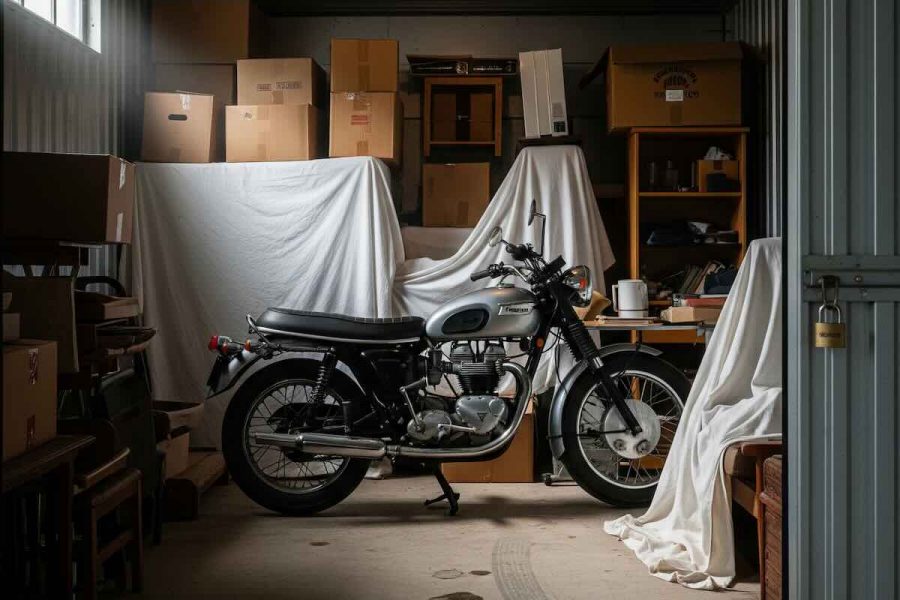
This guide explains how to store a motorcycle safely in 2026, which storage conditions matter most, what rules usually apply at storage facilities, and how to prepare the bike so it starts cleanly when it is time to ride again.
Key Takeaways: Motorcycle Storage
- Clean the motorcycle before storage. Dirt, salt, bugs, road grime, and moisture can damage paint, chrome, rubber, and metal while the bike sits.
- Use fuel stabilizer for long-term storage. Fresh fuel with stabilizer helps reduce condensation and fuel-system problems when the motorcycle is stored for weeks or months.
- Protect the battery. A battery can drain while the bike is parked, so it should be disconnected, removed, or maintained with an approved smart charger.
- Prevent tire damage. Proper tire pressure, motorcycle stands, or occasional repositioning can reduce flat spots during long storage periods.
- Choose dry, secure, and stable storage. Indoor and climate-controlled storage offer stronger protection than outdoor parking.
- Check storage facility rules before moving the bike in. Many facilities restrict fuel, batteries, maintenance, running engines, hazardous fluids, and unregistered vehicles.
- Do not store gear carelessly. Helmets, jackets, gloves, documents, and electronics need clean, dry, secure conditions.
- Plan for theft prevention. A lockable unit, disc lock, chain lock, cover, camera-monitored facility, and insurance coverage all matter.
Why Motorcycle Storage Matters
Motorcycles are compact, valuable, and easy to damage when they are stored poorly. A bike may look fine from the outside after sitting for months, but problems can develop quietly. Fuel can degrade. Batteries can die. Tires can lose pressure. Brake rotors can rust. Chains can dry out. Moisture can collect in tight spaces. Rodents can chew wiring. Upholstery can crack. Chrome and exposed metal can corrode.
Storage matters even more during a move. A new home may not have a garage, driveway space, HOA approval, or secure parking. Apartment riders may have to deal with parking rules, lease restrictions, and limited covered space. Riders moving to Florida or another humid coastal area also need to think about heat, moisture, salt air, and storm season.
The goal is simple. The motorcycle should come out of storage in the same or better condition than when it went in. That requires a clean bike, stable fuel, protected battery, correct tire care, secure storage, and a clear understanding of what the storage location allows.
Choosing the Right Motorcycle Storage Option
There is no single best storage option for every motorcycle. The right choice depends on risk, budget, access needs, and local conditions.
Garage Storage
A private garage is often the easiest and most practical storage option. It gives the rider control over access, maintenance, charging, cleaning, and security. It also protects the motorcycle from rain, sun, and casual theft.
A garage still needs preparation. The floor should be dry, the area should be clean, and the motorcycle should not sit beside open chemicals, fertilizers, gasoline cans, paint, pool supplies, or leaking equipment. A garage in a humid area may still need ventilation or a dehumidifier.
Indoor Self-Storage Unit
An indoor storage unit is one of the best choices for long-term motorcycle storage. It protects the bike from weather, sun, street exposure, and most casual theft risks. A 5×10 unit can fit many standard motorcycles, while larger touring bikes, cruisers, trikes, or motorcycles with sidecars may need more space.
Before renting the unit, measure the motorcycle from the front tire to the rear fender or luggage, then measure the width with handlebars, mirrors, bags, crash bars, and accessories included. Do not assume the bike will fit just because the listed unit size sounds large enough.
Climate-Controlled Storage
Climate-controlled storage is useful for motorcycles with leather seats, electronics, custom paint, chrome, vintage parts, premium saddlebags, or sensitive accessories. It is also helpful in humid regions where moisture can lead to corrosion, mildew, and electrical issues.
Climate control is not a substitute for proper preparation. A dirty or wet motorcycle can still develop problems. The bike should be washed, dried, stabilized, and covered correctly before it is placed in a climate-controlled space.
Outdoor Motorcycle Storage
Outdoor storage is the cheapest option, but it carries the most risk. Rain, UV exposure, heat, snow, ice, dust, tree sap, bird droppings, theft, and vandalism can all affect the bike. Outdoor storage should be used carefully and should not be treated as a maintenance-free solution.
If outdoor storage is the only option, choose a paved or well-drained surface, avoid low spots that collect water, use a breathable weather-resistant motorcycle cover, lock the bike, and check it regularly. A motorcycle should not sit directly on wet grass or dirt for long periods.
Covered Parking or Carport Storage
Covered parking gives better protection than open outdoor parking but less protection than an enclosed garage or storage unit. It helps reduce direct rain and UV exposure, but humidity, windblown rain, dust, pests, and theft remain concerns.
This option works best for short-term storage or for riders who can inspect the bike often. A fitted motorcycle cover is still useful, but it should not trap moisture.
Dealership or Specialty Motorcycle Storage
Some dealerships, repair shops, and motorcycle storage businesses offer seasonal storage. This can be helpful when the bike also needs service, winterization, inspection, tires, or detailing. It may cost more, but it can save time and reduce the chance of missed maintenance.
Before using this option, ask what is included. Some providers only park the bike. Others include battery maintenance, fuel treatment, tire pressure checks, service reminders, or spring preparation.
Motorcycle Storage Options Compared
| Storage Type | Best For | Main Benefits | Main Risks | Best Condition |
|---|---|---|---|---|
| Private Garage | Homeowners and frequent riders | Easy access, weather protection, flexible maintenance | Humidity, clutter, chemical exposure, weak security | Clean, dry, locked, ventilated, and away from hazardous materials |
| Indoor Self-Storage Unit | Moving, seasonal storage, long-term parking | Strong weather protection and better privacy | Facility rules, access hours, fuel and battery restrictions | Registered, insured, clean, dry, and accepted by the facility |
| Climate-Controlled Storage | Vintage bikes, custom bikes, humid climates, premium interiors | More stable temperature and humidity conditions | Higher monthly cost and limited unit availability | Best for bikes that will sit for several months or more |
| Outdoor Storage | Short-term storage and lower budgets | Lower cost and easy access | Weather, UV damage, theft, pests, moisture, corrosion | Covered, locked, elevated, inspected often, and parked on a dry surface |
| Covered Parking | Apartments, condos, and short-term storage | Less sun and rain exposure than open parking | Still exposed to humidity, theft, wind, and dust | Best with a breathable fitted cover and strong locks |
| Dealership or Specialty Storage | Seasonal riders, high-value bikes, service needs | May include maintenance, battery care, and spring prep | Higher cost and limited access | Best when the provider gives written service details |
Motorcycle Storage Rules You Need to Know
Storage rules vary by facility, city, lease, HOA, and insurance policy. The safest approach is to confirm every rule in writing before moving the motorcycle into storage.
Fuel Rules
Many storage facilities restrict gasoline and other flammable materials. Some facilities allow motorcycles only if the bike is registered, insured, operational, and stored with limited fuel. Others may require the tank to be drained or nearly empty. Some indoor facilities do not allow motorcycles at all.
The rule to follow is simple. Never assume fuel is allowed. Ask the facility before reserving the unit. If the facility has a specific fuel level requirement, follow it exactly.
Battery Rules
Some storage facilities allow batteries to remain installed. Others require the battery to be disconnected. Some restrict charging inside the unit because of fire risk. Lithium batteries may face stricter rules than conventional lead-acid batteries.
Battery care should follow the motorcycle manual, the battery manufacturer’s instructions, and the storage facility’s rules. If a smart charger is used, it should be approved for the battery type and allowed by the facility.
Maintenance Rules
Many storage facilities do not allow oil changes, fuel work, brake work, engine running, washing, painting, repairs, or mechanical projects inside a unit. A storage unit is usually for storage, not a workshop.
If the motorcycle needs maintenance before storage, complete it before move-in or use a professional shop. Do not plan to drain fuel, change oil, clean parts, or run the engine inside a storage unit unless the facility clearly allows it.
Registration and Insurance Rules
A facility may require the motorcycle to be registered, insured, and in working condition. Unregistered or non-operational vehicles may be prohibited. Some facilities may also require proof of ownership or insurance before allowing storage.
Insurance matters because the storage facility’s insurance usually protects the building, not the owner’s motorcycle. The rider should confirm whether the motorcycle policy covers theft, fire, flood, storm damage, vandalism, and storage away from home.
Prohibited Items
A motorcycle storage unit should not be used to store hazardous or prohibited materials. Avoid storing gasoline cans, propane, paint, solvents, fireworks, ammunition, open oil containers, chemicals, food, damp textiles, or perishable items with the motorcycle.
Riding gear can be stored with the bike only if it is clean, dry, and protected. Helmets should not be crushed under boxes or left where heat and moisture can damage them.
HOA, Lease, and Local Parking Rules
Home storage may be limited by neighborhood rules. HOAs, apartment leases, condo boards, and city ordinances may restrict motorcycle parking, trailers, covers, noise, repairs, or vehicle storage in driveways and common areas.
Before storing a motorcycle at home, check the written rules. A bike that fits physically may still violate a lease or HOA policy.
Best Conditions for Motorcycle Storage
A motorcycle should be stored in conditions that are dry, stable, secure, and clean. The more valuable or sensitive the motorcycle is, the more important the storage environment becomes.
Dry Conditions
Moisture is one of the biggest storage enemies. It can cause rust, mildew, electrical issues, brake rotor corrosion, chain corrosion, and damage to leather or vinyl. The storage area should not have standing water, leaks, damp flooring, or heavy condensation.
In humid climates, climate-controlled storage or a dry garage with airflow can make a meaningful difference. If the motorcycle is covered, the cover should breathe. A plastic tarp that traps moisture can cause more harm than good.
Stable Temperature
Extreme temperature changes can affect batteries, rubber, seals, tires, fuel, and fluids. A stable indoor space is better than an area that repeatedly heats up and cools down. Climate control is especially helpful for vintage motorcycles, custom builds, electronics, and long-term storage.
Low Sun Exposure
Direct sunlight can fade paint, dry out rubber, crack seats, weaken plastics, and damage instrument panels. Outdoor storage should include shade or a quality motorcycle cover. Indoor storage is better for long storage periods.
Clean Surroundings
The storage area should be free from food, trash, pests, chemicals, leaking containers, and clutter. Rodents can damage wiring, airboxes, seats, and saddlebags. If pests are common in the area, the owner should ask the facility how pest control is handled.
Security
Good motorcycle storage should make theft difficult. Look for gated access, cameras, lighting, individual locks, staff presence, and controlled entry. A motorcycle should also be locked inside storage, not simply parked and covered.
How to Store a Motorcycle Step by Step
Motorcycle storage should be done in a clear order. The steps below apply to most gas-powered motorcycles, but the owner’s manual should always take priority for model-specific guidance.
Step 1: Wash and Dry the Motorcycle
Start with a full wash. Remove dirt, bugs, salt, mud, oil residue, brake dust, and road grime. Clean the wheels, chain area, underbody, painted surfaces, windshield, seat, luggage, and exposed metal.
Dry the motorcycle completely before covering it. Water trapped under a cover or inside tight spaces can cause corrosion and mildew.
Step 2: Lubricate the Chain and Moving Parts
If the motorcycle has a chain, clean and lubricate it before storage. A dry or dirty chain can corrode while the bike sits. Also check cables, levers, locks, hinges, and other moving parts that may benefit from proper lubrication.
Belt and shaft-drive motorcycles have different requirements, so follow the owner’s manual.
Step 3: Change or Check the Oil
Used oil can contain contaminants. For long-term storage, many riders prefer to store the motorcycle with fresh oil and a clean filter. At minimum, check the oil level and condition before storage.
If the motorcycle is due for service soon, it is usually better to handle it before storage rather than waiting until the next riding season.
Step 4: Stabilize the Fuel
For long-term storage, fresh fuel and fuel stabilizer help protect the fuel system. After adding stabilizer, the motorcycle should be run long enough for treated fuel to move through the system. This should be done outdoors or in a properly ventilated area before the bike enters storage.
Do not run a motorcycle inside a closed storage unit. Exhaust fumes are dangerous, and many facilities prohibit engine operation indoors.
Step 5: Protect the Battery
A motorcycle battery can drain while the bike is parked. Depending on the motorcycle, battery type, facility rules, and storage length, the battery may be disconnected, removed, or connected to a smart maintainer.
If the battery is removed, store it in a dry and temperature-stable place. Do not place it directly on a damp floor. Use only a charger that matches the battery type.
Step 6: Inflate and Protect the Tires
Check tire pressure before storage. Tires that sit under low pressure can develop flat spots or sidewall stress. For long storage, use motorcycle stands if possible so the tires are not carrying the full weight of the bike.
If stands are not available, move the motorcycle slightly from time to time when access allows. Avoid storing the bike on wet dirt, grass, or uneven surfaces.
Step 7: Fill or Protect Cooling and Brake Systems
Check coolant, brake fluid, clutch fluid, and other fluids based on the motorcycle’s service schedule. If the bike will be stored in a cold climate, confirm that the coolant offers proper freeze protection.
Do not ignore brake fluid. Moisture contamination can affect braking performance, and a motorcycle that sits for a long time may need inspection before returning to the road.
Step 8: Block Pests
Rodents can chew wiring, build nests, and damage seats or luggage. Remove food, wrappers, and scented items from saddlebags and storage compartments. Check the air intake and exhaust areas before and after storage.
Some riders use breathable exhaust covers or intake protection during storage, but anything used to block openings must be removed before starting the motorcycle.
Step 9: Cover the Motorcycle Properly
Use a motorcycle cover suited to the environment. Indoor storage needs a soft breathable dust cover. Outdoor storage needs a breathable weather-resistant cover that fits securely.
Avoid cheap plastic tarps. They can trap moisture, scratch paint, flap in wind, and hold condensation against the motorcycle.
Step 10: Lock and Document the Bike
Before leaving the motorcycle in storage, lock it and document its condition. Take photos of all sides, the odometer, VIN area, accessories, luggage, controls, wheels, and any existing scratches or damage.
Use a disc lock, chain lock, ground anchor if available, and a high-quality unit lock. Keep the title, registration, spare keys, and insurance documents outside the storage unit in a secure place.
Short-Term vs Long-Term Motorcycle Storage
Not every storage situation needs the same level of preparation. The longer the motorcycle sits, the more thorough the process should be.
Short-Term Storage: Up to 30 Days
For short-term storage, the main goals are cleanliness, security, and battery protection. Wash and dry the motorcycle if it is dirty, park it in a dry place, lock it, cover it, and consider a smart battery maintainer if the bike is known to drain batteries.
Short-term storage still requires attention if the motorcycle is outdoors, exposed to rain, or parked in a theft-prone area.
Seasonal Storage: One to Six Months
Seasonal storage needs a more complete approach. Clean the bike, stabilize the fuel, protect the battery, check tire pressure, use a cover, lubricate the chain, remove valuables, and inspect the storage space.
This is the most common storage situation for winter riders, snowbirds, military moves, long vacations, and relocations.
Long-Term Storage: More Than Six Months
Long-term storage requires the most care. The motorcycle may need fresh oil, fuel-system preparation, battery removal, tire stands, pest prevention, moisture control, insurance review, and periodic inspections.
A motorcycle stored for a year or more should not be restarted casually without inspection. Tires, brakes, battery, fluids, fuel, chain, controls, and lights should all be checked before the bike returns to the road.
Electric Motorcycle Storage
Electric motorcycles have different storage needs than gas-powered motorcycles. There is no fuel system to stabilize, but the high-voltage battery, 12-volt system, software, tires, brakes, and charging conditions still matter.
The most important rule is to follow the manufacturer’s battery storage guidance. Many electric motorcycles should not be stored at a completely full or completely empty state of charge for long periods. Temperature also matters because extreme heat or cold can affect battery health.
For electric motorcycle storage:
- Check the owner’s manual for the recommended storage charge level.
- Store the bike in a dry and temperature-stable space when possible.
- Confirm whether the storage facility allows EV charging or battery maintenance.
- Do not use extension cords or chargers that violate facility rules.
- Check tire pressure and brakes before storage.
- Keep software, keys, and charging accessories organized and secure.
Electric motorcycles should not be treated like regular household electronics. Battery safety, charging rules, and facility permissions should be confirmed before storage.
Motorcycle Storage Security
Motorcycles are easier to move than cars, which makes theft prevention a major part of storage. Even indoor storage should include layers of security.
Security Features to Look For
A stronger storage location usually includes:
- Gated access
- Security cameras
- Good lighting
- Controlled entry codes
- On-site staff or patrols
- Individual unit locks
- Fenced outdoor areas
- Clear access hours and visitor rules
Locks and Anti-Theft Measures
The motorcycle should be locked even inside a unit. A disc lock, chain lock, U-lock, alarmed lock, or ground anchor can slow theft attempts. If the bike is on a trailer, the trailer should be locked as well.
A cover also helps because it keeps the motorcycle less visible. Thieves often prefer easy targets, and a covered, locked, indoor motorcycle is less inviting than an exposed bike with visible accessories.
Remove Valuables
Remove helmets, electronics, tools, cameras, GPS units, registration documents, cash, riding jackets, and expensive accessories when possible. If saddlebags or top cases remain on the bike, they should be locked and empty of valuable items.
Insurance and Documentation
Insurance should not be canceled automatically just because the motorcycle is in storage. Theft, fire, vandalism, flood, storm damage, and accidental damage can still happen while the bike is parked.
Before storage, review the motorcycle policy and ask about:
- Comprehensive coverage during storage
- Coverage at a storage facility away from home
- Requirements for locks or secure storage
- Flood and storm exclusions
- Lay-up policies or seasonal coverage options
- Coverage for accessories, riding gear, and custom parts
Keep important documents outside the storage unit. These include the title, registration, insurance policy, storage contract, spare keys, maintenance records, and photos of the motorcycle before storage.
Motorcycle Storage During a Move
Motorcycle storage is often needed during a move because timing does not always line up. The old home may close before the new garage is ready. The new property may not allow driveway parking. The rider may need time to arrange registration, insurance, or a secure parking space.
Before moving a motorcycle into storage, decide whether it will be ridden, trailered, or transported by a professional. Long-distance moves require extra care because the motorcycle may need protection from shifting, weather, and handling damage.
If you are planning a larger relocation, our long-distance moving services page explains how planning, scheduling, and specialty-item coordination can help reduce stress during a move.
If the motorcycle, riding gear, documents, or accessories need protection from heat and humidity, our guide to climate-controlled storage units can help you decide when climate control is worth the cost.
For help planning the timing of a move, storage, and specialty items, use our free quote page to get a clearer estimate.
Common Motorcycle Storage Mistakes
Most storage damage comes from skipping basic steps. Avoid these common mistakes:
- Storing the motorcycle dirty or wet
- Using a plastic tarp that traps moisture
- Leaving old fuel untreated for months
- Letting the battery die in storage
- Parking on underinflated tires
- Leaving the bike outside in direct sun for long periods
- Storing helmets and leather gear in damp conditions
- Leaving valuable accessories on the motorcycle
- Running the motorcycle inside a closed storage unit
- Assuming fuel, battery charging, or repairs are allowed at the facility
- Canceling insurance without understanding the risk
- Forgetting to check HOA, lease, or local parking rules
Motorcycle Storage Checklist
- Measure the motorcycle before choosing a unit.
- Confirm storage facility rules for fuel, batteries, charging, repairs, and registration.
- Check HOA, lease, or local parking rules if storing at home.
- Wash and dry the motorcycle completely.
- Clean and lubricate the chain if applicable.
- Check or change oil before long-term storage.
- Add fuel stabilizer for seasonal or long-term storage.
- Run the engine outdoors long enough to circulate treated fuel.
- Disconnect, remove, or maintain the battery based on the bike and facility rules.
- Inflate tires to the correct pressure.
- Use stands if the motorcycle will sit for months.
- Remove valuables, documents, and electronics.
- Use a breathable motorcycle cover.
- Lock the motorcycle with more than one security layer.
- Take photos of the bike before storage.
- Keep title, registration, insurance, spare keys, and storage contract in a safe place.
- Inspect the motorcycle before riding it again.
How to Take a Motorcycle Out of Storage
The first ride after storage should not begin with a quick start and immediate departure. A stored motorcycle needs a careful inspection.
Before riding:
- Remove the cover and inspect for moisture, pests, leaks, rust, and damage.
- Check tire pressure and tire condition.
- Inspect brakes, brake fluid, and brake feel.
- Check oil, coolant, and other fluids.
- Reconnect or reinstall the battery.
- Check lights, horn, turn signals, and controls.
- Inspect chain tension and lubrication if applicable.
- Confirm that nothing is blocking the exhaust or air intake.
- Look for fuel leaks before and after starting.
- Let the motorcycle warm up normally and listen for unusual sounds.
- Take a short careful test ride before returning to regular use.
If the motorcycle has been stored for many months, or if anything feels wrong, have it inspected by a qualified motorcycle technician before riding at speed.
Frequently Asked Questions About Motorcycle Storage
What size storage unit do I need for a motorcycle?
A 5×10 storage unit can fit many standard motorcycles. Larger cruisers, touring bikes, trikes, motorcycles with sidecars, or bikes with large saddlebags may need a bigger unit. Measure the full length and width before renting.
Can I store a motorcycle in a self-storage unit?
Many facilities allow motorcycle storage, but rules vary. The facility may require the motorcycle to be registered, insured, operational, and stored with limited fuel. Some facilities also require the battery to be disconnected or prohibit charging inside the unit.
Should I drain the gas before storing a motorcycle?
For many motorcycles, long-term storage is handled by filling the tank with fresh fuel, adding fuel stabilizer, and running the engine outdoors long enough to circulate treated fuel. However, storage facility rules and the motorcycle owner’s manual should always be followed.
Should I disconnect the motorcycle battery for storage?
Yes, for many storage situations the battery should be disconnected, removed, or maintained with an approved smart charger. The best choice depends on the battery type, motorcycle model, storage length, and facility rules.
Is climate-controlled storage worth it for a motorcycle?
Climate-controlled storage is worth considering for long-term storage, humid climates, vintage motorcycles, custom bikes, premium electronics, leather, chrome, or high-value motorcycles. It helps reduce heat and humidity stress.
Can I store motorcycle gear with the bike?
Yes, but gear should be clean, dry, and protected. Helmets should be stored where they will not be crushed or exposed to heat and moisture. Leather jackets, gloves, and boots should be dry before storage to prevent mildew.
Can I work on my motorcycle inside a storage unit?
Usually not. Many facilities prohibit repairs, oil changes, fuel work, painting, washing, battery charging, and running engines inside storage units. Always check the facility rules before planning any maintenance.
How do I prevent motorcycle theft in storage?
Use a secure facility, choose good lighting and controlled access, keep the bike covered, remove valuables, and use multiple locks. A disc lock, heavy chain, U-lock, alarm lock, and secure unit lock can all help.
Should I keep insurance on a stored motorcycle?
In many cases, yes. A motorcycle can still be stolen, damaged by fire, vandalized, flooded, or damaged by storms while in storage. Review your policy before reducing or canceling coverage.
How often should I check a stored motorcycle?
For long-term storage, check the motorcycle at least monthly when access is available. Look for moisture, tire pressure loss, pests, battery condition, leaks, cover fit, and signs of tampering.
Final Thoughts on Motorcycle Storage
Motorcycle storage works best when it is treated as preservation, not parking. A clean, dry, stabilized, locked, and properly covered motorcycle is far more likely to come out of storage ready for the road.
The best storage conditions are secure, dry, stable, and allowed by the facility or property rules. Before storing the bike, confirm fuel and battery policies, protect the tires, maintain the battery, stabilize the fuel, remove valuables, and document the motorcycle’s condition.
Whether the bike is being stored for winter, a move, a deployment, a long trip, or a temporary housing change, the same rule applies. Prepare it before storage, protect it while it sits, and inspect it carefully before the first ride.
References
- Harley-Davidson: Motorcycle Winter Storage Tips
- Michelin: Motorcycle Winter Storage
- Extra Space Storage: How to Prepare Your Motorcycle for Winter Storage
- National Insurance Crime Bureau: Motorcycle and Boat Theft Prevention
- Kiplinger: Things You Should Not Keep in a Storage Unit
- Safestore: What Not to Put Into Self Storage
- Yeates: Prohibited Items in Self Storage
- CubeSmart: How to Store a Motorcycle for Winter
- Harley-Davidson Insurance: Winterizing Your Ride