Key Takeaways: Boat Storage in 2026
- Indoor storage offers the best protection. It shields the boat from UV exposure, rain, salt air, pests, and casual theft risk.
- Outdoor storage is cheaper but needs better preparation. A strong breathable cover, trailer maintenance, pest prevention, and regular checks are essential.
- Florida boat owners need a hurricane plan. Storage should be chosen with storm surge, flood zones, wind exposure, and marina hurricane policies in mind.
- Humidity is a serious storage problem. Mold, mildew, corrosion, wiring issues, and electronics damage can happen when a boat is stored damp or sealed without ventilation.
- Security should be part of the price comparison. Gated access, cameras, lighting, staff presence, individual locks, trailer locks, and insurance requirements matter.
- Preparation protects the boat more than the storage space alone. Cleaning, drying, fuel treatment, battery care, bilge checks, engine flushing, and cover choice make a major difference.
- The cheapest option can become expensive. A low monthly rate is not a bargain if it leads to mold, theft, storm damage, cracked upholstery, dead batteries, or engine repairs.
Why Boat Storage Matters
A boat is exposed to more risk when it sits unused than many owners expect. Weather, humidity, salt, pests, theft, dead batteries, stale fuel, clogged drains, and storm damage can all develop while the boat is parked. In Florida, the combination of heat, moisture, salt air, and hurricane season makes storage planning part of responsible ownership.
Poor storage can damage the gelcoat, fade upholstery, corrode metal, weaken canvas, grow mildew inside compartments, and shorten the life of electronics. A boat stored outside without a proper cover can also collect standing water. Standing water creates weight, stains, mildew, and mosquito problems, and it can lead to more serious damage if the bilge system is not working.
Security is another reason storage matters. Boats, trailers, motors, electronics, and fishing gear can all be theft targets. Smaller boats and boats on trailers are especially vulnerable because they can be moved quickly. A secure storage facility, marina, or indoor unit does not eliminate risk, but it reduces easy access and improves the odds that suspicious activity is noticed.
Storage is also important during a move. A new home may not have a dock, garage, driveway clearance, HOA approval, or enough side-yard access for the boat and trailer. Temporary storage gives the owner time to settle in, verify local rules, arrange insurance, and decide where the boat should live long term.
Choosing the Right Boat Storage Option
The right storage option depends on the boat size, trailer size, budget, climate risk, insurance requirements, and how often the boat will be used. A small center console on a trailer has different storage needs than a cabin cruiser, pontoon, sailboat, or personal watercraft.
Indoor Boat Storage
Indoor boat storage gives the highest level of protection. It keeps the boat out of direct sun, rain, salt spray, falling branches, windblown debris, and daily weather exposure. For owners storing a boat for several months, moving into a new home, or protecting expensive electronics and upholstery, indoor storage is often the safest choice.
A 10×30 storage unit can fit many boats under 30 feet if the total length includes the trailer tongue and motor clearance. Some boats need a 10×40 space or a specialty vehicle storage bay. Always measure the full length, width, height, trailer, tower, hardtop, windshield, outboard, and accessories before booking a unit.
Indoor storage is best for long-term protection, high-value boats, boats with electronics, and boats with interiors that can suffer from humidity and mildew. The main drawbacks are cost, availability, height limits, and restricted access hours.
Climate-Controlled Storage
Climate-controlled storage is useful when the boat has sensitive electronics, premium upholstery, wood trim, documents, cushions, or gear that should not sit in extreme heat and humidity. It can also help reduce mold and mildew risk when the boat is fully dry before storage.
Climate control does not fix poor preparation. If the boat is stored wet, dirty, or sealed without airflow, mold can still develop. Owners should ask the facility how temperature and humidity are managed, whether the building has active humidity control, and whether the unit is suitable for vehicle or boat storage.
Outdoor Boat Storage Lots
Outdoor storage is usually the most affordable option. It works well for short-term storage, boats that are used often, and owners who need easy access. The tradeoff is exposure. Sun, rain, wind, pests, salt air, and storm debris can affect the boat unless it is covered and inspected regularly.
Outdoor storage should include a quality cover, clean drainage paths, a secure trailer lock, wheel chocks, tire protection, and periodic checks. If the boat will sit for months, the owner should also think about battery maintenance, fuel treatment, pest control, and trailer tire condition.
Covered Outdoor Storage
Covered outdoor storage sits between indoor and uncovered outdoor storage. It protects the boat from direct sun and some rain while costing less than a fully enclosed unit. It is a practical option for many Florida boat owners because UV exposure is one of the biggest long-term threats to upholstery, gelcoat, dashboards, and canvas.
Covered storage does not provide full protection from wind-driven rain, humidity, pests, theft, or storm surge. It is still important to use a fitted cover, secure the trailer, and ask about hurricane procedures.
Dry Stack Storage
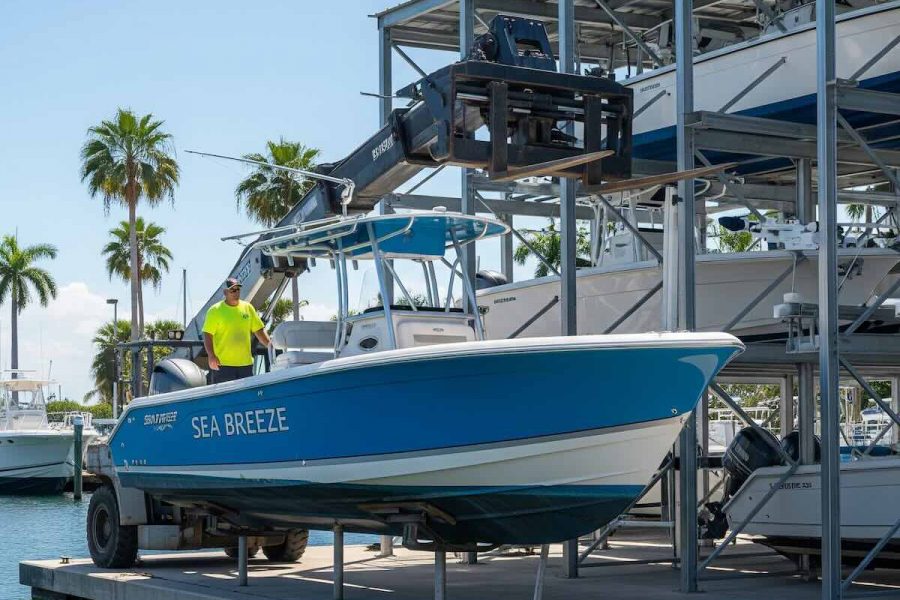
Dry stack storage is common at marinas and is convenient for smaller powerboats. The boat is stored on a rack and launched by marina staff when the owner wants to use it. This option reduces time in the water, limits bottom growth, and makes boating easier for frequent users.
Dry stack storage is not ideal for every boat. Size, weight, beam, tower height, and marina equipment limits matter. Access can also depend on marina hours and launch schedules. Owners should ask how early they need to request launch, how storms are handled, whether racks are hurricane-rated, and whether the marina requires a separate hurricane plan.
Wet Slip Storage
A wet slip is convenient because the boat stays in the water and is ready to use. It is often best for larger boats, frequent boaters, and owners who want marina amenities. The disadvantages are bottom growth, dock line wear, corrosion, storm exposure, and higher maintenance needs.
Wet storage requires strong dock lines, chafe protection, working bilge pumps, shore power awareness, regular inspections, and a clear storm plan. In hurricane-prone areas, wet storage should never be chosen only for convenience. The marina’s hurricane policy and the boat owner’s insurance requirements should be reviewed carefully.
Driveway or Home Storage
Home storage can save money, but it is not always allowed. HOA rules, city ordinances, driveway length, side-yard access, setback rules, and trailer visibility restrictions can limit where a boat may be parked. In Florida neighborhoods, boat storage rules can be strict.
If home storage is allowed, choose a high, well-drained area away from trees, power lines, and low spots that flood. Use a trailer lock, remove valuables, cover the boat properly, and check it after heavy rain. Do not assume the driveway is safe during hurricane season. A boat on a trailer can still be damaged by falling limbs, flying debris, flooding, or wind movement.
Portable Storage Containers
Portable storage containers are useful for moving household goods, boat gear, cushions, equipment, tools, and accessories, but they are not a standard solution for storing most boats. A boat usually needs vehicle storage, marina storage, dry stack, a garage, or a dedicated boat storage lot.
Portable containers may help during a move when the owner needs a place for fishing gear, life jackets, coolers, electronics, dock lines, anchors, and accessories while the boat itself is stored separately.
Boat Storage Options Compared
| Storage Type | Best For | Main Benefits | Main Risks | 2026 Buyer Tip |
|---|---|---|---|---|
| Indoor Storage | Long-term storage, high-value boats, moving transitions | Strong weather protection and better security | Higher cost, limited availability, size limits | Measure the boat with trailer, motor, tower, and accessories included. |
| Climate-Controlled Storage | Boats with electronics, upholstery, cushions, or sensitive gear | Reduces heat and humidity stress | May cost more and may not support every boat size | Ask whether humidity is controlled, not only temperature. |
| Outdoor Storage Lot | Short-term storage and budget-conscious owners | Lower cost and easier access | UV exposure, rain, pests, theft risk, storm exposure | Use a breathable cover and secure the trailer with a coupler lock and wheel lock. |
| Covered Outdoor Storage | Florida owners who need sun protection without indoor pricing | Reduces direct sun and rain exposure | Still exposed to humidity, wind, pests, and storm surge | Confirm the roof height, drainage, and hurricane policy. |
| Dry Stack Marina Storage | Frequent boaters with smaller powerboats | Convenient launch service and less water exposure | Size limits, marina hours, storm policy limitations | Ask if the rack system is rated for severe weather and how storms are handled. |
| Wet Slip | Larger boats and frequent use | Fast access to the water | Bottom growth, corrosion, dock damage, storm surge exposure | Review insurance requirements and create a written storm plan. |
| Home or Driveway Storage | Owners with space and legal permission | Low cost and easy access | HOA issues, theft risk, storm damage, flooding | Check HOA and local rules before bringing the boat home. |
Florida Boat Storage Considerations for 2026
Florida is one of the best states for boating, but it is also one of the hardest environments for storing a boat. Heat, humidity, salt air, UV exposure, afternoon storms, tropical systems, and local parking rules all matter.
Humidity and Mold
Humidity is one of the biggest storage problems in Florida. A boat that is stored damp can develop mildew inside lockers, under cushions, behind panels, and inside canvas. Electronics and wiring can also suffer from condensation and corrosion.
Before storage, the boat should be cleaned, dried, opened for airflow where appropriate, and cleared of wet towels, life jackets, food, bait, trash, and damp gear. Cushions should be lifted or removed. Compartments should be dry. A breathable cover is usually better than a cheap tarp that traps moisture.
Sun and UV Damage
Florida sun can fade gelcoat, crack vinyl, dry out rubber, weaken canvas, and age dashboards. A covered space or indoor unit can prevent much of this damage. If the boat is outdoors, the cover should fit properly and be made for marine use. A loose cover can flap in the wind, rub the finish, collect water, and tear.
Salt Air and Corrosion
Salt can damage metal, electrical connections, trailer parts, and engines. Boats used in saltwater should be rinsed thoroughly before storage. The engine should be flushed, the trailer should be rinsed, and metal parts should be checked for corrosion. This is especially important before long-term storage.
Hurricane Season
The Atlantic hurricane season runs from June 1 through November 30. Even if a seasonal outlook is less active than usual, one storm can still cause serious damage. Florida boat owners should not wait until a storm is already named to decide where the boat will go.
A hurricane storage plan should answer these questions before the season begins:
- Will the boat stay in the water, go to dry stack, move indoors, or be trailered inland?
- Is the storage location outside a storm surge or flood-prone area?
- Does the marina or storage facility have a written hurricane policy?
- Does the insurance policy require a named storm plan?
- Who is responsible for moving, securing, or hauling the boat if the owner is out of town?
- Are there extra fees for hurricane haul-out, storm storage, or emergency movement?
For many trailered boats, the safest option is often a secure indoor location or high-ground storage away from storm surge, trees, loose debris, and flood-prone streets. For boats stored ashore, reducing windage matters. Canvas, loose gear, cushions, antennas, sails, and removable equipment should be taken off or secured before severe weather.
Preparing Your Boat for Storage
Good storage starts before the boat reaches the facility. The storage space protects the boat from the outside. Preparation protects the boat from damage that begins inside.
Clean the Boat Thoroughly
Wash the hull, deck, cockpit, compartments, seats, canvas, and trailer. Remove salt, algae, dirt, fish residue, food, bait, leaves, and standing water. Clean the bilge and make sure drains are clear. A dirty boat can attract pests, stain surfaces, and create mildew during storage.
After washing, let the boat dry completely. This step is especially important in humid climates. Storing a damp boat under a tight cover is one of the fastest ways to create mildew.
Protect the Finish
Waxing the hull before storage can help protect the finish from UV exposure, salt residue, dirt, and oxidation. Vinyl seats and rubber seals should be cleaned and treated with marine-safe products. Canvas should be dry before it is folded, covered, or stored.
Prepare the Fuel System
Fuel should not be ignored during storage. Stale fuel can cause engine problems, especially when a boat sits for months. Many owners use fuel stabilizer and run the engine long enough to circulate treated fuel through the system. The right approach depends on the engine type, fuel type, storage length, and manufacturer guidance.
For long-term storage, follow the owner’s manual or have a marine technician prepare the engine. Guessing can become expensive.
Flush and Protect the Engine
Saltwater engines should be flushed before storage. Outboards, stern drives, and inboards each have specific maintenance needs. The engine should be inspected for leaks, corrosion, worn belts, damaged hoses, and overdue service.
In colder climates, winterization is essential. In Florida, freeze damage is less common, but engine and water system preparation still matters if the boat will sit unused or if it may be moved to a colder region during a relocation.
Manage Batteries
Batteries should be fully charged, disconnected if appropriate, and stored or maintained based on manufacturer guidance. A dead battery can shorten battery life and create problems when the boat is ready to use again.
For longer storage, a smart maintainer may be useful if the facility allows it. If power is not available, schedule periodic battery checks.
Remove Valuables and Sensitive Gear
Electronics, fishing equipment, personal documents, registration papers, tools, expensive safety gear, removable GPS units, and personal items should not be left in the boat unless necessary. If gear must remain onboard, it should be inventoried and secured.
Take photos before storage. Photograph the hull, motor, trailer, electronics, interior, registration numbers, serial numbers, and the condition of the boat. These photos can help with insurance claims, facility disputes, and theft reports.
Cover the Boat Correctly
The cover should match the storage environment. Indoor storage may only require a dust cover. Outdoor storage needs a marine-grade cover that resists UV, rain, and wind while allowing ventilation. Breathability matters because trapped moisture can cause mildew.
Avoid loose tarps that sag, flap, or trap water. If shrink wrap is used, vents should be installed to reduce moisture buildup. The boat should not be wrapped in a way that prevents necessary airflow.
Security and Accessibility for Boat Storage
Security should be part of every boat storage decision. The facility should make theft difficult, not merely provide an open parking space.
Security Features to Look For
A stronger boat storage facility usually includes:
- Gated access with controlled entry
- Security cameras in storage areas
- Bright lighting at night
- On-site staff or regular patrols
- Individual unit locks or secure assigned spaces
- Fenced outdoor lots
- Clear access logs or keypad entry records
- Rules against unauthorized work, loitering, or overnight activity
For trailered boats, the owner should add trailer security. A coupler lock, wheel lock, hitch lock, and locked storage compartments can reduce theft risk. Remove portable electronics and expensive fishing gear before storage.
Accessibility Questions
Access matters if the owner needs to check the bilge, charge a battery, retrieve gear, prepare for a trip, or move the boat before a storm. Before choosing a facility, ask:
- What are the access hours?
- Can the boat be picked up during evenings, weekends, or holidays?
- Is advance notice required?
- Can service providers access the boat?
- Are maintenance tasks allowed onsite?
- Is electricity available?
- Can the facility move the boat in an emergency?
Some facilities do not allow repairs, fuel work, battery charging, washing, or engine running inside storage areas. These rules should be understood before the boat is moved in.
Insurance, Documents, and Storage Agreements
Boat storage should be coordinated with insurance. Some policies have requirements for named storms, marina storage, haul-out plans, geographic limits, theft prevention, or lay-up periods. A boat owner should review the policy before choosing a storage location, not after a loss.
Important documents should include:
- Boat registration
- Trailer registration
- Insurance policy and claim contact information
- Storage contract
- Photos of the boat before storage
- Serial numbers for engines, electronics, and trailer
- Maintenance records
- Marina or facility hurricane policy
Read the storage agreement carefully. Pay attention to liability limits, storm policies, access rules, late fees, lien rights, insurance requirements, prohibited items, and whether the facility is responsible for moving or securing the boat during severe weather.
Common Boat Storage Mistakes
Many storage problems are preventable. The most common mistakes include:
- Storing the boat while it is still wet inside
- Using a cheap tarp that traps moisture or tears in wind
- Leaving food, bait, towels, or damp life jackets onboard
- Forgetting to treat fuel before long-term storage
- Leaving batteries connected until they drain
- Ignoring the trailer tires, bearings, lights, and locks
- Choosing outdoor storage without checking drainage
- Assuming the marina will handle hurricane preparation automatically
- Leaving expensive electronics or fishing gear in plain sight
- Failing to verify HOA, city, or insurance rules
The best storage plan is simple, written, and repeatable. Clean the boat, dry the boat, secure the boat, document the condition, check the insurance, and know what happens if severe weather approaches.
Boat Storage Checklist
- Measure the full boat, trailer, motor, tower, and accessories.
- Confirm HOA, city, marina, and facility storage rules.
- Choose indoor, covered, outdoor, dry stack, wet slip, or home storage based on risk and budget.
- Wash the boat, trailer, motor, and compartments.
- Dry the boat completely before covering it.
- Remove food, trash, bait, damp gear, valuables, and portable electronics.
- Treat or manage fuel based on the engine and storage length.
- Flush the engine after saltwater use.
- Disconnect, charge, or maintain batteries properly.
- Check bilge pumps, drains, plugs, and water systems.
- Use a fitted breathable cover.
- Lock the trailer, hitch, compartments, and storage unit.
- Photograph the boat before storage.
- Review insurance requirements and the facility contract.
- Create a hurricane plan before June 1 if the boat is in Florida or another coastal area.
Storage Help During a Move
Boat storage is often part of a larger moving plan. If you are relocating to Florida, downsizing, waiting for a dock, or moving into a home with HOA restrictions, temporary storage can give you time to make the right long-term decision.
If your boat has electronics, cushions, documents, or sensitive gear that should not sit in heat and humidity, our guide to climate-controlled storage units explains when climate control is worth considering.
If you are planning a larger relocation, our long-distance moving services page explains how professional planning can help coordinate the timing of household goods, storage, and specialty items. You can also use our free quote page to get a clearer estimate for your move.
Frequently Asked Questions About Boat Storage
What size storage unit fits a boat?
A 10×30 unit can fit many boats under 30 feet, but the trailer tongue, motor, swim platform, tower, windshield, and accessories can change the required size. Some boats need a 10×40 unit or a specialty vehicle storage space. Always measure the full stored length, width, and height before reserving a unit.
Is indoor boat storage worth it?
Indoor storage is often worth it for long-term storage, high-value boats, boats with electronics, and boats stored in hot, humid, or storm-prone areas. It costs more than outdoor storage, but it can reduce UV damage, rain exposure, theft risk, pest issues, and weather-related wear.
Is climate-controlled storage necessary for a boat?
Climate control is not necessary for every boat, but it can help protect electronics, cushions, upholstery, wood trim, documents, and sensitive gear from heat and humidity. In Florida, climate control is especially useful when the boat or boat gear will sit for months.
Can I store a boat in my driveway in Florida?
Sometimes, but not always. Many Florida neighborhoods, HOAs, cities, and counties restrict boat parking. Rules may cover visibility, driveway length, side-yard storage, trailer parking, registration, and how long a boat can remain outside. Check local and HOA rules before bringing the boat home.
How do I protect a boat from humidity in storage?
Clean and dry the boat before storage, remove damp gear, open compartments where safe, use breathable covers, lift cushions, avoid trapping moisture under plastic tarps, and consider climate-controlled storage for sensitive interiors and electronics.
How should I store a boat during hurricane season?
Create a hurricane plan before the season begins. Decide whether the boat will be moved indoors, hauled out, stored on high ground, placed in dry stack, or secured in a marina. Review insurance requirements, storm surge risk, facility policies, and who is responsible for moving the boat if you are not available.
What should not be stored with a boat?
Do not store flammable liquids, food, bait, damp towels, perishables, unsecured valuables, or prohibited hazardous materials with the boat. Many storage facilities also restrict fuel, repairs, battery charging, and maintenance inside units.
How do I prevent boat theft in storage?
Choose a secure facility with gated access, cameras, lighting, and staff presence. Use trailer locks, coupler locks, wheel locks, compartment locks, and remove portable electronics and expensive gear. Keep photos, serial numbers, registration, and insurance documents in a safe place.
Should I remove the battery before boat storage?
For long-term storage, batteries should be fully charged and disconnected or maintained according to the battery and boat manufacturer’s guidance. A smart maintainer may help if the facility allows power access. A neglected battery can lose charge and fail before the next boating season.
Should I cover a boat in indoor storage?
Yes, a light breathable dust cover is still useful indoors. It protects the boat from dust while allowing airflow. Outdoor storage requires a stronger marine-grade cover designed for rain, UV exposure, wind, and ventilation.
Final Thoughts on Boat Storage in 2026
Boat storage is a protection decision, not just a parking decision. The right choice depends on the boat, the climate, the owner’s access needs, the insurance policy, and the level of risk the owner is willing to accept.
For Florida boat owners, the best storage plan accounts for heat, humidity, salt air, theft, HOA rules, and hurricane season before the boat is parked. Indoor or covered storage usually provides stronger protection, but even the best facility cannot replace proper preparation. Clean it, dry it, secure it, document it, and check the storage agreement before leaving the boat for the season.
References
- BoatUS: Winterization
- BoatUS: Guide to Preparing Boats and Marinas for Hurricanes
- NOAA: 2026 Atlantic Hurricane Season Outlook
- NOAA: Hurricane Preparedness
- National Insurance Crime Bureau: Watercraft Thefts Decrease in the U.S. for Second Year
- National Insurance Crime Bureau: Motorcycle and Boat Theft Prevention
- Extra Space Storage: 10×30 Storage Unit Size Guide
- PODS: Storage Solutions
- Insurance Information Institute: Theft Facts and Statistics
- Kiplinger: Things You Should Not Keep in a Storage Unit