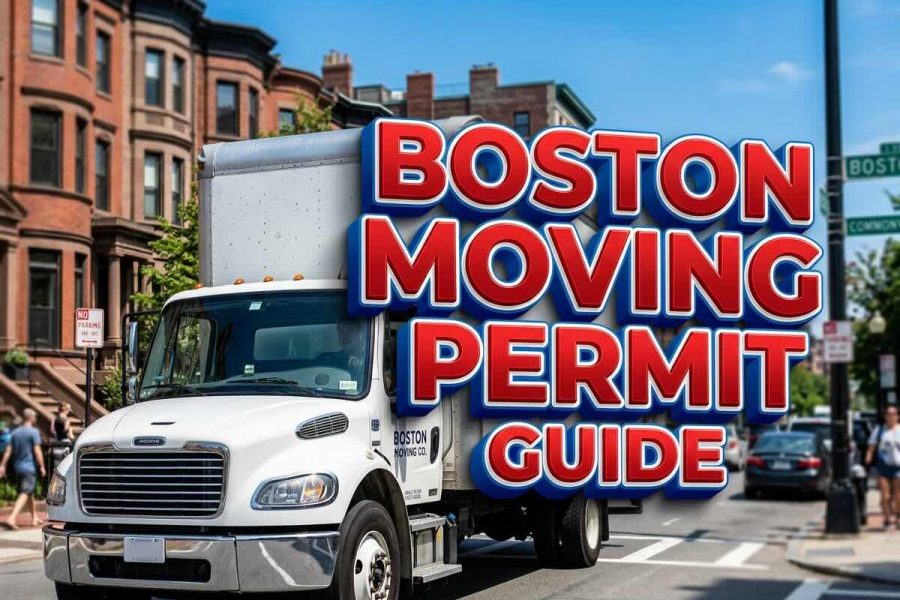

Parking can be one of the hardest parts of moving in Boston, especially when the truck needs to stop outside a brownstone or apartment building on a busy residential street. The City of Boston lets you reserve curb space for a moving truck with a temporary moving permit. The reservation gives the crew a designated place to load or unload and lets the city act if another vehicle blocks the permitted spaces.
Boston does not generally require a moving-truck permit for every move. You can move without reserving a space when the truck has somewhere it can park legally. For a street with limited parking, however, leaving the curb space to chance could put the truck several buildings away and add considerable carrying time. The city’s permit process has separate rules for online applications, in-person requests and moving containers, so the right starting point is the parking arrangement at your actual address.
Key Points
- Boston moving permits are optional. They reserve legal curb space for the moving truck; ordinary parking restrictions still apply if you move without one.
- A standard one-day permit costs $69 for two non-metered spaces or $109 for two metered spaces, before any applicable card-processing fee.
- Apply online 15 days to eight weeks ahead. In-person applications can be made when the move is at least three days away, and permits may cover up to five consecutive days.
- Post the city’s signs at least 48 hours ahead. Boston also supplies notices that must be placed on nearby cars before the move.
- Check container and street rules separately. PODS have a different application arrangement, and city moving permits apply to city-owned streets.
Do You Need a Moving Permit in Boston?
The city describes its moving-truck permit as a way to reserve parking for moving day. You can use an available legal parking space without applying for that reservation, although a moving truck remains subject to the signs, meters, street-cleaning rules and other restrictions at the address.
A reservation is worth considering when there are few legal spaces near the building or the carrier needs room beside the door to load furniture. On a tight street in Beacon Hill or the North End, an extra block of carrying can mean repeated trips with mattresses, dressers and boxes. Where a building has a private loading dock or a suitable off-street driveway, ask its manager about access before paying for city curb space you may not use.
The permit covers a designated space on a city-owned street. The parking area must already be a place where parking is legal. A moving reservation cannot turn a fire lane, an accessible parking space, a construction zone or a no-stopping area into a loading zone. The city also has separate instructions for roads owned by the Massachusetts Department of Conservation and Recreation (DCR).
Boston’s official moving-truck parking page explains the reservation and application process. Check that page before applying, since individual streets and dates may have temporary restrictions.
How Much Does a Boston Moving Permit Cost in 2026?
For the standard one-day reservation, Boston lists $69 for two non-metered spaces, including two official no-parking signs. If both spaces have parking meters, the city adds $40, bringing the city charge to $109. The usual reservation covers two spaces from 7 a.m. to 5 p.m.
| One-day moving-truck reservation | City fee | What’s included |
|---|---|---|
| Two non-metered spaces | $69 | One day and two official signs |
| Two metered spaces | $109 | Same reservation, with $40 in meter charges |
For a metered reservation, the city breaks the charge into a $50 base fee, approximately $11 for use of the space, $8 for two signs and $40 for two meters. If you pay by credit card or pinless debit card, Boston adds a nonrefundable 2.5% processing fee, with a $1 minimum. Cash is accepted for in-person applications. These are the city’s published charges for the stated example, so confirm the total for your own request before paying.
How to Apply for a Boston Moving Permit
First confirm where the truck will stop. Ask the carrier whether it expects to use a box truck or a larger vehicle, then check the street outside the building for meters, loading restrictions and enough space to unload. A permit reservation does not authorize a truck to drive onto a road with a posted height or weight restriction.
Applying Online
Boston accepts online applications for a one-day moving-truck reservation when the move is at least 15 days and no more than eight weeks away. Use the application linked from the City of Boston’s moving permit page. Check the location in the city’s street-occupancy permit lookup before submitting the request, especially if another reservation or road restriction may affect the spaces.
You will need the move date, the address for the reservation and details about whether the parking spaces are metered. Pay the fee after reviewing the selected location and permit terms. Once the application is approved, Boston mails the permit, signs and neighborhood notices to the mailing address supplied with the application. For people moving from another state, that address needs to be somewhere they can actually receive mail before moving day.
The city’s moving-truck permit FAQ says physical permits normally arrive within seven to ten business days after approval, although mail times vary. If the documents haven’t arrived within two weeks of approval, contact the Parking Clerk’s Office at 617-635-2560 about a replacement; the FAQ specifies that replacement requests in person must be made no later than three days before the move.
Applying in Person
In-person applications are available when the move is at least three days away and no more than eight weeks away. The City of Boston permits reservations of up to five consecutive days through this process. For a longer occupation, the city requires a 48-hour break when the public can use the space again before another period of up to five days can be issued.
Visit the Office of the Parking Clerk at Boston City Hall, 1 City Hall Square, Room 224, Windows 4–5. The city’s FAQ lists office hours as Monday through Friday, 8:30 a.m. to 4:30 p.m. Bring the move date, the exact address where the truck will park, and information about whether the spaces are metered. Check the city’s page for holiday or office changes before traveling there.
Applying close to the minimum deadline leaves little time to place signs and notify neighbors, so arrange the reservation earlier whenever the moving date is known.
When and How to Post Boston Moving Permit Signs
The city requires its official no-parking signs to be posted at least 48 hours before the permit begins. A standard reservation begins at 7 a.m., which means the signs need to be in place by 7 a.m. two days earlier. Boston recommends posting them three days ahead when possible. Someone must be able to reach the property to do this, even if you’re still living in another state.
Boston also provides a notice for nearby parked cars. Make copies and place the notices on vehicles within a half-block of the reserved spaces each day for at least two days before the move. For metered spaces, the city says one day of vehicle notices is sufficient. Remove the signs and notices when the reservation ends and clear away any packing debris left at the curb.
If you’re moving into an apartment building, ask a local contact or building manager whether they can help you post the signs. Do not assume the assigned carrier will be in Boston several days before delivery. Confirm in advance who will physically post the materials and check that they’re still visible when the truck arrives.
What if Another Car Is in the Reserved Space?
A permit creates an enforceable reservation, although someone may still leave a car in the space when the crew arrives. Boston directs permit holders to call the Boston Police at 617-343-4911, explain that the call is not an emergency and provide the vehicle’s license plate number. Police may arrange towing if they cannot reach the owner.
Call as soon as you discover the problem. The crew may need to wait or use another legal unloading location while enforcement is arranged, so the permit alone cannot guarantee that the pavement will be empty at the exact moment of arrival.
Moving Containers, PODS and Multi-Day Street Parking
A portable storage container occupies the curb for longer than a truck that loads or unloads and leaves. Boston requires in-person applications for moving containers, with authorization from the container’s owner and the city’s bonding requirements satisfied. The standard online moving-truck application is intended for moving trucks.
The city’s current FAQ distinguishes PODS containers from other moving containers. For PODS, Boston instructs applicants to use Permit Puller or call 617-424-7275. Other eligible containers use the city’s in-person process. Confirm the container company, dimensions and planned days on the street before seeking approval; a private driveway or building’s loading area may have a separate agreement with its owner or manager.
If the truck itself needs the curb for more than one day, ask the Parking Clerk’s Office about the appropriate in-person reservation. The city’s stated maximum is five consecutive days, followed by the required break for any further reservation period.
Parking and Truck Access in Boston Neighborhoods
Permits are issued for a specific street location, so the practical concerns differ even within one neighborhood. A moving truck unloading at a Back Bay building with a dedicated loading area has a different approach from one stopping on a narrow Beacon Hill street. Confirm the particular address, posted signs and curb arrangement before selecting the reservation spaces.
Allston, Brighton and the September Move-In Rush
Boston’s annual turnover of leases in late August and early September places extra pressure on curb space. The city notes that some common moving locations are set aside for truck drop-offs from August 31 through September 2, without requiring individual moving permits. The existence of those areas does not mean every street has unrestricted moving access during that period. Check your address against the city’s current street notices before submitting an application or telling a carrier where it can park.
Beacon Hill, the North End and Narrow Streets
Some streets have little room for a large vehicle to turn or unload, even after parking has been reserved. Ask the carrier to review the approach as well as the unloading spot; in some situations a smaller delivery vehicle or a longer carry may need to be arranged. The North End also has seasonal events and road closures. Boston’s moving-truck FAQ asks residents to contact the city before applying for certain North End summer dates affected by feasts.
Back Bay, Fenway and Buildings with Loading Areas
Parking meters can change the permit price, while apartment or condominium managers may require a separate loading-dock or service-elevator booking. Check both the street reservation and the building’s moving window so the truck does not arrive before staff can admit the crew. For Fenway-area addresses, review local event and traffic restrictions on the proposed date rather than assuming an ordinary weekday parking arrangement will be available.
Storrow Drive and Other Truck Restrictions
Boston’s moving guide warns that moving trucks cannot use Storrow Drive because of its low clearance, which the city lists as 10 feet. Give the carrier the destination details and allow its driver to choose a truck-safe route. A curbside permit does not authorize a prohibited road or remove an overhead clearance limit.
Moving Permits in Cambridge, Somerville and Brookline
Boston’s moving permit applies to city-owned streets in Boston. Cambridge, Somerville and Brookline administer their own street-reservation systems, so check the municipality for each address. A move across the city line can require separate arrangements for pickup and delivery if curb space must be reserved at both ends.
Cambridge
Cambridge offers a Moving Van Permit to reserve curb space for a truck. The city states that it can cover up to two consecutive days. It also has a separate moving-container or crate permit. Check the application for the current fee and posting deadline for the address rather than relying on Boston’s prices.
Somerville
Somerville’s Parking Department lists a Moving Van or Container reservation costing $50 per day for up to three days. Use its application and sign-posting instructions for a Somerville address, even if the carrier is based in Boston.
Brookline
Brookline issues moving-day no-parking signs through its Transportation Division. The town lists $5 per sign and additional charges for metered spaces. For PODS and other containers placed on the public street, Brookline directs applicants to a separate occupancy-permit process. Its sign-posting rules differ from Boston’s, so follow the town’s current instructions.
Who Handles the Permit When You Hire Movers?
Ask who will submit the city application and who will put up the signs. A resident can handle the request, and some moving companies or permit services may offer help, but the responsibility should be agreed upon before booking. For an interstate move, the person applying also needs to make sure that someone local can receive the signs and post them before the delivery date.
We arrange interstate moves through authorized carriers. When preparing your estimate, we need to know whether a truck can stop near the entrance, how far furniture must be carried and whether there are building restrictions or a reserved unloading window. These details help the assigned carrier plan the delivery and assess any additional work. We do not automatically obtain municipal permits, post signs or guarantee that the city will approve a requested space.
With the parking plan and building rules ready, you can request a free moving quote for your actual inventory and addresses. Our Boston moving services page explains the interstate moving arrangements we can help coordinate.
Boston Moving Permit FAQs
Can I reserve a parking spot for a rental car or minivan?
Boston’s moving-truck permit is for moving trucks, including rental moving trucks. The city’s FAQ excludes ordinary personal vehicles and minivans from this permit program.
What if the permit covers a street-cleaning day?
Boston’s FAQ says one person must remain with the truck during street cleaning. Moving permits do not override snow emergencies, construction zones, accessible parking spaces or posted no-stopping and tow zones. Check the location before arranging the truck’s arrival.
Can I reserve space on a DCR-owned road?
The city’s moving-truck permits apply to city-owned streets. For a road maintained by the Massachusetts Department of Conservation and Recreation, Boston advises contacting DCR about a temporary road-access permit at 857-393-5412 or [email protected].