The case for midsize cities has grown significantly stronger over the past three years as remote work normalized the idea of living somewhere affordable without sacrificing career opportunity, and as the housing markets of Austin, Denver, Nashville, and other once-affordable growth cities pushed median prices past $400,000 and in some cases past $500,000. The cities on this list represent the next tier down in size and profile, places that are attracting jobs, population, and investment right now without yet carrying the price premium of the cities that came before them.
This guide covers the best midsize cities for moving in 2026, including what makes each one worth considering, what housing actually costs, what the job market looks like, and the practical moving cost information you need to budget your relocation accurately from wherever you are starting.
Key Points: Best Midsize Cities for Moving in 2026
- Top picks overall: Raleigh, NC, Huntsville, AL, Greenville, SC, Boise, ID, Colorado Springs, CO, Spokane, WA, and Des Moines, IA lead this year’s list based on job growth, housing affordability, quality of life, and inbound migration data.
- Housing affordability advantage: Median home prices in the top midsize cities on this list range from $230,000 in Des Moines to $390,000 in Boise, compared to $500,000+ in Seattle, Denver, and Austin.
- Job market strength: Huntsville, Raleigh, and Greenville are posting some of the fastest private-sector job growth rates in the country, driven by defense, technology, and advanced manufacturing respectively.
- Moving costs to these cities: Long-distance moves to midsize Sun Belt and Mountain West cities from major metros typically run $3,500–$9,000 for a two- to three-bedroom household depending on origin distance and shipment weight.
- Cost of living edge: Each city on this list carries a cost of living index below 110 (national average = 100), with several below 95, meaning everyday expenses run meaningfully lower than coastal metros.
- Remote worker appeal: All seven cities have invested in broadband infrastructure, co-working space density, and quality-of-life amenities specifically targeting remote and hybrid workers relocating from higher-cost markets.
How These Cities Were Selected
The cities on this list were evaluated across five categories: job market growth and sector diversity, housing affordability relative to median income, cost of living for everyday expenses, quality of life indicators including walkability, outdoor access, and cultural infrastructure, and inbound migration data showing where people are actually choosing to move. Population size was anchored to the 100,000 to 750,000 range for the metro area, which captures cities large enough to have real economic infrastructure, healthcare systems, universities, and airport access while small enough to avoid the congestion costs, housing premiums, and administrative complexity of major metros.
Cities that have already crossed into mainstream relocation awareness, like Boise a few years ago or Nashville more recently, were kept on the list only when current data shows they still offer meaningful affordability relative to the metros people are moving from. The goal is to identify cities where the value proposition is real and current in 2026, not where it was strong three years ago.
1. Raleigh, NC

Raleigh has been on every best-places-to-move list for nearly a decade, and the underlying fundamentals that put it there remain intact in 2026. The Research Triangle anchors one of the most diversified technology and life sciences job markets in the South, with major employers including Apple, Google, Cisco, Red Hat, and a dense network of biotech and pharmaceutical operations across the Research Triangle Park. North Carolina State University and the broader Triangle’s three-university ecosystem produce a continuous pipeline of talent that keeps employers anchored to the region.Housing remains more accessible than comparable tech-heavy metros. The Raleigh metro median home price sits around $380,000 in 2026, which is significantly below Austin, Denver, or Seattle for a market with comparable job concentration and quality of life. Suburban areas like Cary, Apex, and Wake Forest offer larger homes in the $300,000–$420,000 range with strong school ratings and short commutes. The cost of living index sits around 103, modestly above the national average but well below East Coast and West Coast peers.
The city’s infrastructure has kept reasonable pace with its growth, with highway and transit improvements underway and a downtown that has matured into a genuinely walkable core with a strong restaurant, arts, and nightlife scene.
Raleigh at a Glance:
- Metro population: ~1.4 million
- Median home price: ~$380,000
- Cost of living index: ~103
- Top industries: Technology, life sciences, finance, education
- Best for: Tech professionals, families, remote workers from Northeast metros
2. Huntsville, AL

Huntsville is the most surprising city on this list for anyone who has not been paying attention to Alabama’s economic trajectory, and it is arguably the strongest value proposition in the entire country for households prioritizing job security, low housing costs, and a high quality of life. The city hosts NASA’s Marshall Space Flight Center, Redstone Arsenal (one of the largest military installations in the US), and a rapidly expanding defense and aerospace private sector that includes Boeing, Lockheed Martin, Northrop Grumman, and a growing cluster of technology companies attracted by the concentration of engineering talent.
Job growth in Huntsville has been among the fastest in the nation for several consecutive years, and the housing market remains dramatically below national medians. The median home price sits around $290,000 in 2026, and the cost of living index runs around 88, meaning everyday expenses including groceries, healthcare, utilities, and transportation run about 12% below the national average. Huntsville’s downtown has undergone significant revitalization and now offers a walkable core with locally owned restaurants, a craft brewery scene, and cultural venues anchored by the US Space and Rocket Center.
The practical limitation is that Huntsville’s job market is heavily concentrated in defense, aerospace, and government contracting, which makes it an exceptional fit for engineers, program managers, and IT professionals with security clearances, but a less obvious choice for households without those connections.
Huntsville at a Glance:
- Metro population: ~520,000
- Median home price: ~$290,000
- Cost of living index: ~88
- Top industries: Defense, aerospace, government contracting, technology
- Best for: Engineers, defense industry professionals, families from high-cost metros seeking maximum housing value
3. Greenville, SC
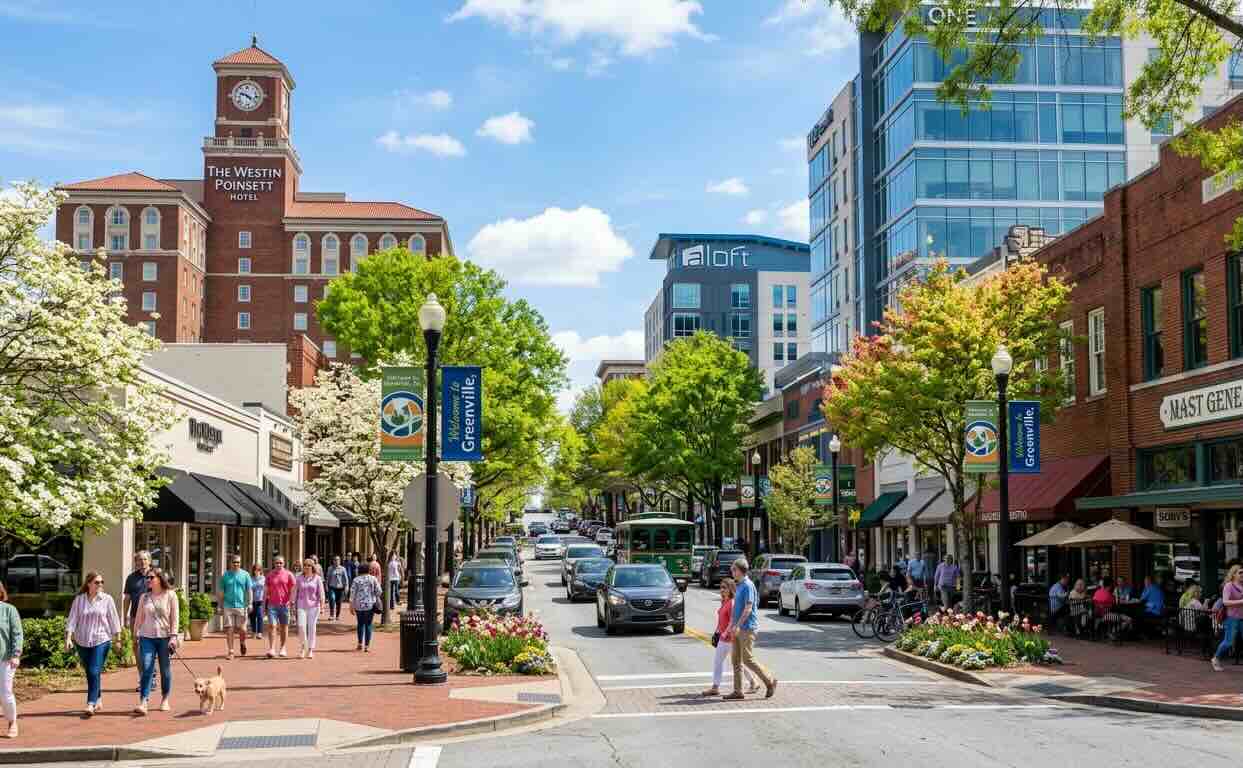
Greenville represents one of the most compelling midsize city transformations in the Southeast over the past fifteen years, shifting from a post-industrial textile economy to a diversified advanced manufacturing hub with a downtown that has become a genuine regional destination. The Upstate South Carolina corridor where Greenville sits hosts BMW’s only North American manufacturing plant, a major Michelin North America headquarters, and a dense network of automotive and aerospace supply chain operations that have made the region one of the most productive advanced manufacturing corridors in the country.
The median home price sits around $285,000 in 2026 for the Greenville metro, with strong suburban options in Simpsonville, Mauldin, and Greer in the $240,000–$340,000 range. The cost of living index runs around 93, meaning most everyday expenses come in below the national average. Falls Park on the Reedy and the Swamp Rabbit Trail have anchored downtown redevelopment that has produced a walkable, restaurant-dense city core that draws consistent recognition in quality-of-life rankings.
Greenville’s proximity to both Charlotte (1.5 hours) and Atlanta (2 hours) via I-85 also gives residents reasonable access to major airport hubs and metropolitan amenities without paying urban housing premiums.
Greenville at a Glance:
- Metro population: ~960,000
- Median home price: ~$285,000
- Cost of living index: ~93
- Top industries: Advanced manufacturing, automotive, aerospace supply chain, healthcare
- Best for: Manufacturing professionals, remote workers, families moving from Charlotte or Atlanta
4. Boise, ID

Boise has been at the center of Mountain West migration for several years, and while housing prices have risen significantly from their pre-2020 levels, the city still offers meaningful value compared to Seattle, Portland, and the California metros that drive most of its inbound migration. The median home price sits around $390,000 in 2026, which is noticeably higher than other cities on this list but remains $150,000–$250,000 below Seattle and the Bay Area for comparable housing stock. The cost of living index runs around 104, near the national average.
Boise’s job market has diversified beyond its agricultural and government roots into technology, with Micron Technology, HP Inc., and a growing remote-worker population anchoring a tech economy that benefits from Idaho’s zero-capital-gains tax and relatively low corporate tax environment. The city’s outdoor access is unmatched among midsize metros for its size: skiing at Bogus Basin is 16 miles from downtown, whitewater rafting and fly fishing on the Boise River are accessible within the city limits, and Sun Valley is a two-hour drive.
The primary trade-off in Boise is that housing prices have risen faster than wages over the past four years, compressing the affordability advantage that made it such a compelling destination earlier in the decade. For households moving from Portland or Seattle, the value is still real. For households moving from the Midwest or Southeast, Boise requires careful budget modeling.
Boise at a Glance:
- Metro population: ~800,000
- Median home price: ~$390,000
- Cost of living index: ~104
- Top industries: Technology, semiconductors, agriculture, remote work economy
- Best for: Outdoor enthusiasts, tech workers from Pacific Northwest, families seeking lower taxes
5. Colorado Springs, CO
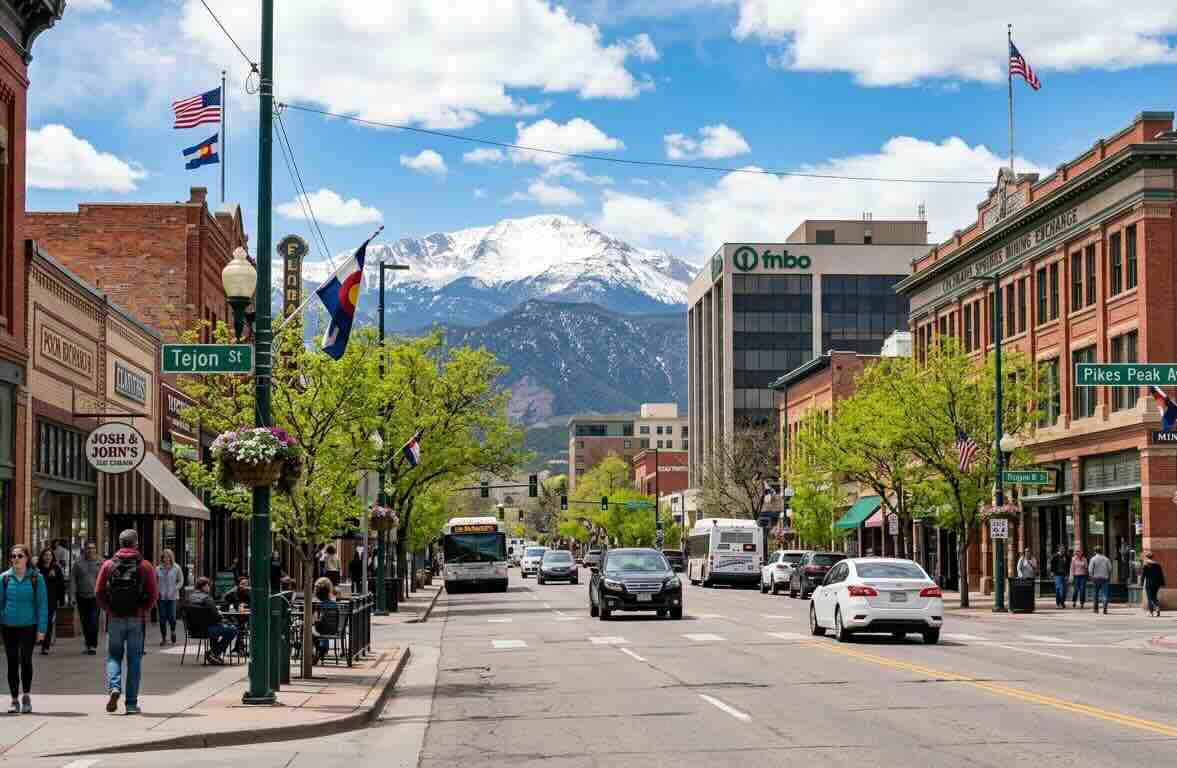
Colorado Springs offers Denver-adjacent quality of life at a meaningful price discount, with the Pikes Peak region’s outdoor access, military-anchored economy, and growing technology sector making it one of the strongest midsize city options in the Mountain West for 2026. The median home price sits around $370,000, approximately $60,000–$80,000 below the Denver metro median for comparable housing, and the cost of living index runs around 101.
The city’s economy is anchored by five major military installations including Fort Carson, Peterson Space Force Base, Schriever Space Force Base, the US Air Force Academy, and NORAD/NORTHCOM, which together make Colorado Springs one of the most defense-employment-dense metros in the country. That foundation supports a strong secondary ecosystem of defense contractors, cybersecurity firms, and aerospace companies that has diversified the job market well beyond its military base. Colorado Springs has also attracted a significant remote worker population from Denver over the past several years as households sought lower housing costs while maintaining access to Denver employers via the I-25 corridor.
Colorado Springs at a Glance:
- Metro population: ~760,000
- Median home price: ~$370,000
- Cost of living index: ~101
- Top industries: Defense, aerospace, cybersecurity, healthcare
- Best for: Military families, defense contractors, Denver remote workers seeking lower housing costs
If you are considering moving to Colorado, we’ve selected the best places to live in Colorado in our article.
6. Spokane, WA
Spokane is the most underrated city on this list among households moving from the Pacific Northwest, offering Washington State’s zero-income-tax environment, genuine four-season outdoor access, and a cost of housing that sits dramatically below Seattle and even well below Portland. The median home price sits around $310,000 in 2026, and the cost of living index runs around 96. Spokane residents pay no state income tax, which on a $90,000 household income represents $5,000–$8,000 in annual take-home pay compared to comparable earnings in Oregon or California.
Washington State University in nearby Pullman and Gonzaga University within the city provide an ongoing talent pipeline and anchor the region’s healthcare and education sectors. Providence Health and MultiCare are among the largest employers in the region alongside a growing logistics and distribution sector supported by Spokane’s position as a regional hub for Eastern Washington, Northern Idaho, and Western Montana. The city’s Centennial Trail, surrounding Channeled Scablands terrain, and proximity to ski resorts including Mount Spokane and 49 Degrees North make it a strong choice for households that prioritize outdoor recreation.
Spokane at a Glance:
- Metro population: ~620,000
- Median home price: ~$310,000
- Cost of living index: ~96
- Top industries: Healthcare, education, logistics, defense (Fairchild AFB)
- Best for: Pacific Northwest households seeking affordability, remote workers, outdoor enthusiasts
7. Des Moines, IA
Des Moines is the strongest pure-affordability story on this list, offering the lowest housing costs of any city here alongside a mature financial services job market, low unemployment, and a quality of life that consistently outperforms its national profile. The median home price sits around $230,000 in 2026, and the cost of living index runs around 90, meaning a household that can remote-work from Des Moines or secure employment in the city’s financial sector effectively stretches every dollar roughly 10% further than the national average.
Principal Financial Group, Wells Fargo Home Mortgage, Nationwide, EMC Insurance, and Meredith Corporation anchor a financial and media sector that is disproportionately large for the city’s size, and Iowa’s agricultural economy supports a resilient food and supply chain industry base. Des Moines has invested significantly in its downtown over the past decade, with the East Village neighborhood, the Principal Park riverfront, and the Des Moines Art Center establishing a cultural core that surprises most visitors expecting a purely utilitarian midwestern capital.
The honest limitation for Des Moines is that its appeal is strongest for households with either local employment connections or genuine remote-work flexibility, since the city’s economic base is relatively concentrated and its professional network, while strong within Iowa, lacks the density of larger metros for cross-industry career transitions.
Des Moines at a Glance:
- Metro population: ~700,000
- Median home price: ~$230,000
- Cost of living index: ~90
- Top industries: Financial services, insurance, agriculture, healthcare
- Best for: Finance professionals, remote workers, families seeking maximum housing value
Side-by-Side: 2026 Best Midsize Cities for Moving
| City | Median Home Price | COL Index | Top Industry | Best For |
|---|---|---|---|---|
| Raleigh, NC | ~$380,000 | ~103 | Tech / Life Sciences | Tech workers, Northeast families |
| Huntsville, AL | ~$290,000 | ~88 | Defense / Aerospace | Engineers, defense professionals |
| Greenville, SC | ~$285,000 | ~93 | Advanced Manufacturing | Manufacturing, Southeast families |
| Boise, ID | ~$390,000 | ~104 | Technology / Semiconductors | Pacific NW households, outdoor enthusiasts |
| Colorado Springs, CO | ~$370,000 | ~101 | Defense / Cybersecurity | Military families, Denver remote workers |
| Spokane, WA | ~$310,000 | ~96 | Healthcare / Education | Pacific NW affordability seekers |
| Des Moines, IA | ~$230,000 | ~90 | Financial Services | Finance professionals, remote workers |
Cost of Living Index: National average = 100. A score below 100 means everyday expenses run below the national average. Median home prices reflect 2026 metro-area estimates.
What It Costs to Move to These Cities
Understanding the quality of life case for a midsize city is only part of the planning equation. The moving cost to get there is a real budget line, and it varies significantly depending on where you are starting and how much you are shipping.
Interstate moves to Sun Belt and Mountain West midsize cities from Northeast, Pacific Coast, and Great Lakes metros typically land in the $3,500–$11,000 range for a two- to three-bedroom household, priced on shipment weight and the mileage between your two addresses. The table below gives realistic cost ranges for common origin-to-destination routes to the cities on this list.
| Destination City | From NYC / Boston | From Chicago | From LA / SF | From Seattle |
|---|---|---|---|---|
| Raleigh, NC | $2,500 – $5,500 | $3,000 – $6,000 | $5,500 – $11,000 | $5,500 – $10,500 |
| Huntsville, AL | $3,000 – $6,500 | $2,500 – $5,000 | $5,000 – $10,000 | $5,500 – $11,000 |
| Greenville, SC | $2,800 – $5,800 | $2,800 – $5,500 | $5,500 – $10,500 | $5,500 – $11,000 |
| Boise, ID | $5,500 – $11,000 | $4,000 – $8,000 | $2,000 – $4,500 | $1,800 – $3,800 |
| Colorado Springs, CO | $5,000 – $10,000 | $3,500 – $7,000 | $2,500 – $5,500 | $3,000 – $6,000 |
| Spokane, WA | $5,500 – $11,000 | $4,000 – $8,000 | $3,000 – $6,000 | $1,500 – $3,200 |
| Des Moines, IA | $4,000 – $8,000 | $1,800 – $3,800 | $4,500 – $9,000 | $4,000 – $8,000 |
Note: Cost ranges reflect full-service interstate moves for a two- to three-bedroom household based on 2026 weight-and-mileage pricing. Actual costs depend on exact shipment weight and origin address. Always request a binding estimate from a licensed, FMCSA-registered mover before committing to a budget.
Moving to a New City: Planning Checklist
Research and Decision (8–12 Weeks Out)
- Research specific neighborhoods within your target city for commute time, school ratings, and proximity to the amenities that matter most to your household
- Visit the city in person if possible before committing, ideally for a long weekend during a typical work week rather than a holiday
- Connect with a local real estate agent in the destination city to understand current inventory, offer conditions, and realistic timelines for your price range
- Research state income tax, property tax rates, and vehicle registration costs as part of your true cost-of-living comparison
- Confirm remote work or employment arrangements before finalizing a move date
Moving Company Selection (6–8 Weeks Out)
- Get written binding or binding-not-to-exceed estimates from at least three FMCSA-licensed interstate movers. Verify each company’s registration at protectyourmove.gov before signing anything
- Schedule in-home or virtual surveys with each company. Provide a complete and honest room-by-room inventory including garage, basement, attic, and storage contents
- Ask each company about their delivery window policy for your destination. Interstate moves to smaller cities sometimes involve longer delivery windows due to load consolidation
- Begin decluttering aggressively. Every 500 pounds removed from your shipment reduces your base rate on a long-distance move
- Book with a deposit receipt once selected and confirm the binding estimate in writing
Logistics and Paperwork (3–4 Weeks Out)
- Begin packing room by room starting with items you use least. Label every box with the destination room name and general contents
- Arrange transfer of medical records, school records, veterinary records, and prescription refills to providers in your destination city
- Notify bank, investment accounts, insurance providers, employer payroll, and subscription services of your new address
- Research and schedule driver’s license and vehicle registration transfer deadlines for your destination state. Most states require transfer within 30–90 days of establishing residency
- Confirm storage-in-transit terms if your move-in date and move-out date do not align
Final Week and Moving Day
- Complete packing of all rooms. Have everything boxed, labeled, and staged before the crew arrives
- Defrost the refrigerator at least 24 hours before pickup and drain all appliance water connections
- Review and sign the Bill of Lading carefully. Every loaded item should appear on the inventory with accurate condition notes before the truck leaves
- Pack a personal essentials bag with documents, medications, valuables, and first-night necessities. Keep it with you in your personal vehicle
- Confirm delivery window and driver contact information before the truck departs
- Inspect every item at delivery and note any damage on the delivery paperwork before signing
How to Keep Your Long-Distance Moving Cost Down
Moving to a midsize city for affordability reasons makes it particularly worthwhile to manage the moving cost itself carefully, since every dollar saved on the move is a dollar that stays in your budget for the new chapter ahead.
Decluttering aggressively before your moving estimate visit is the highest-leverage action available on a long-distance move. Reducing your shipment by 1,500–2,000 pounds, achievable for most households through deliberate pre-move clearance of garages, attics, and closets, can reduce an interstate quote by $400–$900 depending on the route. Items that would cost more to ship than to replace at the destination should always be sold, donated, or discarded before moving day.
Booking an off-season move from November through March saves 25 – 40% compared to peak summer rates for identical routes and shipment weights. If your move date has any flexibility, mid-month weekdays during this window represent the widest available discount. On a $6,000 long-distance move, the combined off-season and mid-month discount can reach $1,500 – $2,400 in real savings.
Getting three binding estimates from FMCSA-licensed movers, not three web-form quotes, is the only reliable way to understand the true competitive range for your specific route and shipment. Long-distance quotes for identical moves regularly vary by $800–$2,000 across companies depending on their current backhaul efficiency on your route, current booking level, and how they structure weight estimates.
FAQ
What are the best midsize cities to move to in 2026?
The top midsize cities for moving in 2026 are Raleigh NC, Huntsville AL, Greenville SC, Boise ID, Colorado Springs CO, Spokane WA, and Des Moines IA. Each combines meaningful job market strength, housing that remains more affordable than major coastal metros, a cost of living at or below the national average, and quality-of-life infrastructure that has made them consistent destinations for inbound migration.
Which midsize city has the lowest cost of living?
Huntsville AL and Des Moines IA carry the lowest cost of living indexes on this list, running around 88 and 90 respectively against a national average of 100. Both cities also have median home prices well below $300,000, making them the strongest pure-affordability options. Greenville SC and Spokane WA follow closely with indexes around 93 and 96.
What is the most affordable midsize city for housing?
Des Moines IA has the lowest median home price of the cities on this list at approximately $230,000 in 2026, followed by Greenville SC at $285,000 and Huntsville AL at $290,000. All three offer median home prices at least $100,000 below cities like Raleigh and Boise that are further along the growth curve.
How much does it cost to move long-distance to a midsize city?
Interstate moves to midsize Sun Belt and Mountain West cities from major Northeast, Pacific Coast, or Great Lakes metros typically cost $2,500–$11,000 for a two- to three-bedroom household, depending on the specific origin and destination distance and your total shipment weight. Moves from nearby metros like Chicago to Des Moines can run as low as $1,800–$3,800, while coast-to-coast moves like New York to Boise run $5,500–$11,000 or more.
Which midsize cities have the strongest job markets in 2026?
Huntsville AL, Raleigh NC, and Greenville SC are posting some of the fastest private-sector job growth rates in the country in 2026. Huntsville’s growth is concentrated in defense and aerospace, Raleigh’s in technology and life sciences, and Greenville’s in advanced manufacturing. Colorado Springs benefits from stable defense employment across five major military installations.
Is Boise ID still worth moving to in 2026?
Boise remains a strong choice in 2026 specifically for households moving from Seattle, Portland, or California, where the housing price difference of $150,000–$250,000 still produces meaningful savings. For households moving from the Midwest or Southeast, Boise requires more careful budget analysis since local wages have not kept full pace with housing price appreciation since 2021. The city’s outdoor access and zero-capital-gains tax environment remain genuine advantages.
What should I research before moving to a new city?
Beyond median housing prices, the most important factors to research before moving to a new city are neighborhood-level commute times and school ratings, state and local tax structure including income tax, property tax, and vehicle registration costs, healthcare system quality and proximity, and the realistic employment landscape for your field in that specific metro. Visiting in person during a normal work week rather than a holiday weekend gives a far more accurate impression of the city than any online ranking can provide.
References
- U.S. News and World Report: Best Places to Live 2026
- Zillow Research: Home Value and Market Forecasts 2026
- Bureau of Labor Statistics: Regional and State Employment Data 2026
- MoveBuddha: Moving to Raleigh — Cost and City Guide
- Niche: Best Cities to Live in America 2026
- Extra Space Storage: Moving to Huntsville AL — 2026 Guide
- BestPlaces.net: Cost of Living Comparisons by City
- Allied Van Lines: Long Distance Moving Cost Calculator 2026