


Moving Companies Boston
Boston Long Distance Moving

Boston Long Distance Moving Services

Coastal Moving Services coordinates long distance moves from Boston to anywhere in the contiguous United States. We match you with vetted, licensed carriers, manage the full process from booking through delivery, and stay available as your single point of contact from the first quote through the final box placed at your new home, including Boston's September 1st moving day, the most congested single moving date in the country.

Licensed & Insured Carriers All 48 Contiguous States Written Estimates Within 1 Business Day No Hidden Fees

Free Boston Moving Quote

Share your move details and we will follow up with a written estimate within one business day.

    or call us directly
    Boston Moving Services

    Long Distance Moving Services from Boston

    Whether you are departing from a Back Bay brownstone, an Allston apartment, a Cambridge triple-decker, or anywhere across the Greater Boston metro, we connect you with the right licensed carrier for your destination, timeline, and budget. Every move is managed through one dedicated coordinator from the initial estimate through confirmed delivery at your new address, including full support for Boston's complex permit requirements, building access procedures, and the city's uniquely compressed moving season.
    Full household long distance move from Boston

    Full Household Moves

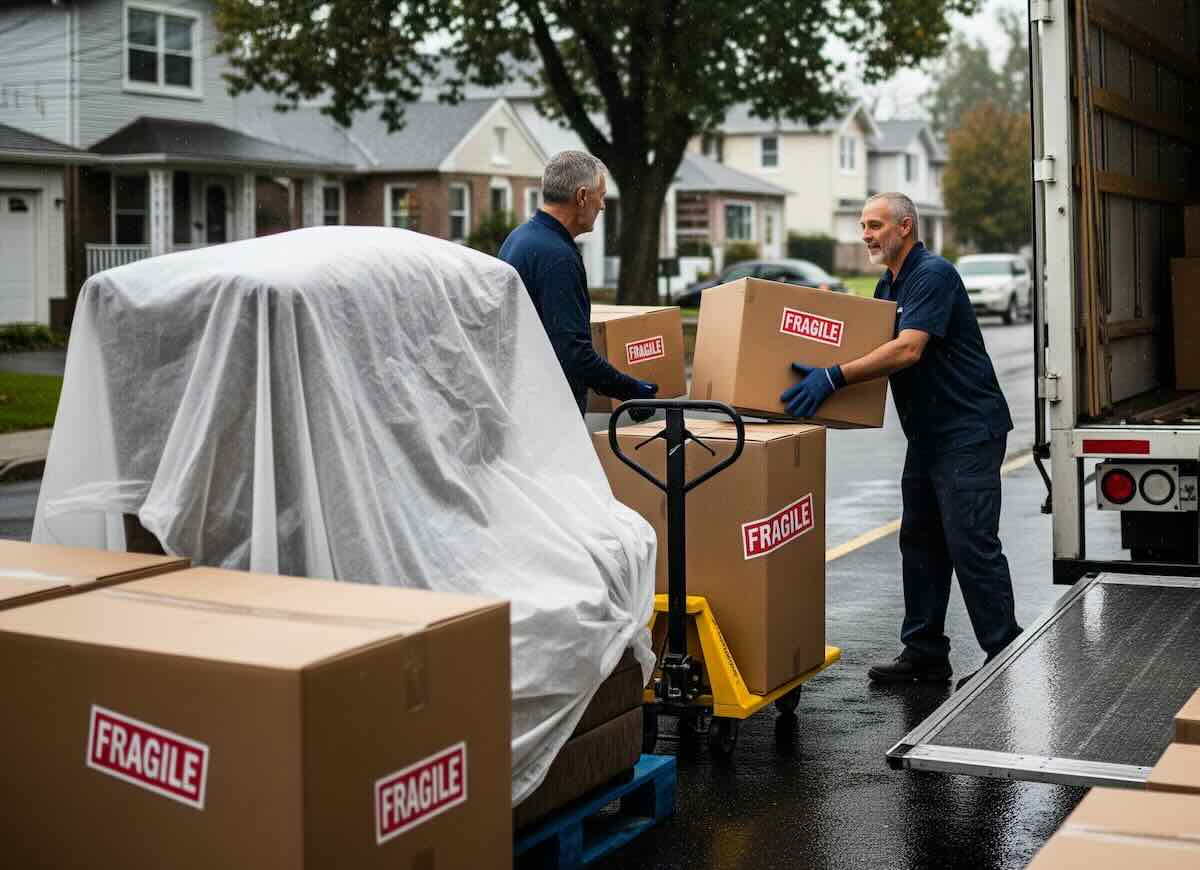
    Door-to-door long distance service for moves out of Boston covering all household contents including furniture, appliances, and fragile items. We match your move to a carrier with direct experience on your destination route, and manage everything from initial booking through final delivery confirmation. Whether you are leaving a South End brownstone, a Fenway-area high-rise, or a suburban Greater Boston home, we coordinate every detail including building access, Boston moving permits, and Storrow Drive route planning to ensure the truck reaches your address without delay.

    Professional packing services for Boston long distance move

    Packing & Unpacking

    Full and partial packing and unpacking services are available through our Boston carrier network. Professional packing removes hours of preparation from one of the most logistically demanding moving environments in the country. Tight staircases in Beacon Hill walk-ups, narrow doorways in Cambridge triple-deckers, and freight elevator windows in Boston high-rise buildings all require packing that is optimized for the building's physical constraints as much as for the distance to your destination.

    Storage bridge solutions for Boston movers

    Storage Bridge Solutions

    When your Boston departure date and your destination move-in date don't align, we coordinate secure short-term storage to hold your belongings between the two ends of the move. Storage bridge service is especially valuable in Boston, where September 1st lease turnover and building elevator conflicts regularly force gaps between when you must be out and when you can move in at your destination. We keep everything tracked and accounted for so nothing is lost between the two dates.

    Corporate employee relocation from Boston

    Corporate & Employee Relocation

    Boston's life sciences, technology, higher education, and financial services industries generate a continuous flow of employee relocations across all US markets. We coordinate directly with relocating employees, manage all logistics from Boston pickup through delivery, and provide documentation for corporate reimbursement and HR compliance. Companies in the Seaport, Kendall Square, Financial District, and Greater Boston suburban campuses all benefit from a single point of accountability for every relocation we manage regardless of destination.
    Full move coordination service from Boston

    Full Move Coordination

    As a licensed moving brokerage, we manage the entire process on your behalf: carrier matching, estimate review, scheduling, Boston moving permit coordination, building access confirmation, move-day oversight, and post-delivery follow-through. You work with one contact who knows your Boston move in full detail from start to finish, rather than explaining your building's COI requirements and freight elevator window to a different person at each stage of the process.

    Specialty and oversized item moving from Boston

    Specialty & Oversized Items

    Pianos, grandfather clocks, antiques, artwork, hot tubs, and oversized gym equipment each require carriers with the right equipment and trained crews to move them safely over long distances. Boston adds an additional layer of complexity: narrow Beacon Hill staircases, historic building doorframes in the Back Bay, and freight elevator weight limits all need to be verified before the right carrier can be matched to a Boston specialty move. We handle all of that confirmation before anyone shows up at your door.

    Moving from Boston? Get a Written Estimate Today.

    No obligation. A clear, itemized quote for your long distance move delivered within one business day; whether you are leaving before September 1st or planning a year-round departure.

    Call (334) 659-1878
    The Challenge

    Why Moving Out of Boston Is Harder Than Almost Any Other City in the Country

    Boston is widely recognized by moving industry professionals as one of the most logistically demanding departure markets in the United States. The combination of September 1st lease turnover, the Storrow Drive truck restriction, a fragmented multi-municipality permit landscape, historic district building requirements, and an event calendar that creates hard blackout dates means that consumers who approach a Boston long distance move the way they would approach a move from any other city regularly run into expensive, preventable problems on the day itself.

    01

    September 1st Is the Single Largest Moving Day in the United States

    Boston's housing market is structurally unlike any other city in the country. The vast majority of residential leases across Boston, Cambridge, Somerville, Allston, Brighton, and the surrounding neighborhoods expire on August 31st and renew on September 1st, creating a single-day mass turnover unlike anything that occurs in any other American city. Moving companies industry-wide acknowledge September 1st in Boston as the highest-demand single moving date in the US, with tens of thousands of households attempting to relocate simultaneously. Quality carriers with the right equipment for long distance moves book out 10 to 12 weeks in advance for September 1st departures. Consumers who begin searching in July for a September 1st long distance move consistently find that every reputable carrier is already fully committed for that date, and their remaining options are either dramatically more expensive or unqualified for interstate work.

    02

    Storrow Drive's 10-Foot Height Restriction Eliminates Most Moving Truck Routes

    Storrow Drive is one of the primary routes that out-of-town carriers default to when navigating into and out of Boston's core neighborhoods. It has a posted height restriction of 10 feet, which is well below the clearance of any standard commercial moving truck. The city's Storrow Drive bridge strikes are a documented annual problem, trucks that attempt to use Storrow Drive regularly impact low bridges in ways that cause serious damage and block the route entirely. Carriers who are not familiar with Boston road restrictions will route directly into this problem. Every move originating from Back Bay, Beacon Hill, the Fenway-Kenmore corridor, and adjacent neighborhoods requires route planning that explicitly avoids Storrow Drive and uses I-90, Route 2, Cambridge Street, or Soldier's Field Road as the appropriate commercial vehicle alternative depending on the origin address.

    03

    Boston, Cambridge, Somerville, and Brookline Are Separate Municipalities with Separate Permit Systems

    One of the most costly mistakes Boston-area residents make when planning a long distance move is assuming that Boston's permit system covers their address. Cambridge, Somerville, Brookline, Newton, Quincy, and every other city and town in the Greater Boston metro are separate municipalities with their own moving permit requirements, their own application processes, and their own lead time expectations. A Cambridge address requires a permit through the City of Cambridge Transportation Department, not through boston.gov. A Somerville address requires the City of Somerville's process. Brookline, which is an independent town entirely surrounded by Boston and Newton, has its own requirements as well. Carriers and consumers who apply only for a Boston permit and then discover on move day that their Cambridge or Somerville address needed a separate application face the prospect of parking tickets, towing, or a crew that cannot legally stage the truck.

    04

    Beacon Hill, Back Bay, and Historic District Buildings Require Carrier COI Before Access Is Granted

    Buildings throughout Beacon Hill, Back Bay, the South End, and Boston's other historic neighborhoods consistently require a Certificate of Insurance from the carrier naming the building as an additional insured before any loading access is permitted. Many of these buildings also restrict move hours to narrow weekday windows, require advance elevator reservations, and impose strict weight limits on freight elevator use. Beacon Hill in particular adds physical constraints on top of the administrative ones, cobblestone streets that cannot support the weight of a fully loaded commercial moving truck, doorframes in some pre-war buildings that are too narrow for standard furniture without doorway removal, and extremely limited street parking that makes truck staging difficult even with a valid permit in place. Carriers who show up without the required COI on file are turned away. Rescheduling cost and delay fall entirely on the customer.

    05

    Boston's Event Calendar Creates Hard Blackout Dates That Kill Unprepared Moves

    Boston Marathon Monday, known as Patriots' Day and observed on the third Monday of April each year, results in substantial street closures across Back Bay, the South End, Kenmore Square, and downtown Boston. Moving truck access to entire sections of the city is impossible on Marathon Monday, and permits for those areas are not issued for that date. Red Sox home games at Fenway Park trigger parking enforcement escalation and restricted commercial vehicle access in the Fenway-Kenmore and Audubon Circle neighborhoods. Major holiday weekends further compress available dates across the city. Consumers who schedule their Boston long distance move without checking the city's event calendar first discover these restrictions only when their carrier calls to say they cannot reach the address which is typically the morning of move day, with a truck already dispatched and fully booked for the day.

    06

    Massachusetts Has No State Moving License Requirement, Leaving Consumers Without a Baseline Filter

    Massachusetts does not require household goods carriers to hold a state-issued license or registration to solicit and perform moving services within the state. The only mandatory credentials for interstate moves are federal FMCSA operating authority and a valid USDOT number. In Boston's extremely high-volume moving market, which has documented issues with rogue brokers and unqualified operators who specifically target the student and academic relocation surge each August and September, this absence of a state-level credential filter means that consumers have no public state database to use when quickly evaluating whether a carrier is legitimate before signing a contract or paying a deposit. Boston's moving market generates a disproportionate concentration of consumer complaints precisely because the demand surge every August creates conditions where unqualified operators can collect deposits and disappear before anyone checks their credentials.

    Boston Moving Costs

    How Much Does a Long Distance Move from Boston Cost?

    Long distance moving costs from Boston depend on the size of your home, the distance to your destination, the services you select, and the specific timing of your departure. Boston commands a meaningful premium over most US metro areas due to its extreme seasonal demand concentration, urban density, building access complexity, and the logistical overhead required to execute a compliant move in a multi-permit environment. A move from a Back Bay brownstone requires more coordination than a move from most suburban addresses in the country, and that coordination is priced accordingly by carriers who know the market.

    The September 1st window commands the highest premiums of any single moving period in the United States. Quality long distance carriers serving Boston price September 1st departures at 20 to 35 percent above standard peak-season rates, and availability disappears 10 to 12 weeks in advance. Moves in July and August also carry significant premiums over the spring and fall shoulder seasons. If your timeline allows any flexibility away from September 1st, even a departure of three to five days in either direction produces meaningful cost savings and substantially more carrier availability to choose from.

    Home Size Estimated Weight Typical Cost Range
    Studio / 1 Bedroom 1,000 – 3,000 lbs $1,400 – $3,800
    2 Bedrooms 3,000 – 5,000 lbs $2,600 – $6,600
    3 Bedrooms 5,000 – 8,000 lbs $4,400 – $10,200
    4+ Bedrooms 8,000 – 14,000 lbs $7,200 – $16,000+

    What Drives the Final Price on a Boston Long Distance Move

    • Total miles between your Boston address and destination city
    • Shipment weight and total volume of items being transported
    • Packing services selected: full pack, partial pack, or self-pack
    • Move date proximity to September 1st and peak summer demand window
    • Building access requirements including COI, elevator reservation windows, and restricted move hours in Beacon Hill, Back Bay, or South End historic buildings
    • Boston moving permit fees ($69 base rate at boston.gov/moving for two non-metered spaces) and any Cambridge, Somerville, or Brookline permit costs if applicable to your address
    • Storage bridge requirements between your Boston departure and destination move-in date
    • Specialty items requiring custom crating, staircase lift equipment, or historic building doorframe removal

    Get Your Boston Moving Quote

    We will review your move details and send a written estimate within one business day.

      or call us directly
      Boston Moving Rules

      Boston Moving Rules & Requirements

      Boston has more municipal moving regulations per square mile than almost any city in the United States. Understanding which rules govern your specific address; Boston proper, Cambridge, Somerville, Brookline, or another surrounding municipality is the difference between a clean pickup and a move-day crisis that costs you money and delays you by days. These are the rules that matter most for a long distance departure from the Greater Boston area.

      Massachusetts Has No State Moving License, FMCSA Credentials Are the Baseline for Interstate Moves

      Massachusetts does not require household goods movers to obtain a state-issued license or certification to operate within the state. For any long distance move from Boston that crosses a state line, which applies to every long distance move departing the Greater Boston area, the carrier must hold active FMCSA interstate operating authority and a valid USDOT number. Verify both credentials at no cost through the FMCSA Safer System website at safer.fmcsa.dot.gov before paying any deposit or signing any contract. In Boston's high-volume, high-scam-risk moving market, verifying FMCSA credentials before committing to any carrier or broker is the single most important protective step you can take.

      Boston Moving Permits: Boston.gov/Moving, $69 Base Fee, 48-Hour Posting Required

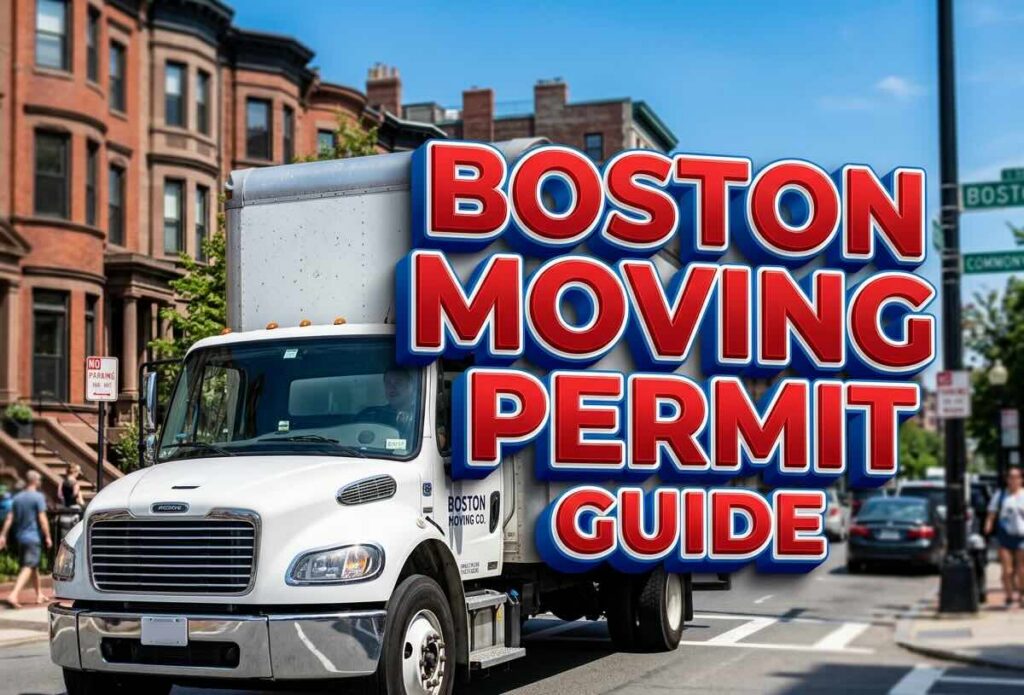
      The City of Boston requires a temporary street occupancy permit for all moving trucks that need to park on a residential street, metered street, or any other public right-of-way within the city limits. The base permit fee is $69 for two non-metered parking spaces for one day, as confirmed by the City of Boston's permit portal at boston.gov/moving. After the permit is issued, two official City of Boston No Parking signs must be posted at your reserved street location at least 48 hours before your move date to legally enforce the space. Online applications must be submitted at least two weeks before your move date. In-person applications at City Hall require a minimum of three business days. If another vehicle occupies your reserved permit space on move day despite the posted signs, call the Boston Police Department non-emergency line at (617) 343-4911 to request enforcement.

      Cambridge, Somerville, and Brookline Require Separate Municipal Permits

      Moving from a Cambridge, Somerville, Brookline, Newton, Quincy, or Malden address requires a permit from that municipality's transportation or public works department, not from the City of Boston. Cambridge moving permits are managed through the City of Cambridge Traffic, Parking, and Transportation Department. Somerville issues moving permits through the Somerville Traffic and Parking Department. Brookline issues permits through the Brookline Transportation Division. These are entirely separate applications with their own fees, lead time requirements, and No Parking sign posting rules. Applying to the wrong municipality's system or assuming a Boston permit covers your Cambridge or Somerville address will leave you without a legally enforced parking space on move day.

      Historic District Buildings Require Carrier Certificate of Insurance Naming the Building

      Buildings in Beacon Hill, Back Bay, the South End, Charlestown, and other historic neighborhoods consistently require the moving carrier to provide a Certificate of Insurance naming the building or its management company as an additional insured before any move-day access is granted to the freight entrance, loading area, or elevator. The required coverage amounts vary by building, but $1 million per occurrence general liability is typical, and some Boston properties require higher limits. Contact your building's management office at least two weeks before your move date to confirm the exact insurance requirements and submit the carrier's COI in advance. Carriers who arrive without the correct COI on file are turned away at the door, and the rescheduling cost is the customer's responsibility.

      Storrow Drive Prohibition: Moving Trucks Cannot Use Storrow Drive

      Storrow Drive has a posted maximum vehicle height of 10 feet. All standard commercial moving trucks exceed this height and are prohibited from using Storrow Drive. Carriers unfamiliar with Boston regularly attempt to use Storrow Drive to access Back Bay, Beacon Hill, and Kenmore-area addresses, resulting in bridge strikes that cause truck damage, road closures, and criminal liability. The prohibition is absolute and has no exception for moving vehicles. Any carrier you engage for a Boston long distance move must explicitly confirm that their driver is routing via I-90, Soldier's Field Road, Cambridge Street, or other approved commercial vehicle corridors which is not Storrow Drive, before the truck departs for your address.

      Binding Estimate Rights and Federal Deposit Protections

      Federal law entitles you to request a written binding estimate for any interstate move from Boston. A binding estimate locks the total price based on the agreed inventory and cannot be increased at delivery regardless of actual shipment weight. A non-binding estimate can be revised substantially upward based on weight, and in Boston's competitive market with many operators taking advantage of uninformed consumers, non-binding estimates are regularly used to quote low and charge high at delivery. Always request a binding estimate in writing before any deposit is paid. Federal regulations also prohibit carriers from demanding full payment before delivery. Any Boston carrier or broker requiring the full move cost upfront is operating outside federal guidelines.

      Parking & Access

      Boston Moving Parking & Access Guide

      No city in the country presents as many simultaneous moving access challenges as Boston. The permit system, the Storrow Drive prohibition, the fragmented multi-municipality landscape, the historic building COI requirements, and the event calendar blackouts each add a layer that other cities simply do not have. Getting all of these confirmed before move day, not in the morning of which we try to fix a lot, is the only way to prevent a cascade of problems that cannot be resolved once the truck is already on the road.

      The City of Boston's official moving permit portal. The $69 base permit fee covers two non-metered parking spaces for one day. No Parking signs must be posted at least 48 hours before your move. For metered spaces, a separate permit category applies at a different rate. Online applications must be submitted at least two weeks in advance. If you are moving from a Cambridge, Somerville, Brookline, or any other surrounding municipality address, apply to that city or town's own transportation department separately, the Boston permit system does not cross municipal boundaries.

      🏛

      Beacon Hill: Cobblestone Streets, Historic Doorframes, and the Tightest Access in Boston

      Beacon Hill is the most physically constrained moving environment in Boston. Cobblestone streets on many blocks cannot safely support a fully loaded commercial moving truck and limit the size of vehicle that can approach certain addresses. Pre-war building doorframes on the Hill are often too narrow for standard furniture to pass without doorframe removal, which requires advance coordination with the carrier. Beacon Hill permits require at least two weeks of lead time, and the narrow streets mean the posted No Parking restriction must be scrupulously enforced, any vehicle in your reserved space on move day requires an immediate call to Boston Police at (617) 343-4911. Building COI requirements on the Hill are strict and must be submitted to building management before access is granted on move day.

      🏢

      Back Bay Brownstones: COI Requirements, No Storrow Drive, and Marathon Monday Blackouts

      Back Bay brownstones combine building COI requirements, the Storrow Drive prohibition, and a hard event calendar blackout on Boston Marathon Monday (Patriots' Day, third Monday of April). Every Back Bay move requires the carrier to have a confirmed route that avoids Storrow Drive and enters the neighborhood via Boylston Street, Newbury Street, or Commonwealth Avenue from the Mass Pike interchange at Copley. Apply for your boston.gov permit at least three weeks ahead for any Back Bay departure, and confirm with your building management that your carrier's COI has been submitted and accepted before move day. Do not schedule any Back Bay move on Marathon Monday, street closures make truck access impossible across the entire neighborhood during the race.

      🎓

      Allston-Brighton and the September 1st Surge: Book 10 to 12 Weeks Out

      Allston and Brighton are the epicenter of Boston's September 1st mass lease turnover. The student population density in these neighborhoods, anchored by Boston University, Boston College, and students from Harvard, MIT, and other area universities, creates a concentration of simultaneous move-outs and move-ins on September 1st that overwhelms every available carrier, truck, and parking permit in the area. "Allston Christmas," the informal name given to the period when students abandon furniture on Allston sidewalks during move-out, reflects just how compressed and chaotic the turnover is. For any long distance departure from Allston or Brighton with a September 1st date, the minimum booking window is 10 to 12 weeks in advance. Any later and qualified long distance carriers will be fully committed, and your only remaining options will be operators you would not choose under normal circumstances.

      Fenway-Kenmore: Red Sox Home Game Blackouts and Metered Street Permit Complications

      The Fenway-Kenmore neighborhood experiences escalated parking enforcement and restricted commercial vehicle access on all Red Sox home game days at Fenway Park. The City of Boston issues heightened enforcement orders in the area on game days, and moving trucks that arrive without a confirmed permit and a clear staging location before the enforcement window opens face immediate ticketing and towing. Kenmore Square and surrounding blocks also have a high concentration of metered street spaces, which require a different permit category at boston.gov/moving than standard non-metered spaces. Confirm whether your Fenway or Kenmore address is on a metered block before applying and paying the base $69 fee, metered permits have different rates and different procedures.

      🏫

      Cambridge: MIT and Harvard Areas Require the City of Cambridge Permit System

      Cambridge addresses; including the MIT campus corridor, Harvard Square, Central Square, Inman Square, Porter Square, and all Cambridge residential neighborhoods, are under the jurisdiction of the City of Cambridge, not the City of Boston. Moving permits for Cambridge addresses must be applied for through the Cambridge Traffic, Parking, and Transportation Department, not through boston.gov. August and early September around the MIT and Harvard academic calendars generate a demand surge that rivals Allston in intensity. For any Cambridge long distance departure in August, begin the permit application process and carrier booking a minimum of eight weeks in advance. Cambridge's permit process and lead time requirements differ from Boston's, so confirm the current application timeline directly with the Cambridge TP&T Department before assuming Boston's two-week minimum applies.

      Pro tip: Apply for your Boston moving permit at boston.gov/moving at least two weeks before your move date. Post the two No Parking signs 48 hours in advance. If you are moving from Cambridge, Somerville, or Brookline, contact that municipality's transportation department directly, the Boston permit does not apply outside city limits. For Marathon Monday and Red Sox home game dates, check the City of Boston's event calendar before booking any move in Back Bay, Fenway, Kenmore, or South End. For any parking violation of your reserved space on move day, call Boston Police non-emergency at (617) 343-4911.

      Questions About Your Boston Move?

      Our team knows Boston's permit system, Storrow Drive restrictions, and neighborhood access requirements across the full Greater Boston metro. Call us before you commit to anything.

      GET A FREE QUOTE

      we are here for your Boston moving

      Tired of the stress of moving day?
      Get your free quote from the city’s top-rated movers.
      Let us handle the hard work for you.

      how it works

      Tell us about your move

      Share your basic details; locations, dates, size of your home, and any special needs, so we can start building the perfect plan.

      We Compare Movers for You

      We evaluate quotes, services, and timelines from our nationwide network of pre-vetted moving partners to find the best fit.

      You Choose Your Mover

      We present you with options that match your needs and budget. You decide which mover to hire, no pressure, no obligation.

      We Stay Involved

      Once your mover is selected, we stay in touch throughout the process to ensure everything goes smoothly. If anything changes, we help you adjust.
      YOUR MOVING INSURANCE

      Straightforward protection

      We’ve got you covered. Our moving insurance provides full protection for everything you own, so you can focus on settling into your new home.

      Licensed & Vetted Movers

      We only partner with moving companies that are fully licensed, insured, and compliant with DOT regulations so you don't have to worry about rogue operators.

      Tailored Match for Your Move

      Whether you’re moving a studio apartment or a five-bedroom house, locally or cross-country, we connect you with movers that specialize in your exact type of move.

      Full Support Start to Finish

      From your initial quote to delivery day, our team is available to answer questions, resolve issues, and help you. We work for you, not the moving company.
      Long Distance Routes

      Popular Long Distance Moving Routes from Boston

      These are the most common long distance routes we coordinate from Boston. Cost ranges reflect full-service moves including loading, transport, and delivery. Final pricing varies based on home size, services selected, and time of year. Boston-to-Florida routes are among the highest-volume outbound corridors in New England.
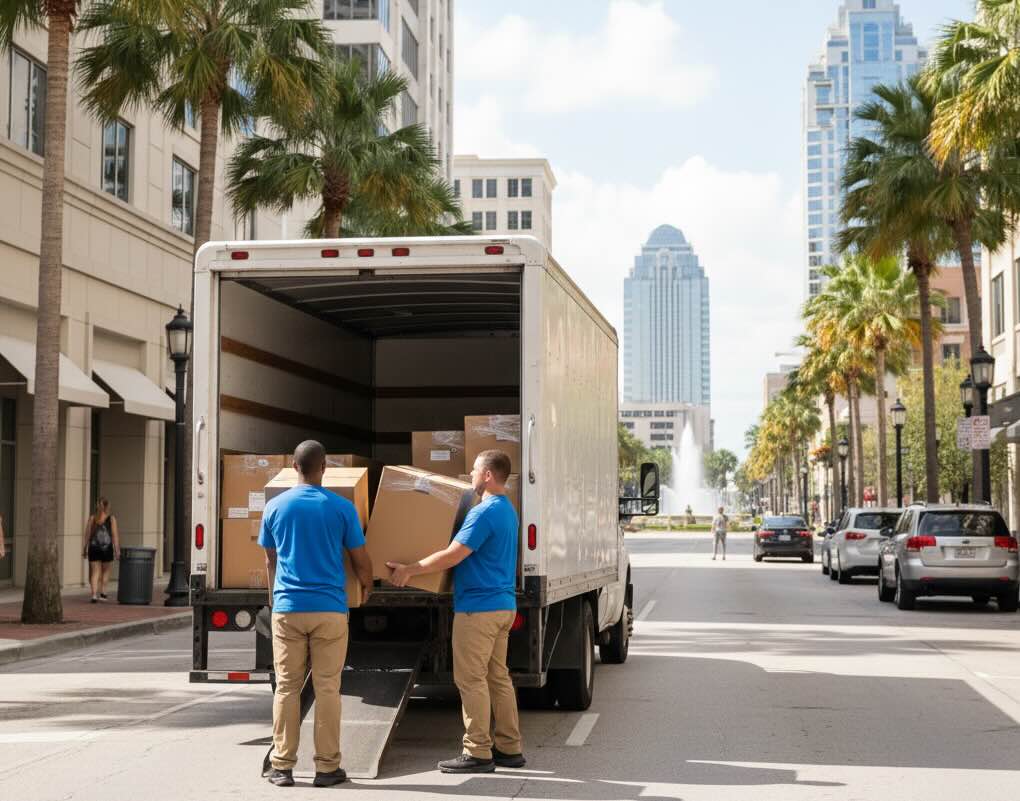
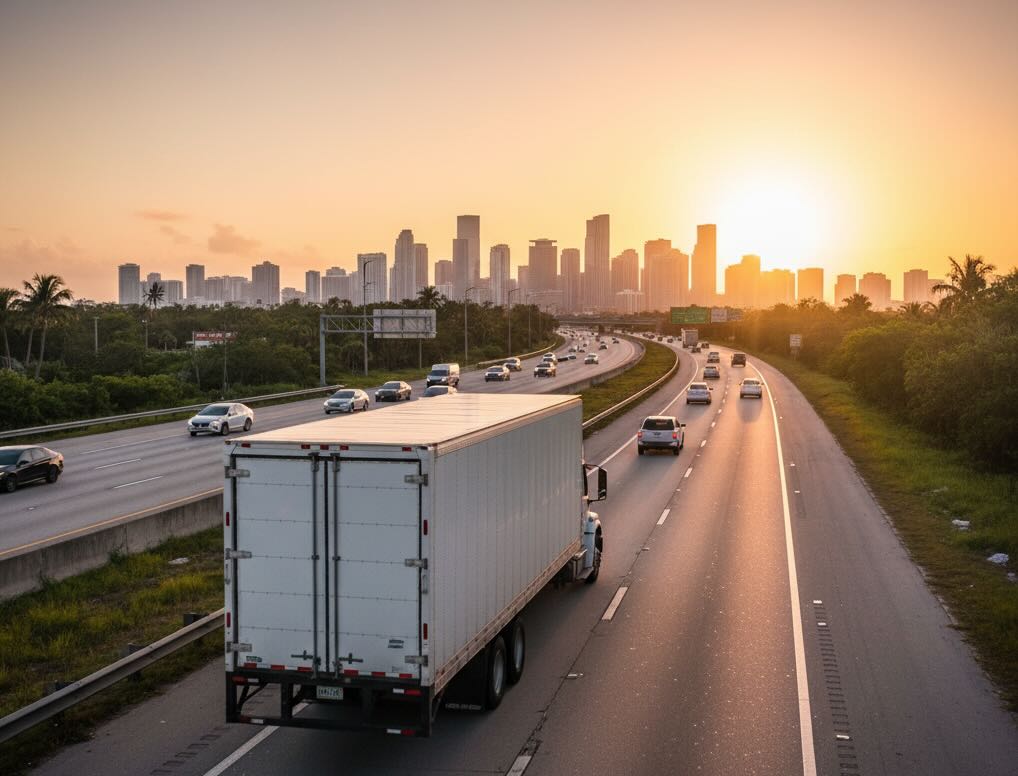
      Moving from Boston to Orlando Florida
      From Boston Orlando, FL
      📍 Approximately 1,300 miles 🚚 3 to 7 transit days 📅 Peak season: June through September 1st
      Moving from Boston to Miami Florida
      From Boston Miami, FL
      📍 Approximately 1,500 miles 🚚 4 to 8 transit days 📅 Peak season: June through September 1st
      Moving from Boston to Atlanta Georgia
      From Boston Atlanta, GA
      📍 Approximately 1,100 miles 🚚 3 to 6 transit days 📅 Peak season: June through September 1st
      Moving from Boston to Charlotte North Carolina
      From Boston Charlotte, NC
      📍 Approximately 900 miles 🚚 2 to 5 transit days 📅 Peak season: June through September 1st
      Moving from Boston to Dallas Texas
      From Boston Dallas, TX
      📍 Approximately 1,800 miles 🚚 5 to 9 transit days 📅 Peak season: June through September 1st
      Moving from Boston to Los Angeles California
      From Boston Los Angeles, CA
      📍 Approximately 3,000 miles 🚚 7 to 14 transit days 📅 Peak season: June through September 1st
      Ready to Move from Boston?

      Get a Written Estimate for Your Boston Long Distance Move

      Fill out the form and a member of our team will follow up within one business day with a detailed, itemized quote based on your specific Boston move details, including your building's access requirements, permit needs, and departure date relative to September 1st. No pressure and no obligation to proceed.

      • Written estimate delivered within one business day
      • Licensed and insured carriers matched to your specific route
      • Transparent pricing with no hidden fees at delivery
      • One dedicated coordinator for your entire Boston move
      • Coverage for all 48 contiguous US states

      Free Boston Moving Quote

      Tell us where you are going and we will take it from there.

        Why Use a Moving Planner

        Why Choose a Moving Planner in Boston

        Boston is the most operationally complex long distance moving market in New England and one of the most challenging in the country. A licensed moving planner who knows the permit system, the Storrow Drive prohibition, the September 1st demand reality, and the building COI landscape removes the risk that comes with navigating this market independently with no prior experience and no industry relationships to draw on.

        1

        Verified FMCSA Credentials Before Any Carrier Is Assigned

        Every carrier in our Boston network is verified for active FMCSA interstate authority and valid insurance before we assign them to any move. In a market with no Massachusetts state credential filter and a well-documented concentration of rogue operators targeting the August-September surge, this pre-screening is the protection Boston consumers cannot get from the state on their own.

        2

        Boston-Specific Logistics Handled Before Move Day

        We confirm Storrow Drive avoidance in the carrier's routing, coordinate boston.gov permit applications, verify the carrier's COI meets your building's requirements, and check the event calendar for Marathon Monday and Red Sox game blackouts against your departure date, all before any contract is signed. These are Boston-specific steps that a non-local broker or a carrier from outside the market will simply not take.

        3

        One Contact from First Quote Through Final Delivery

        From the initial estimate through delivery confirmation at your destination, you work with one person who knows your Boston move in full detail, your building's COI requirements, your permit status, your departure date relative to September 1st, and your destination timeline. No re-explaining your situation to a different representative each time you call for an update.

        4

        Real Leverage When Something Goes Wrong

        If a problem develops mid-move , a carrier who is running late on September 1st, a delivery dispute, a damage claim, a licensed brokerage has direct relationships with the carrier and a financial stake in resolving the problem quickly. You are not pursuing a complaint from another state alone. We are on the same side of the phone call as you, with real industry leverage to apply.

        Specialty Moving

        We Move Special Items from Boston

        Boston's historic housing stock adds a layer of physical complexity to every specialty move that does not exist in newer cities. Narrow Beacon Hill staircases, pre-war brownstone doorframes, freight elevator weight limits, and cobblestone street load restrictions all affect how specialty items can be moved out of a Boston address. We match every Boston specialty move to an operator who has assessed and prepared for the specific physical conditions at your property before the crew arrives.

        Piano moving specialist Boston long distance

        Piano Moving

        Upright pianos, baby grands, and concert grands require specialized moving boards, custom padding, and trained crews who can navigate Boston's most physically challenging building access conditions. Beacon Hill walk-ups with steep staircases and tight landings, South End brownstones with narrow front entries, and Cambridge triple-deckers with low-clearance back staircases are environments that demand staircase piano specialists. Long distance piano moves from Boston require proper internal bracing, humidity control documentation for the transit period, and confirmed routing that avoids Storrow Drive. We assign these jobs exclusively to carriers with verified Boston piano moving experience and the correct equipment on the truck before they arrive at your address.
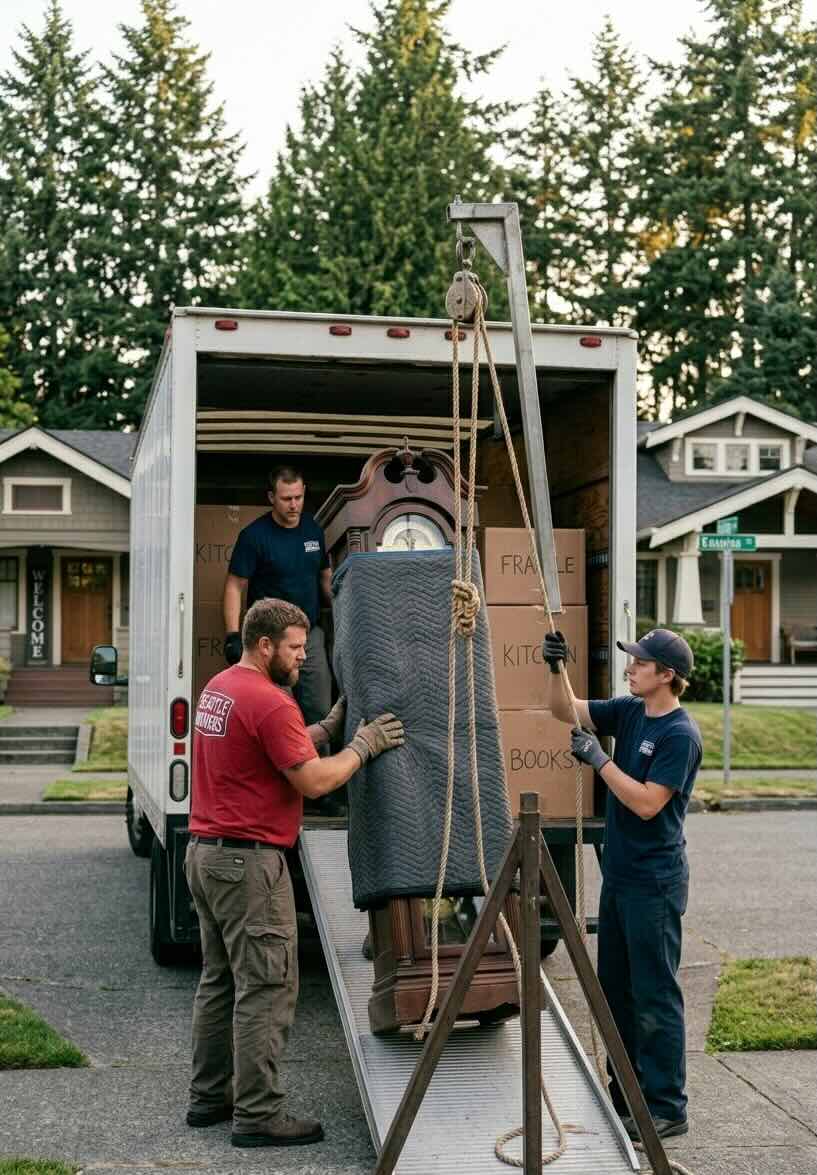
        Grandfather clock moving Boston long distance

        Grandfather Clocks

        Grandfather clocks must be fully disassembled before any long distance move out of Boston. The pendulum, weights, and movement each require individual packaging, and tight staircases in Boston brownstones and walk-ups demand that the disassembled case is padded and oriented before the carry-out begins to avoid doorframe contact on the way down. Skipping any disassembly step causes irreparable damage to the movement mechanism that cannot be corrected at a reasonable cost after the fact. Our Boston grandfather clock specialists handle the full disassembly at your address, custom packaging of each component, safe long distance transit, and professional reassembly at your destination city so the clock arrives in working condition.
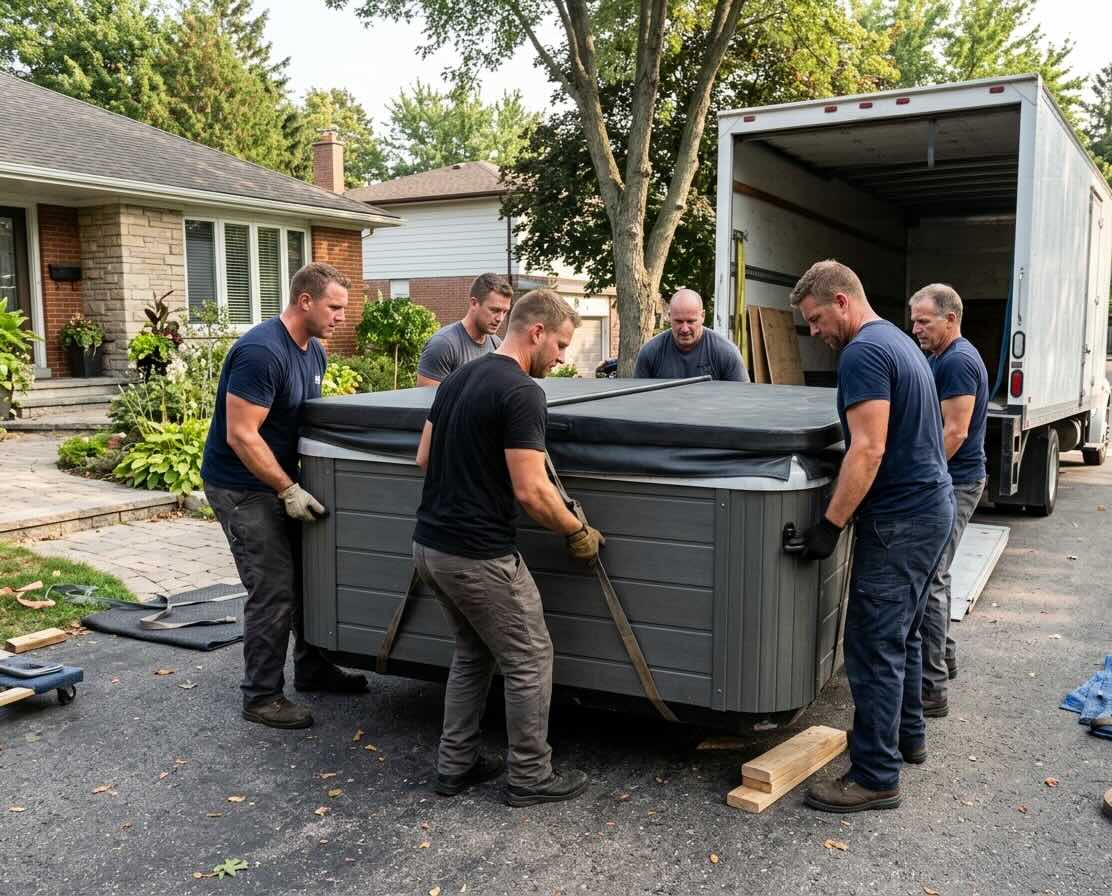
        Hot tub moving from Boston long distance

        Hot Tubs

        Hot tub relocation from any Greater Boston property requires complete drainage, panel removal, and heavy-lift equipment to move the shell without cracking the acrylic or damaging the plumbing fittings. Boston-area properties add access complexity that other markets do not: cobblestone approaches in historic neighborhoods cannot support the lift vehicle's ground pressure, deck-mounted hot tubs in South End townhouses require crane or lift work over building parapets, and narrow back-yard access paths common to Cambridge and Somerville three-families frequently require custom rigging plans developed before the crew arrives. We match every Boston hot tub move to a carrier with verified Boston-area heavy lift experience and the equipment to handle the specific site conditions at your address before any booking is confirmed.


        Service Coverage

        Boston & Greater Boston Service Areas

        We coordinate long distance moves from every Boston neighborhood and across the full Greater Boston metro, including Cambridge, Somerville, Brookline, Newton, and all surrounding cities and towns. Every address in the region is covered, from Back Bay and Beacon Hill to the outer suburbs and the South Shore.

        Boston Moving Guides

        Articles About Moving from Boston

        Practical guides covering Boston-specific moving topics including September 1st planning, Storrow Drive routing, the multi-municipality permit landscape, historic building access, and long distance cost breakdowns for the most common routes out of Massachusetts.

        Start Your Boston Long Distance Move with a Free Quote

        Get a written, itemized estimate for your long distance move from Boston within one business day. No contracts, no pressure, and no minimum move volume required. We handle September 1st departures, historic building access, and Cambridge and Somerville permit coordination, all as part of the standard service.

        FAQ

        Boston Moving Frequently Asked Questions

        Answers to the questions we hear most often from people planning a long distance move out of Boston, Cambridge, Somerville, and the Greater Boston metro.

        How far in advance should I book a long distance move from Boston for September 1st?
        For any long distance departure on or within a week of September 1st, the minimum reliable booking window is 10 to 12 weeks in advance. September 1st is the single highest-demand moving day in the United States due to Boston's mass lease turnover, and quality long distance carriers commit their available trucks for that date months before the day itself. Consumers who begin searching in July for a September 1st long distance move consistently find that all reputable carriers are fully booked, and the remaining options are either dramatically more expensive or not qualified for interstate work. If your lease allows any flexibility, including departing August 27th through 29th or September 3rd through 5th, that flexibility translates directly into better pricing and significantly more carrier availability to choose from.
        Can moving trucks use Storrow Drive to access Back Bay, Beacon Hill, or Kenmore?
        No. Storrow Drive has a posted maximum vehicle height of 10 feet. All standard commercial moving trucks are taller than 10 feet and are absolutely prohibited from using Storrow Drive. There is no permit or exception that allows a moving truck to use Storrow Drive. The city's Storrow Drive bridge strikes are a documented annual problem caused primarily by out-of-state carriers who are unfamiliar with Boston road restrictions and default to routing via Storrow Drive when approaching core Boston neighborhoods. Any carrier assigned to your Boston long distance move must explicitly confirm that their driver is routing via I-90, Soldier's Field Road, Cambridge Street, or another approved commercial vehicle corridor, never Storrow Drive, before the truck is dispatched to your address.
        How does the Boston moving permit work and how much does it cost?
        The City of Boston requires a temporary street occupancy permit for any moving truck that needs to park in a residential street space, metered space, or public right-of-way within Boston city limits. The base permit fee is $69 for two non-metered parking spaces for one day, applied for through the City of Boston's permit portal at boston.gov/moving. After the permit is approved, two official No Parking signs must be physically posted at the reserved location on the street at least 48 hours before your move date to legally enforce the space and prevent other vehicles from occupying it. Online applications require at least two weeks of lead time before the move date. In-person applications at City Hall require a minimum of three business days. If another vehicle occupies your reserved space despite the posted signs, call the Boston Police Department non-emergency line at (617) 343-4911 to request enforcement and have the vehicle ticketed or towed.
        I am moving from Cambridge, do I need a Boston permit or a Cambridge permit?
        You need a Cambridge permit. The City of Boston's moving permit system only applies to addresses within Boston city limits. Cambridge is a separate municipality with its own moving permit application process managed by the Cambridge Traffic, Parking, and Transportation Department. The same is true for Somerville, Brookline, Newton, Quincy, Malden, and every other city and town in the Greater Boston metro, since each is a separate jurisdiction with its own permit requirements, fees, and lead time expectations. Applying to boston.gov when your address is in Cambridge, Somerville, or Brookline will result in an invalid permit that provides no legal protection for your parking space on move day. Confirm which municipality your address belongs to before applying to any permit system.
        My building in Back Bay requires a Certificate of Insurance from the mover. What does that mean?
        A Certificate of Insurance (COI) is a document issued by the carrier's insurance provider that proves the carrier holds active liability coverage and names your building or its management company as an additional insured under that policy. Back Bay, Beacon Hill, South End, and other historic Boston neighborhood buildings routinely require this document before granting any access to loading areas, freight elevators, or lobby entrances on move day. The required coverage amount varies by building, and $1 million per occurrence general liability is the most common threshold in Boston, though some properties require higher limits. Contact your building's management office at least two weeks before your move date to get the exact COI requirements, and make sure the carrier you engage can deliver a compliant COI before move day. Carriers who arrive without an accepted COI on file are denied building access regardless of your permit status, and the cost of rescheduling falls entirely on you.
        Are there dates when moving trucks cannot access Boston neighborhoods at all?
        Yes. Boston Marathon Monday, known as Patriots' Day and observed on the third Monday of April, results in major street closures across Back Bay, the South End, Kenmore Square, and downtown Boston. Moving permits are not issued for affected areas on Marathon Monday, and truck access to entire blocks is physically impossible during the race window. Red Sox home games at Fenway Park trigger escalated parking enforcement and restricted commercial vehicle staging in the Fenway-Kenmore corridor and Audubon Circle neighborhoods on game days. Major holiday weekends and city-wide events create similar access constraints in other Boston neighborhoods throughout the year. Before booking any Boston long distance departure date, check the City of Boston's event calendar and the Red Sox home schedule against your proposed move date. Discovering a conflict the morning of move day, after the truck is already dispatched, has no good solution.
        Does Massachusetts require moving companies to be licensed by the state?
        No. Massachusetts does not require household goods carriers to obtain a state-issued license or registration to operate moving services within the state. The only mandatory credentials for any interstate long distance move departing Boston are federal FMCSA interstate operating authority and a valid USDOT number. You can verify both credentials at no cost through the FMCSA Safer System website at safer.fmcsa.dot.gov. In Boston's extremely high-volume moving market, which has a well-documented history of rogue brokers and unqualified operators targeting the August and September student moving surge, the absence of a state licensing filter makes carrier verification before any contract is signed the most important protective step available to consumers. Working with a licensed FMCSA-registered brokerage means this verification is completed for you before any carrier is assigned to your move.
        What is the best time of year to move long distance out of Boston if I want to avoid the September 1st surge?
        October is widely considered the optimal month for a long distance departure from Boston. The September 1st surge is over, carrier schedules open back up substantially, and pricing across the Boston market drops 15 to 25 percent below peak summer rates as demand normalizes. New England weather in October is typically stable and well within the operational range for long distance truck transport. Late April through May offers a secondary shoulder season window, after the academic spring semester ends and before the summer surge begins, that also provides competitive pricing and solid carrier availability. The months to avoid if you have any schedule flexibility are July, August, and the first week of September, when demand is highest, pricing is at its peak, and the risk of running out of qualified carrier options before your preferred date is at its greatest.