

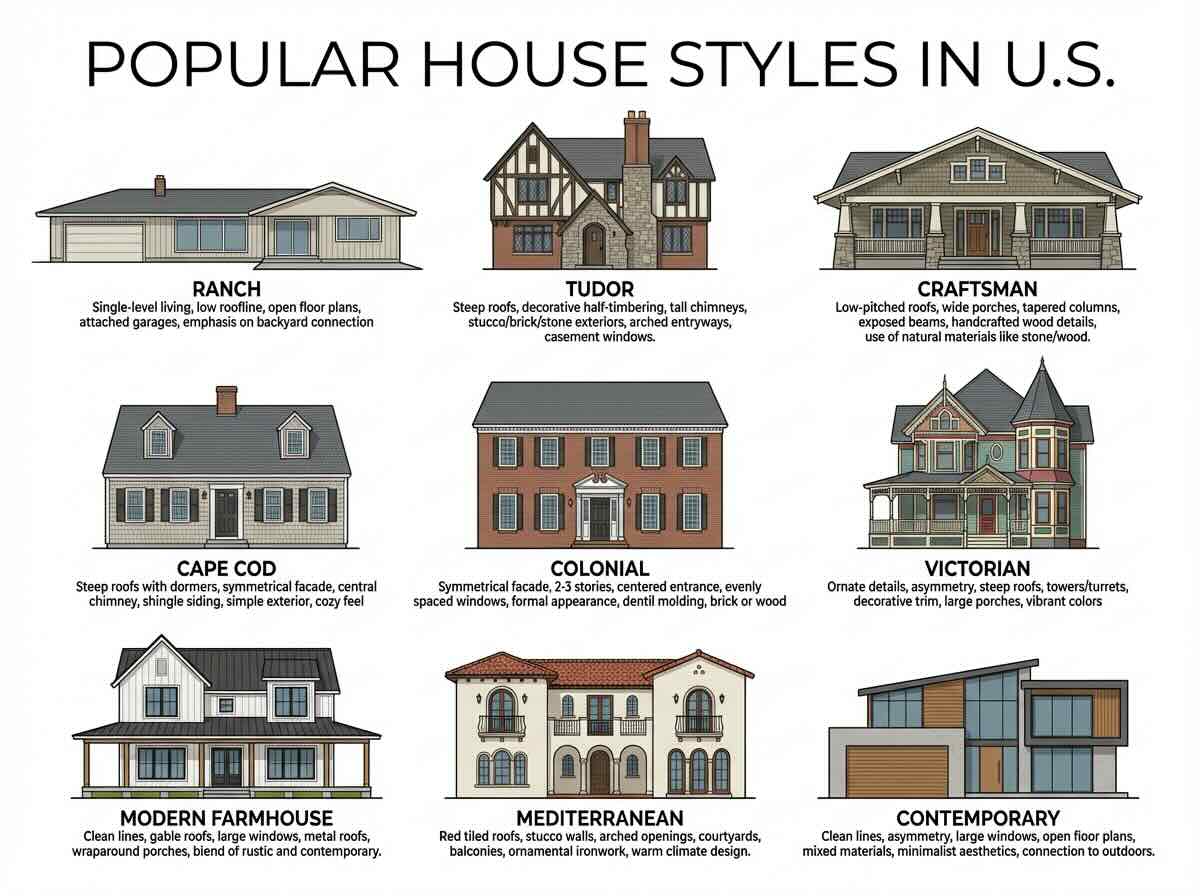
Popular house styles will help you to make informed decisions about whether a particular property matches your aesthetic preferences, lifestyle needs, maintenance capacity, and long-term investment goals when you’re shopping for a home or considering renovations to your current property. Each architectural style carries distinct characteristics reflecting the historical period when it became popular, regional influences that shaped its development, and practical considerations about construction methods, maintenance requirements, and how well the design adapts to modern living needs alongside preserving historical authenticity and charm that attracted buyers to these styles originally.
Key Points
- Popular house styles: Ranch, Tudor, Craftsman, Cape Cod, Colonial, Victorian, Modern Farmhouse, Mediterranean, and Contemporary styles dominate residential real estate across the United States, each with distinct visual characteristics, construction methods, and regional popularity patterns that vary significantly based on climate, local building traditions, and buyer preferences in different geographic areas.
- Maintenance and costs: Victorian and Tudor styles generally require higher maintenance and restoration costs compared to simpler ranch or contemporary designs, with specialty materials, complex rooflines, and detailed architectural elements increasing both initial purchase prices and long-term upkeep expenses that surprise owners unfamiliar with style-specific requirements.
- Investment considerations: Regional popularity dramatically affects resale value and investment potential since architectural styles preferred in one region may be less desirable in others, and trends toward modern minimalism versus traditional preservation vary based on buyer demographics, economic conditions, and local real estate market preferences that shift over time.
Ranch Style House: America’s Most Popular Residential Design
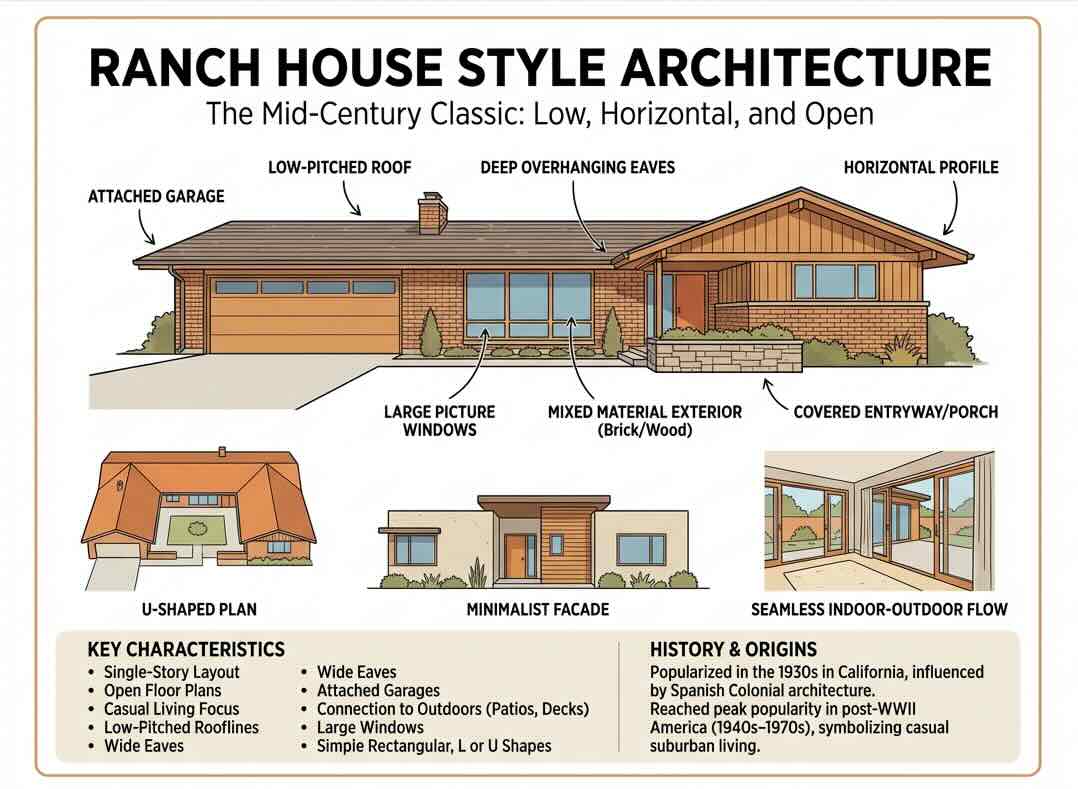
Ranch style houses represent one of America’s most beloved and enduring residential designs, originating in 1920s California and spreading nationwide through the post-World War II suburban boom when affordable, practical, single-story homes perfectly matched the needs and budgets of returning servicemen and young families looking to establish themselves in new communities across the country. The ranch style’s popularity persists today because of its practical floor plan, accessibility, lower maintenance compared to multi-story homes, and adaptability to virtually any climate or geographic region while maintaining its signature aesthetic that homeowners continue finding attractive nearly a century after the style’s initial development.
| Ranch Style Characteristic | Description | Practical Implications |
|---|---|---|
| Single story layout | All living spaces on one level with no stairs required to access bedrooms, bathrooms, or main living areas. | Ideal for aging in place, families with mobility limitations, and those seeking accessibility without home elevators or major renovations. |
| Low pitched roof | Gently sloping roof rather than steep pitch, contributing to the home’s distinctive horizontal profile. | Easier and safer to maintain, reduces wind resistance in storms, lower roofing material costs compared to steep-pitch designs. |
| Open floor plan | Minimal interior walls separating kitchen, dining, and living spaces creating flexible, flowing interior layout. | Allows flexible furniture arrangement, easier supervision of children or pets, natural light penetration throughout home. |
| Broad, low profile | Horizontal lines dominate with emphasis on width rather than height and setback from street. | Blends naturally into suburban landscapes, requires larger lots typically, emphasizes connection to outdoor spaces. |
| Minimal ornamentation | Clean lines, simple details, emphasis on function over decorative elements distinguishes ranch from more ornate styles. | Lower maintenance requirements, easier to update and modernize, less costly to repair when damage occurs. |
| Large windows | Extensive glass creating visual connection between interior and outdoor living spaces and surrounding landscape. | Maximizes natural light and views, increases cooling costs in summer, requires window treatments for privacy. |
Ranch style remains highly desirable because of accessibility, affordability, and practical floor plans that adapt to modern lifestyles. Most common residential style in American suburbs built between 1950-1980.
Tudor Style House: Medieval Charm With Modern Comfort
Tudor style houses evoke English medieval architecture with steeply pitched roofs, decorative half-timbering, leaded glass windows, and asymmetrical facades that create romantic, storybook aesthetic appealing to homeowners seeking character and distinctive appearance that stands out from cookie-cutter suburban developments. Originating in England during the Tudor period (1485-1603) but gaining popularity in America during the 1920s-1940s, Tudor revival homes represent significant departure from modern minimalism and appeal particularly to those valuing historical authenticity, craftsmanship, and architectural detail even when those qualities demand higher maintenance, specialized repairs, and substantial investment compared to simpler contemporary designs.
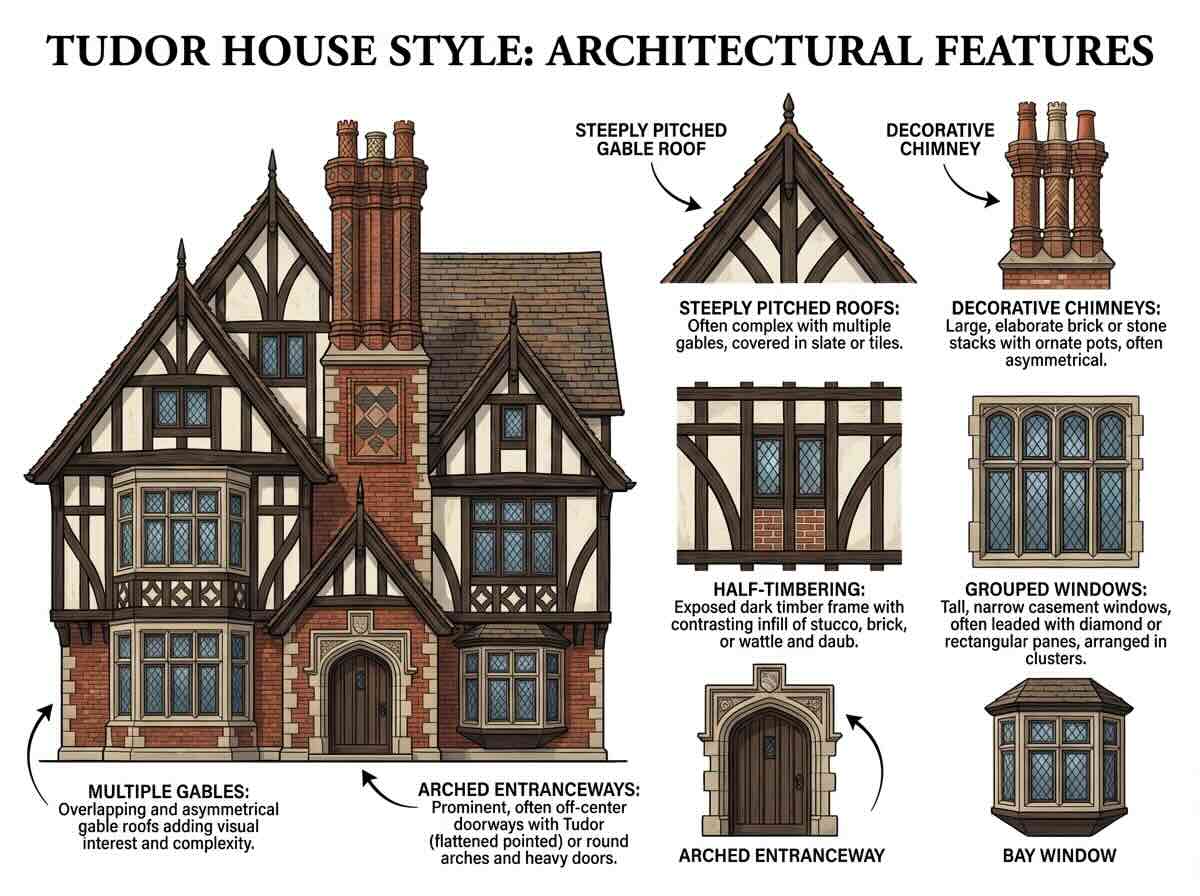
- Distinctive visual features: Half-timber framing creating dark wood patterns against cream or white plaster, steeply pitched roofs often with multiple angles and valleys, casement windows with leaded glass panes, rounded doorways, and decorative chimneys all contribute to unmistakable medieval aesthetic.
- Maintenance requirements: Tudor homes demand specialty knowledge for repairs since materials like half-timber, plaster, and leaded glass require craftspeople familiar with historical restoration techniques and authentic materials that increase repair costs substantially compared to standard home maintenance.
- Interior characteristics: Heavy exposed beams, stone or brick fireplaces, detailed woodwork, and period-appropriate fixtures create cozy interior spaces that feel dramatically different from contemporary open floor plans and minimalist design trends dominating modern home construction.
- Climate adaptation: Originally designed for English climate, Tudor homes adapt reasonably to cold climates with thick walls and small windows providing good insulation, but struggle in hot, humid regions where thick walls and small windows increase cooling costs and the romantic aesthetic seems out of place.
Craftsman Style Homes: Handmade Quality and Authentic Detail
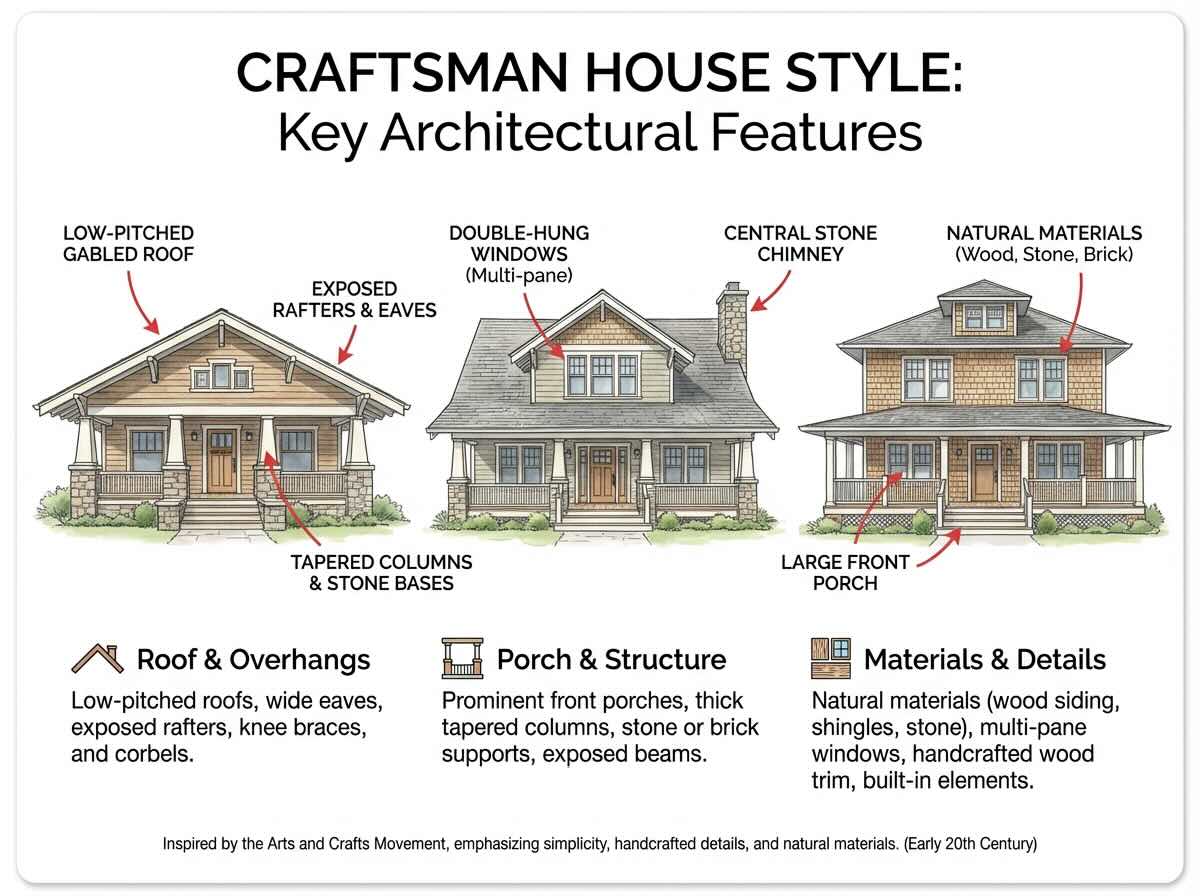
Craftsman style houses emerged as reaction against mass production and industrial manufacturing, emphasizing handcrafted details, natural materials, and honest construction methods that celebrate the skill and artistry of individual craftspeople rather than hiding structural elements behind decorative facades. Popular from 1905-1930 but experiencing major revival during the 2000s-2020s among homeowners seeking quality craftsmanship, authentic materials, and homes that aged gracefully rather than becoming dated through reliance on trendy materials and construction shortcuts that compromise longevity and aesthetic appeal across decades.
Exterior Details
Exposed wood beams on porches, decorative brackets supporting eaves, horizontal banding of stones or shingles, and simple geometric patterns distinguish craftsman exteriors from more ornate styles. Front porches become signature feature providing outdoor living space and neighborhood connection.
Interior Design
Built-in cabinetry, window seats with storage, exposed wood joinery, tile work, and handcrafted details throughout interior showcase individual artistry and quality. Every element designed with intention rather than following standardized conventions or trendy fashions.
Material Selection
Natural materials dominate including wood, stone, tile, and metal chosen for durability and beauty rather than cost or convenience. Quality construction methods and authentic materials age beautifully and actually improve with time unlike synthetic materials requiring replacement.
Functional Beauty
Craftsman philosophy emphasizes that form follows function and beautiful design emerges naturally from solving practical problems elegantly. No purely decorative elements exist for ornamentation alone – every detail serves purpose while creating aesthetic pleasure simultaneously.
Cape Cod Style Homes: Coastal Charm and Practical Design
Cape Cod style homes originated in New England during the 1600s-1700s, designed specifically to withstand harsh coastal weather, heavy snow loads, and strong winds while maximizing interior living space within modest footprints and simple construction methods that early settlers could build themselves without specialized craftspeople or expensive materials. The style’s enduring appeal stems from its authentic functionality merged with charming aesthetic that feels both cozy and elegant, making Cape Cod designs perpetually popular in coastal regions and increasingly sought after nationwide by homeowners appreciating the style’s honest practicality and understated beauty that resists becoming dated through adherence to timeless principles rather than trendy details.
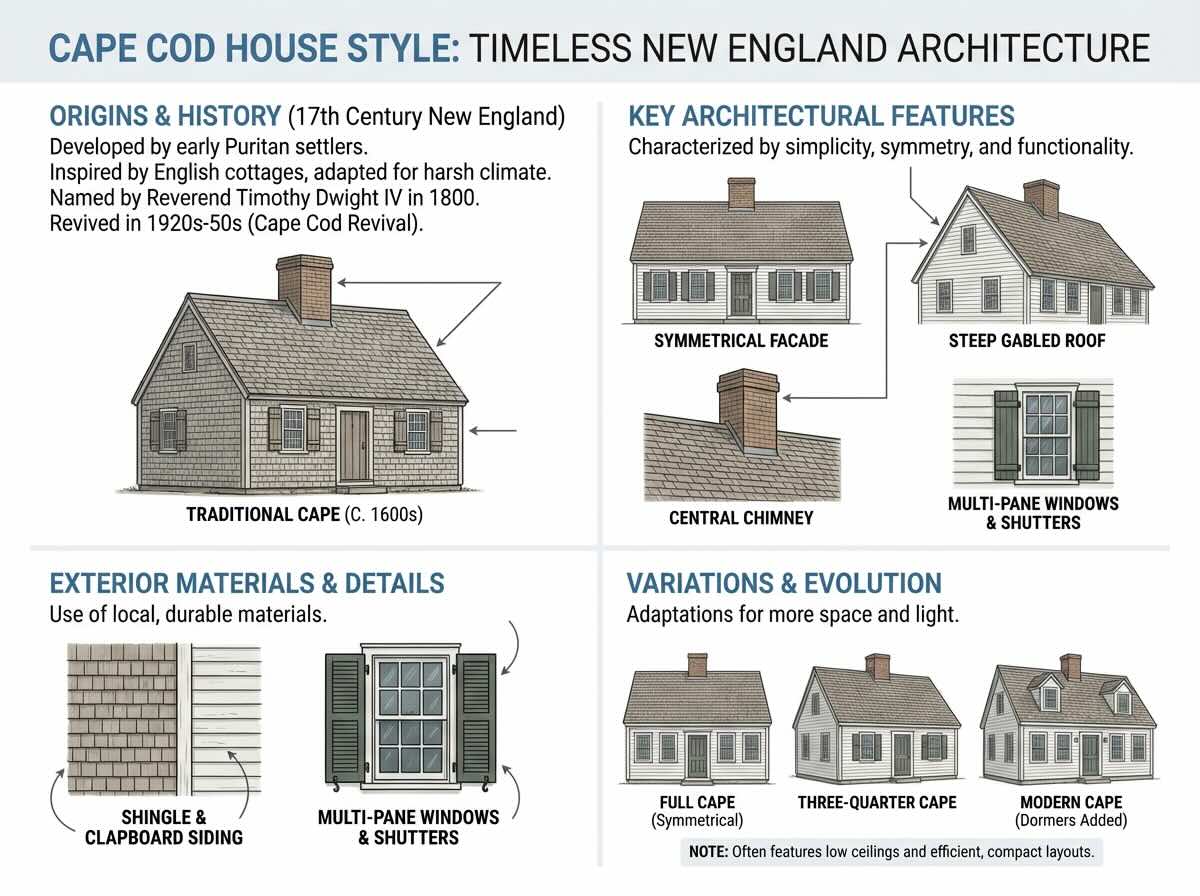
| Cape Cod Feature | Original Purpose | Modern Relevance |
|---|---|---|
| Steep roofline | Sheds heavy snow loads and rain efficiently, prevents water accumulation and ice dam formation during harsh winters. | Still effective for snow-prone regions, requires professional maintenance but excellent water management. Aesthetic appeal regardless of climate. |
| Compact square shape | Minimizes wall surface exposed to weather and wind, reduces interior volume requiring heating during long cold winters. | Efficient heating and cooling, lower energy costs, fits well on smaller lots, creates cozy interior spaces. |
| Dormer windows | Created usable attic space for bedrooms without requiring second story construction and wind resistance. | Adds visual interest to roofline, provides additional interior space, creates charming upper bedrooms with sloped ceilings. |
| Central chimney | Single chimney served multiple fireplaces throughout home, provided structure for heat distribution and structural support. | Architectural focal point, allows homes to function without fireplaces for modern heating. Adds character and visual interest. |
| Symmetrical facade | Balanced appearance created sense of stability and permanence, reflected practical room arrangement inside. | Timeless aesthetic appeal, feels balanced and complete, works across multiple color schemes and landscaping approaches. |
Cape Cod style remains highly desirable particularly in New England but gaining popularity nationwide among buyers seeking practical, timeless design over trendy architectural statements.
Colonial Style Homes: American Heritage and Formal Elegance
Colonial style houses draw inspiration from Georgian and Federal architectural traditions brought to America by English settlers and refined over generations into distinctly American interpretation that represents formal elegance, symmetrical balance, and dignified simplicity reflecting Enlightenment principles that influenced colonial-era American thought and aesthetics. Colonial homes built during 1700s remain highly prized by preservation enthusiasts and architectural historians, while colonial revival homes constructed during the 1920s-1980s bring colonial aesthetic to new construction for homeowners seeking heritage connection, timeless beauty, and formal entertaining spaces that colonial design emphasizes through proportional rooms, grand staircases, and carefully arranged fenestration creating pleasing visual balance.
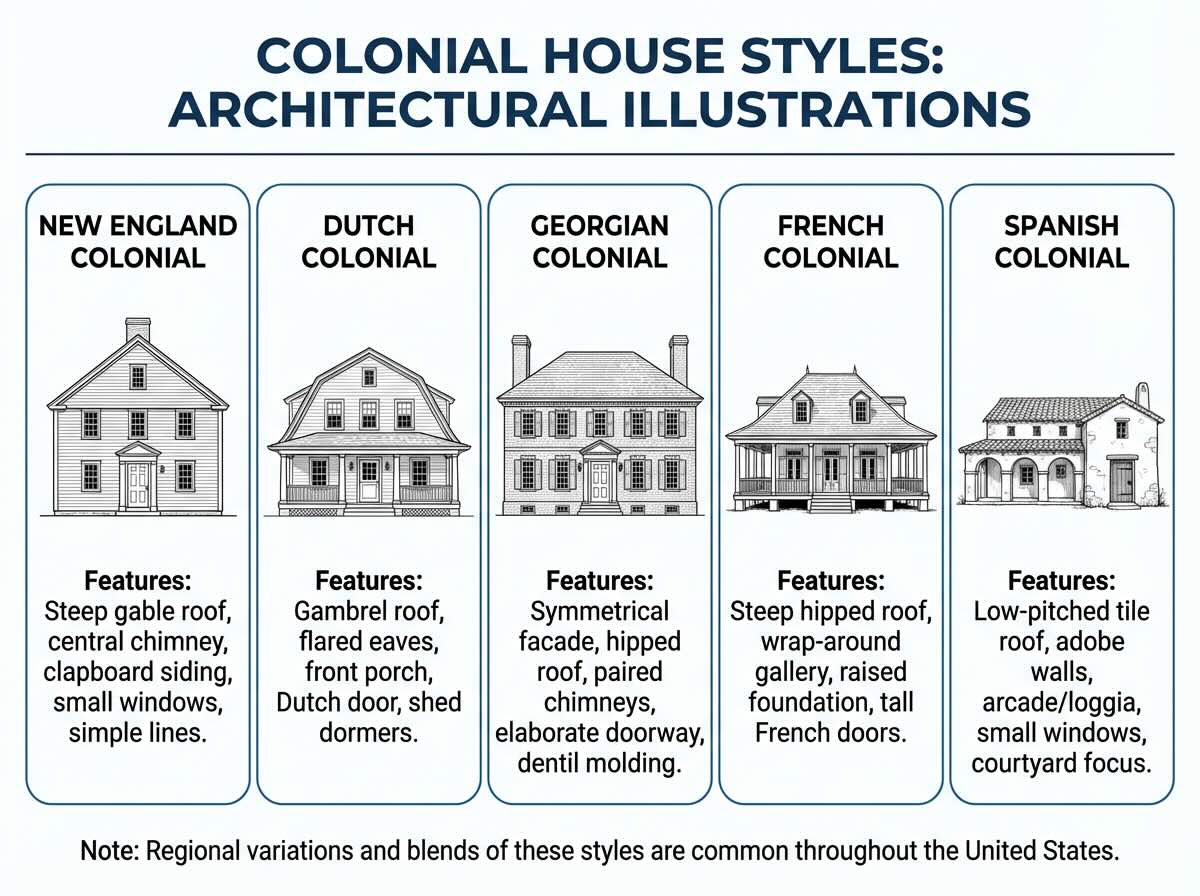
- Exterior characteristics: Symmetrical facades with centered doorway, regularly spaced double-hung windows, pitched roofline, brick or clapboard siding, and minimal decorative elements beyond shutters and front entry create refined, dignified appearance emphasizing balance and proportion.
- Interior layout: Central hallway dividing home into symmetrical rooms on either side, grand staircases featured prominently, formal living and dining spaces separated from kitchen and utility areas reflecting hierarchical room organization of colonial era.
- Decorative elements: Dentil molding under eaves, quoins at corners, pediment doorways, shutters serving both functional and decorative purposes, and restrained ornamentation compared to Victorian abundance distinguish colonial from other historical styles.
- Construction methods: Heavy timber framing, brick or stone foundation, large fireplaces and chimneys, and attention to proportional relationships reflect both practical building knowledge and aesthetic principles colonists brought from Europe and adapted to American conditions.
- Regional variations: Northern colonial homes feature steeper roofs for snow shedding while southern colonial examples include piazzas and broader roofs for heat protection, demonstrating how fundamental colonial principles adapted to different climates and regional building traditions.
Victorian Style Homes: Ornate Opulence and Architectural Complexity
Victorian style homes represent the architectural exuberance and industrial confidence of the Victorian era (1837-1901) when mass production made ornamental details affordable to middle-class homeowners who gleefully embraced elaborate decoration, complex rooflines, contrasting colors, and eclectic mixing of design elements from multiple traditions creating homes that celebrated wealth, education, and refined taste through architectural showmanship. Victorian homes captivate contemporary homeowners through their distinctive beauty, romantic character, and evidence of craftsmanship and investment that speaks to permanence and quality despite the maintenance challenges and significant expenses required to preserve these architecturally complex and materially demanding homes authentically.
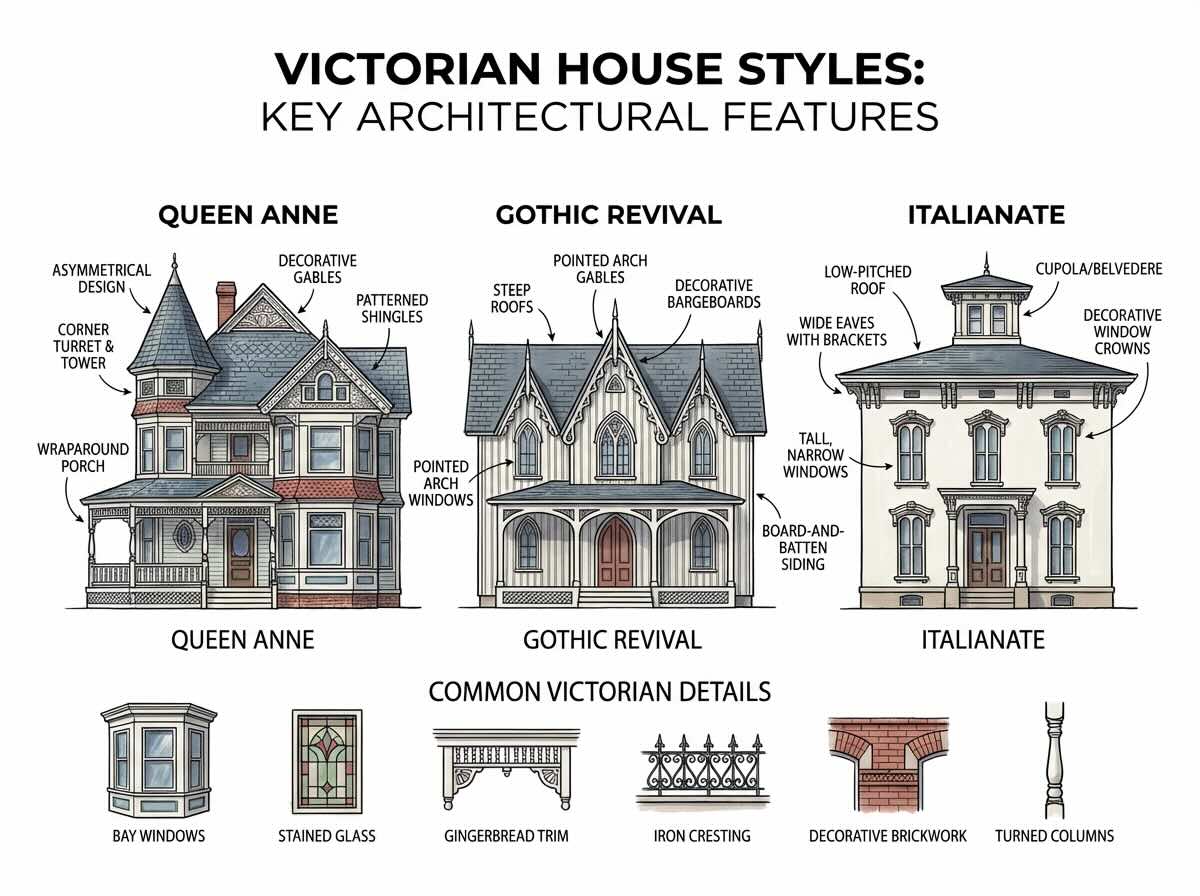
Queen Anne Victorian
Asymmetrical facades, wraparound porches, varied roofline with multiple peaks and angles, turrets or towers, fish-scale shingles, and exuberant ornamentation create dramatically romantic appearance. Most elaborate and expensive Victorian substyle to maintain.
Italianate Victorian
Tall narrow proportions, bracketed eaves, rounded arch windows and doors, decorative quoins, and tower-like cupolas create distinctive silhouette. Often found in urban areas, sometimes converted to multi-unit buildings.
Second Empire Victorian
Mansard roofs with dormers create distinctive top-heavy appearance, elaborate decoration, and formal symmetry balanced by ornate details. Popular in northeast urban areas, represents wealth and sophisticated taste.
Stick Style Victorian
Decorative wooden “sticks” applied to exterior as ornament, creating geometric patterns and visual interest without structural function. Combines simplicity with applied ornamentation and experimentation with materials.
Modern Farmhouse: Contemporary Comfort With Rustic Character
Modern farmhouse style emerged during the 2010s-2020s as reaction against both strict minimalism and excessive ornamentation, blending farmhouse nostalgia and rural authenticity with clean contemporary lines, open floor plans, and practical modern amenities creating homes that feel both comfortable and designed, welcoming and curated simultaneously. The style appeals to homeowners seeking aesthetic that references agricultural heritage without demanding the maintenance and limitations of genuine historical farmhouses, allowing them to enjoy barn-inspired interiors, reclaimed wood details, and rural character while maintaining modern kitchen technology, efficient heating and cooling systems, and flexible interior spaces optimized for contemporary living patterns.
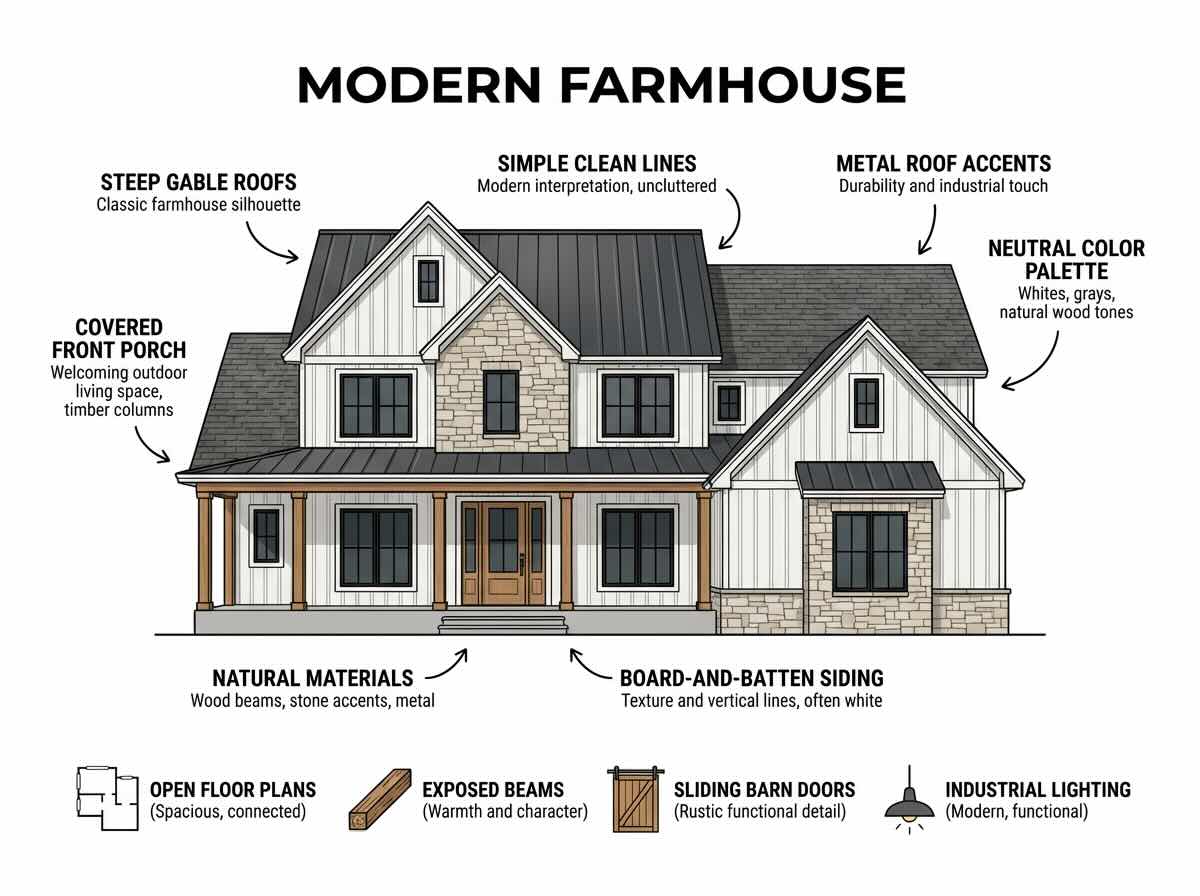
- Exterior design: Combines traditional barn forms with contemporary materials, large windows providing views and natural light, metal roofing or mixed materials, and simplified rooflines compared to ornate historical farmhouses. Modest ornamentation and emphasis on honest materials and proportional relationships.
- Interior characteristics: Open floor plans with kitchen, dining, and living spaces flowing together, exposed wood beams or faux beams for character, shiplap or reclaimed wood wall finishes, barn doors serving both functional and aesthetic purposes, and industrial light fixtures blending rural and contemporary aesthetics.
- Material selection: Mix of wood, metal, stone, and glass creates visual interest and texture. Reclaimed wood genuine or reproduction references rural heritage while new materials maintain durability and ease of maintenance modern homeowners expect.
- Color palettes: Neutral tones dominate with black, white, cream, and gray creating calm backdrop allowing natural materials and textures to provide visual interest. Pops of darker colors for contrast and depth without overwhelming the calm, balanced aesthetic.
- Practical appeal: Easier to maintain than historical farmhouses while retaining character appeal. Flexible interior spaces accommodate work-from-home situations, extended family visits, and evolving lifestyle needs without compromising the designed aesthetic.
Mediterranean Style Homes: European Elegance in Warm Climates
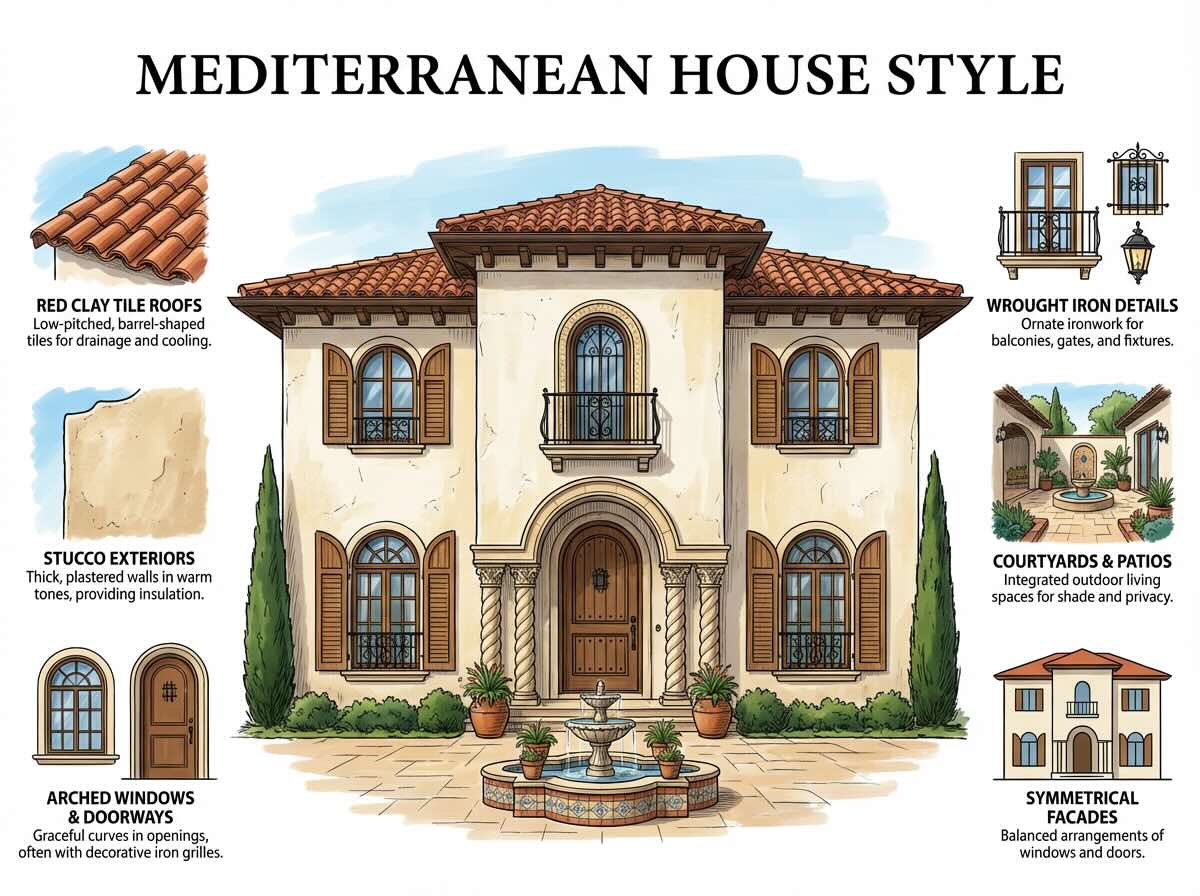
Mediterranean style homes transport European coastal aesthetics to warm American regions, drawing inspiration from Spain, Italy, Greece, and other Mediterranean countries where climate, building materials, and cultural traditions created distinctive architectural approaches emphasizing outdoor living, natural ventilation, thick walls for thermal mass, and light-filled interiors with direct connection to courtyards and terraces. Mediterranean homes appeal to those seeking vacation-like atmosphere in their everyday living, preferring colorful exteriors and textured materials to contemporary minimalism, and accepting the style’s inherent requirement for sufficient land, courtyard spaces, and warm climate to fully realize the design’s intentions and practical benefits beyond pure aesthetic preference.
| Mediterranean Element | Characteristic Details | Function and Benefit |
|---|---|---|
| Stucco exterior | Thick, textured plaster finish in cream, terracotta, or warm tones, sometimes with decorative patterns or colorful accents. | Reflects heat keeping interior cool, weather-resistant in hot, dry climates, requires periodic recoating for maintenance. |
| Clay tile roofing | Curved or flat terracotta tiles creating distinctive appearance while providing excellent thermal performance and longevity. | Heavy tile reflects heat and provides ventilation space, extremely durable lasting 100+ years, requires structural support and professional installation. |
| Arched doorways | Rounded openings creating visual interest and softness compared to rectangular contemporary doorways and windows. | Distributes weight of structure above openings, creates graceful aesthetic, requires specialized framing and masonry skills. |
| Courtyards and patios | Central outdoor spaces surrounded by covered porches and arches, creating natural ventilation and outdoor living areas. | Provides natural cooling, expands living spaces outdoors, requires sufficient land and climate suitable for outdoor living most of year. |
| Thick walls | Heavy construction with substantial thermal mass providing insulation and temperature regulation without mechanical systems. | Maintains cool interior during hot days, releases stored warmth at night, reduces cooling costs significantly in appropriate climates. |
Mediterranean style thrives in warm climates like California, Arizona, Florida, and Texas where year-round outdoor living and heat management justify the style’s design principles and material investments.
Contemporary and Modern Style Homes: Minimalism and Innovation
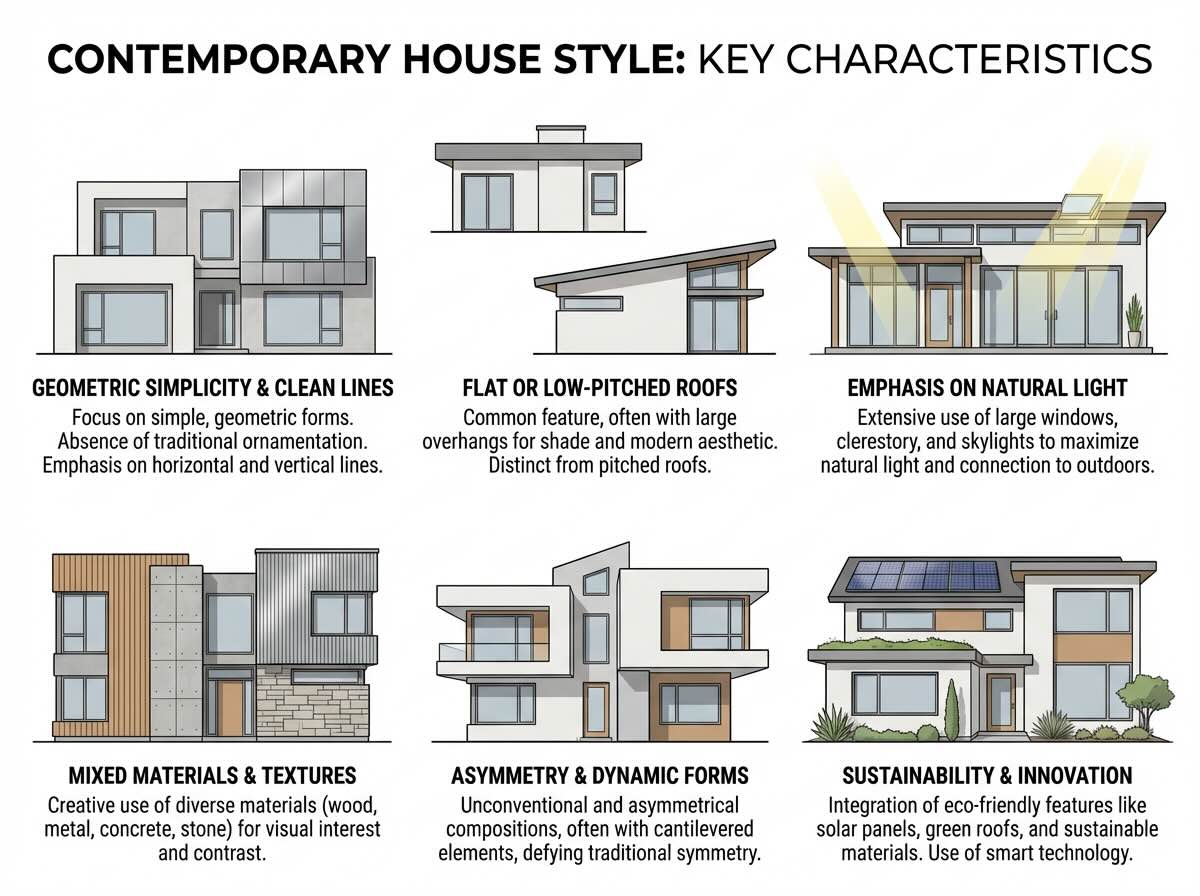
Contemporary and modern style homes (often used interchangeably though technically different, with modern referring to specific mid-century movement and contemporary referring to current design approaches) emphasize clean lines, open floor plans, minimal ornamentation, and honest display of structural and mechanical systems rather than hiding them behind decorative facades and finishes. These styles appeal to homeowners seeking low-maintenance homes that age gracefully rather than becoming dated, appreciating the philosophical stance that function determines form and decoration should serve purpose rather than create unnecessary complexity, and accepting that the design requires quality materials, excellent construction, and thoughtful details to succeed because simplicity reveals any imperfections or cheap shortcuts immediately.
Mid-Century Modern
1950s-1960s design emphasizing horizontal lines, connection between interior and outdoor spaces through large glass, natural materials including wood, and functional furniture design that influences home design. Iconic style experiencing major revival among designers and collectors.
Minimalist Contemporary
Stripped down to essentials with no decorative elements, neutral color palettes, hidden mechanical systems, and emphasis on materials and proportions creating beauty through restraint rather than ornamentation or visual complexity.
Industrial Modern
Celebrates materials and systems typically hidden including exposed brick, concrete, steel beams, and HVAC systems as design elements creating aesthetic authenticity and celebrating craftsmanship of builders and engineers.
Scandinavian Modern
Emphasizes functionality, natural light, warm wood tones, and simplicity reflecting Nordic design traditions. Cozy minimalism balancing clean lines with welcoming atmosphere and connection to nature through materials and large windows.
Bungalow Style Homes: Small-Scale Charm and Authenticity
Bungalow style homes, popular from 1900-1930, emphasize modest scale, handcrafted details, and honest use of materials creating small but beautifully designed residences that represent honest living without pretension or unnecessary expense. The movement emerged as reaction against Victorian excess, emphasizing that modest homes could be designed with care and attention to proportion and detail creating spaces more beautiful and livable than larger homes with less thoughtful design. Bungalows attract contemporary buyers seeking affordable historic homes, smaller carbon footprint and maintenance requirements, and the authentic aesthetic and quality craftsmanship that characterized the original movement.
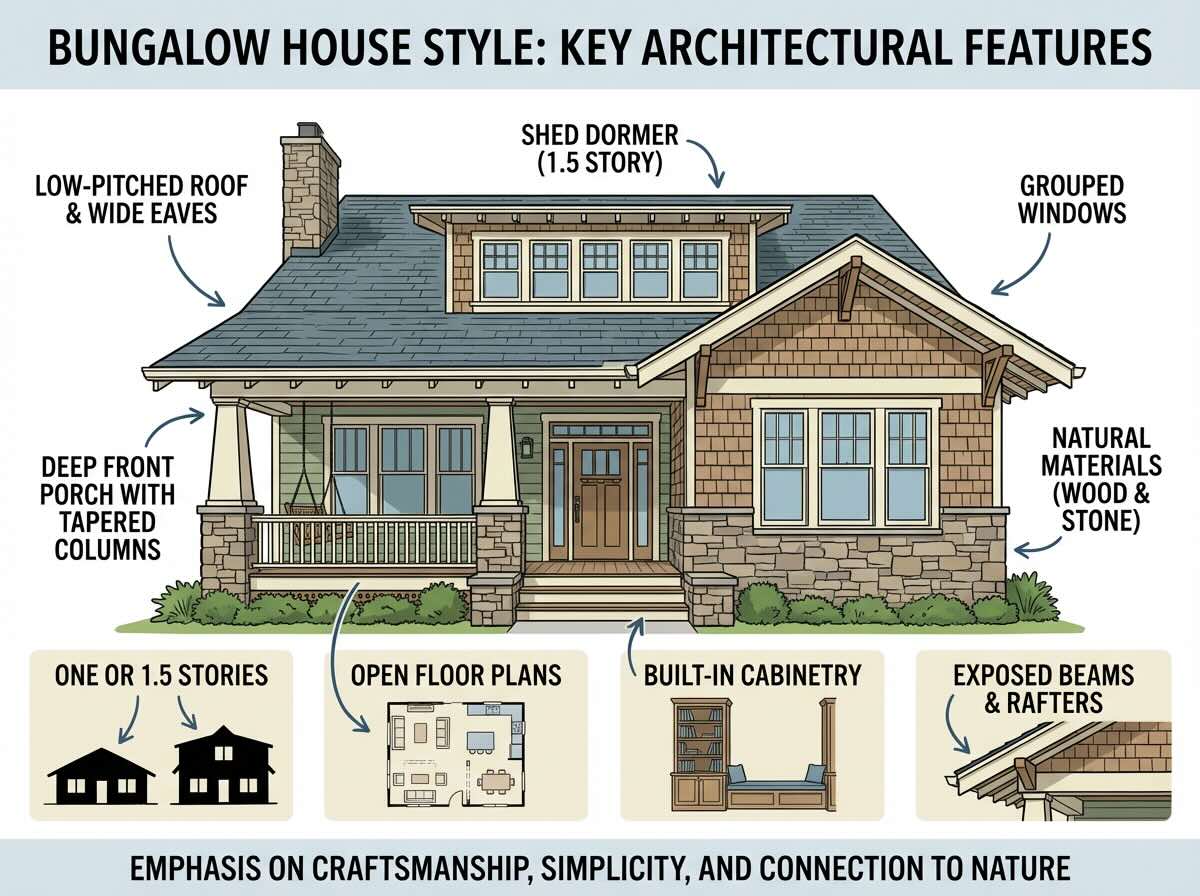
- Size and efficiency: Typically 800-1,500 square feet, bungalows maximize every inch through efficient planning and multipurpose spaces. Basements and sleeping porches provided additional living area without expanding footprint, making bungalows work for small families and modern single households.
- Distinctive features: Low-pitched roofs with deep overhangs, front porches as primary exterior feature, exposed rafter ends, tapered porch columns, and built-in cabinetry and seating throughout interior create distinctive bungalow character across numerous variations.
- Materials and quality: Original bungalows featured quality hardwoods, plaster walls, tile work, and attention to detail reflecting craftsman movement values. Original materials age beautifully but require specialized knowledge and care for authentic restoration.
- Neighborhood appeal: Bungalow neighborhoods typically feel cohesive and walkable since modest scale, front porches, and neighborhood-oriented design encouraged community interaction and outdoor gathering in pedestrian-friendly environments.
Greek Revival Architecture: Classical Elegance and National Identity
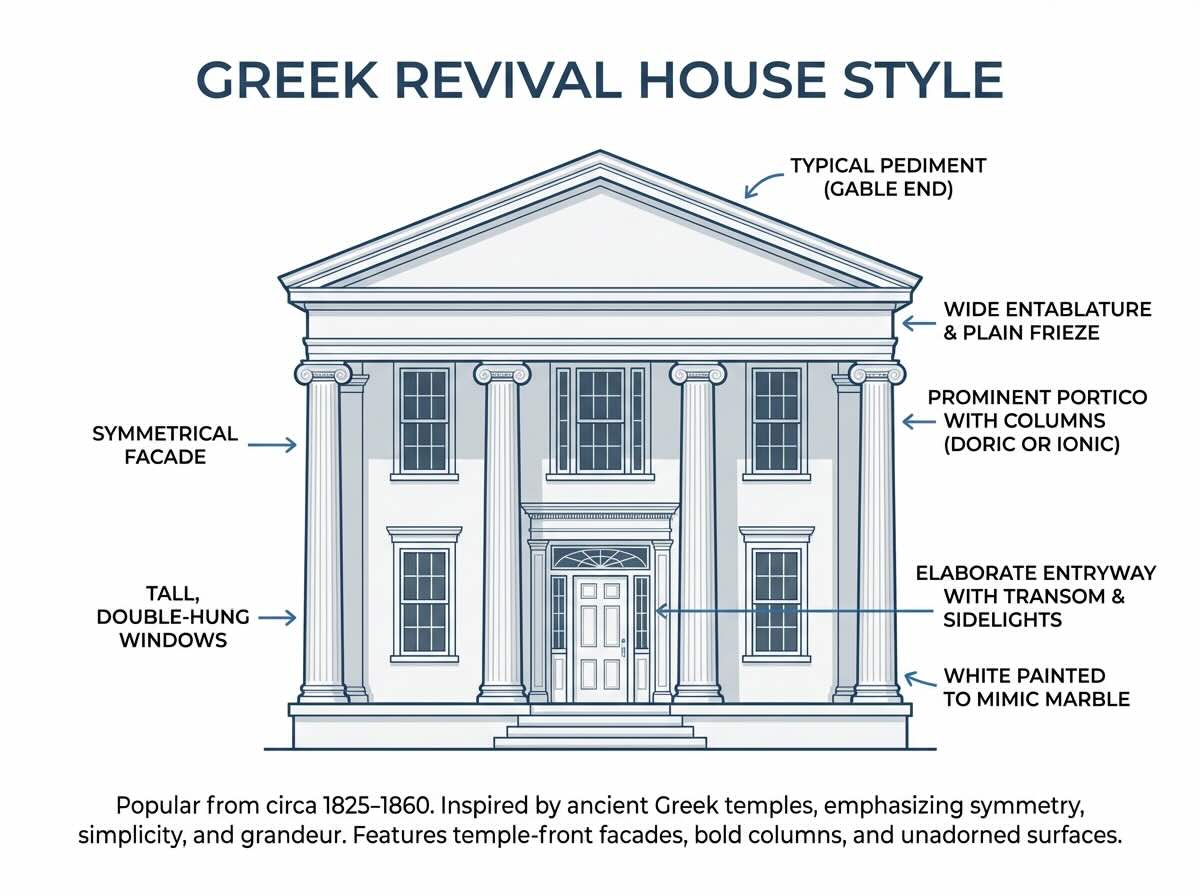
Greek Revival style dominated American architecture from 1825-1860, reflecting democratic ideals and intellectual connections to ancient Greece that founders and educated citizens embraced enthusiastically as representing highest achievements of civilization and democracy. Greek Revival homes feature distinctive columnned porches, pediments, and symmetrical facades inspired by ancient Greek temples, creating monumentality and formality in residential settings that expressed owners’ education, refined taste, and democratic ideals. While fewer Greek Revival homes exist compared to other historical styles, their distinctive architecture remains recognizable and highly valued by preservationists and homeowners seeking homes that embody national heritage and architectural authenticity reflecting American intellectual traditions.
| Greek Revival Feature | Characteristics | Regional Variation |
|---|---|---|
| Columned porticos | Large columns supporting pediments creating temple-like appearance at main entrance, columns typically fluted with Doric, Ionic, or Corinthian capitals. | Northern versions often feature front-gable pediments while southern examples include wraparound galleries with multiple columns creating porches running entire facade. |
| Pediments | Triangular gables at roofline mimicking ancient temple designs, often containing decorative patterns or circular windows (oculus). | Can occur at front, sides, or both creating symmetrical monumentality or asymmetrical drama depending on designer’s intent and lot orientation. |
| Symmetrical facade | Perfectly balanced arrangement of windows and doors reflecting classical proportions and mathematical relationships ancient Greeks valued. | Creates formal, stately appearance emphasizing permanence and rational order, appeals to homeowners valuing tradition and established authority. |
| Minimal ornamentation | Classical simplicity with strength in proportions rather than decorative details, allowing columns and pediments to provide visual interest. | Contrasts with Victorian abundance but provides dramatic impact through scale and architectural clarity without requiring extensive ornamentation. |
Spanish Colonial Style: Southwestern Heritage and Desert Adaptation
Spanish Colonial architecture reflects centuries of Spanish presence in the American Southwest, adapted to desert climate through thick adobe or stucco walls, small windows, interior courtyards, covered arcades, and earth-tone color palettes creating homes perfectly suited to intense sun and heat of arid regions. The style remained dominant in the Southwest through the 19th century and experienced intentional revival during the 1920s-1940s as architects and planners sought to create regional identity and visual distinction from eastern architectural traditions. Spanish Colonial homes appeal to Southwestern residents seeking authentic regional character, climate-appropriate design, and connection to historical traditions that influenced the region’s development while avoiding the exoticism of purely imported styles disconnected from local context and practical building requirements.
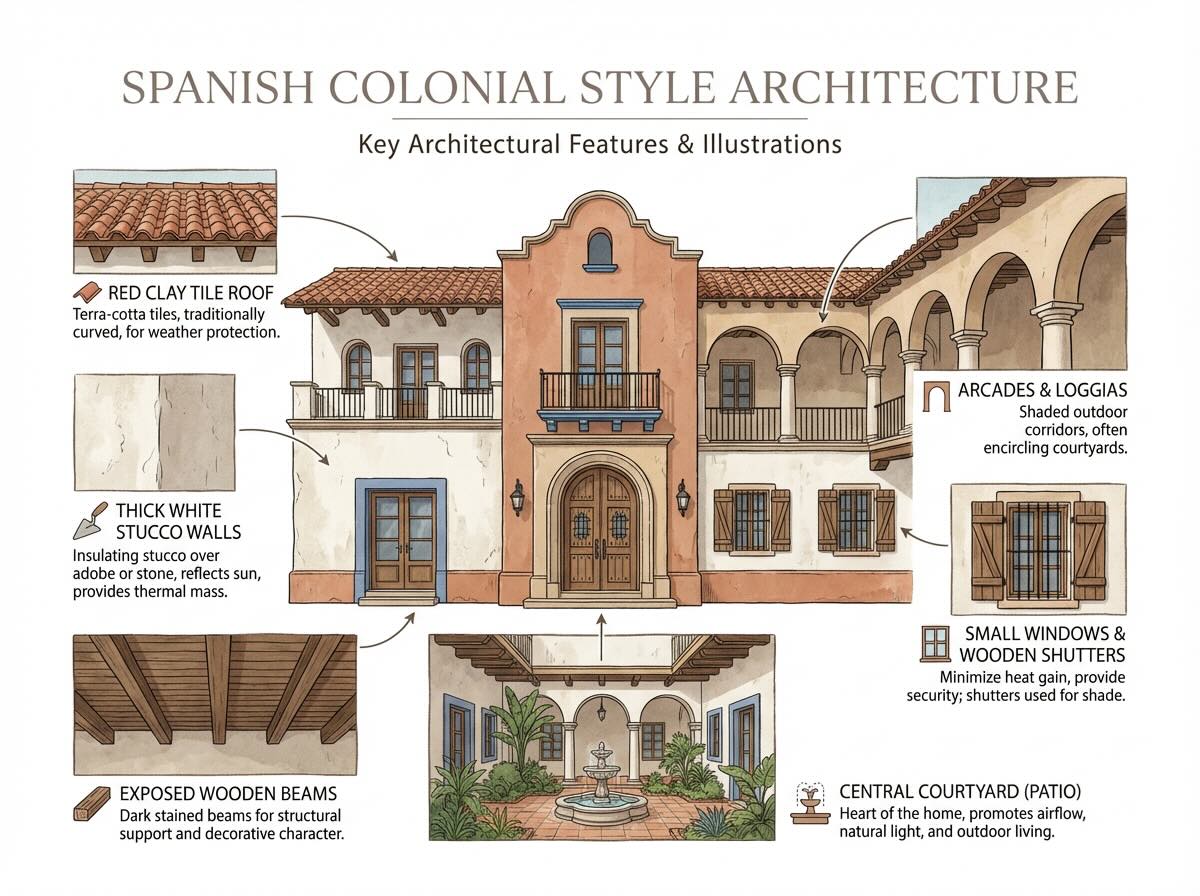
- Building materials: Adobe (sun-dried brick) or stucco exterior providing thick thermal mass and durability in dry climates, clay tile roofing, wooden roof vigas (beams) often left exposed, and stone foundations creating authentic southwestern aesthetic tied directly to available local materials.
- Spatial organization: Interior courtyards create outdoor living space protected from intense sun and wind, rooms arranged around central courtyard with covered arcades providing transitional spaces between interior and outdoor. This organization maximizes natural cooling through ventilation while protecting interior spaces from harsh weather.
- Window and door treatment: Small windows reduce solar heat gain, often featuring decorative iron grilles providing security and visual interest. Doors heavy wood often with decorative iron hardware emphasizing craftsmanship and regional traditions.
- Regional variations: Pueblo Revival emphasizes native American influences with rounded adobe walls and protruding roof vigas, while Territorial style adds Anglo-American influences with portal porches and refined proportions, creating multiple substyles within broader Spanish Colonial category.
Saltbox Style: Colonial-Era Efficiency and Distinctive Silhouette
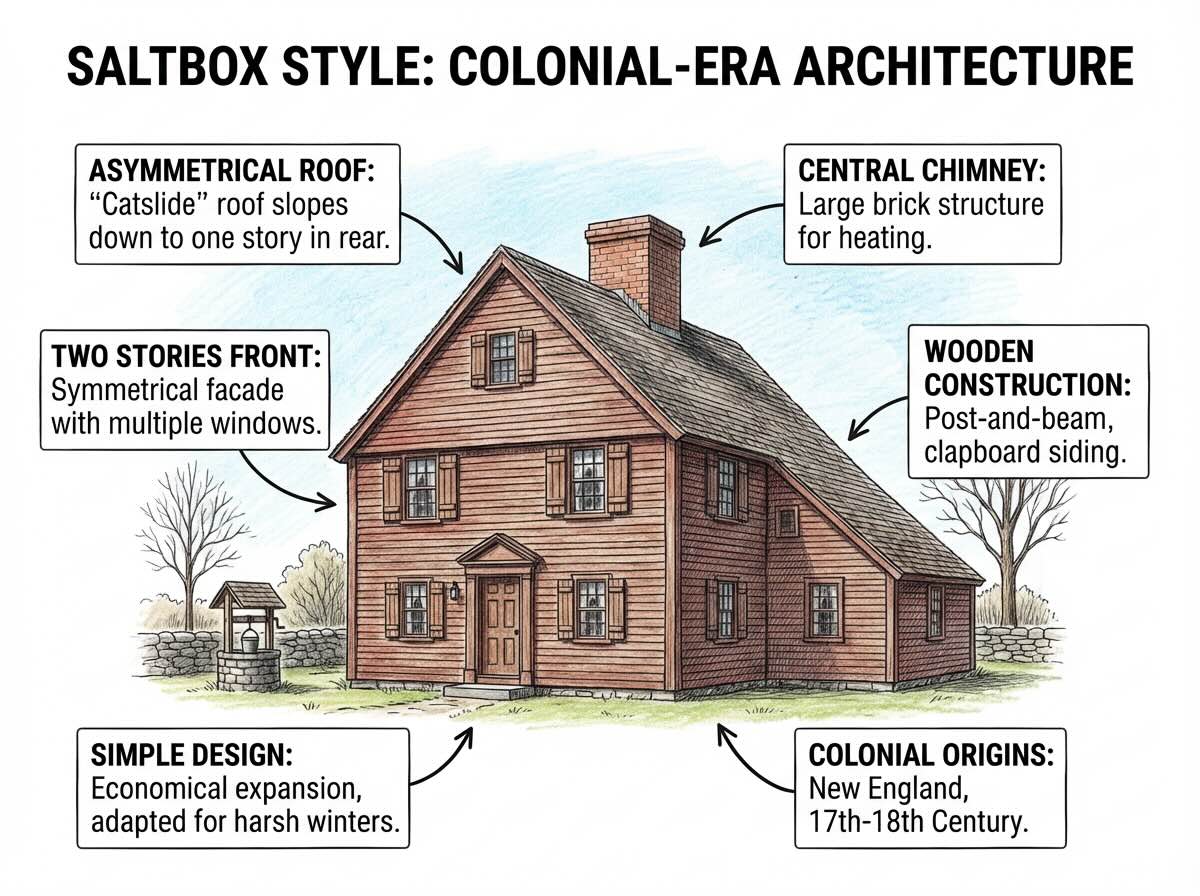
Saltbox style homes emerged in colonial New England as practical solution to growing family needs without rebuilding houses or moving, adding single-story lean-to additions to one side of existing colonial homes creating distinctive asymmetrical roofline resembling the wooden boxes used for storing salt in colonial times. The style remains iconic in northeastern regions and appeals to homeowners valuing authentic historical character, efficient use of space, and the distinctive appearance that results from honest response to practical needs rather than preconceived aesthetic theories determining design decisions from the beginning.
Distinctive Shape
Long sloping roofline on rear side contrasts with steep front roofline creating recognizable silhouette visible from street. Asymmetrical appearance results from practical addition rather than designed proportions.
Interior Layout
Original colonial structure houses main living spaces while lean-to addition contains kitchen, pantry, and service areas. Two-story front contrasts with single-story rear creating unusual interior spatial relationships and ceiling heights.
Historical Context
Saltbox represents family growth and adapting existing structures rather than abandoning homes outgrown through changing circumstances. Authentic examples retain evidence of construction phases showing how families modified homes across generations.
Renovation Challenges
Asymmetrical layouts complicate modern kitchen and bathroom placement, unusual ceiling heights require creative furniture arrangement, and authentic restoration demands specialized knowledge of colonial-era construction methods and materials.
Choosing the Right House Style for Your Needs
Selecting a house style involves balancing aesthetic preference with practical considerations about maintenance requirements, climate appropriateness, regional market conditions affecting resale value, and how honestly the style adapts to your lifestyle needs rather than requiring constant compromises between design intentions and actual living patterns. While romantic appeal of particular styles attracts initial interest, long-term satisfaction depends on choosing homes whose styles accommodate your actual daily life, require maintenance levels you’re willing to commit to, and fit within your budget for both acquisition and ongoing upkeep rather than discovering years into ownership that the stylistic choices demand sacrifices or expenses you didn’t anticipate when falling in love with particular architectural aesthetics.
- Climate compatibility: Match style to regional climate ensuring design features serve practical purpose beyond aesthetic appeal – steep roofs in snowy regions, thick walls and shade in hot climates, and ventilation strategies appropriate to humidity levels rather than choosing styles pretty in vacation destination but impractical in your actual environment.
- Maintenance capacity: Honestly assess your willingness and ability to maintain detailed, complex styles versus choosing simpler designs requiring less specialist knowledge and expensive repairs. Victorian and Tudor homes captivate many people before owners discover the substantial maintenance burden.
- Market conditions: Research what styles command highest prices and sell fastest in your specific region since regional preferences vary dramatically. Moving to neighborhood where your chosen style is less popular may create challenges when selling or refinancing.
- Lifestyle fit: Choose styles accommodating your actual activities and needs – open floor plans for families with young children, formal separate rooms for those entertaining frequently, single-story for aging in place or mobility limitations, outdoor space for those spending extensive time outside.
- Budget reality: Calculate total costs including purchase price, necessary renovations, insurance, utilities, and anticipated maintenance rather than choosing based on asking price alone. A bargain-priced Victorian might cost significantly more long-term than higher-priced contemporary home requiring minimal maintenance.
Preserving Historic Character While Modernizing Systems
Homeowners purchasing older architectural styles frequently struggle with balancing preservation of historic character and authentic details against modernizing systems like electrical, plumbing, HVAC, and insulation that contemporary living standards demand for safety, efficiency, and comfort. Successfully navigating this tension requires thoughtful decision-making about which original elements deserve preservation, which can be carefully concealed while serving modern function, and which require replacement despite architectural loss because modern safety and efficiency standards supersede preserving outdated systems that create hazards or excessive operating costs.
- Preservation priorities: Identify which original features define the style’s character and deserve preservation efforts even if expensive – exposed beams, built-in cabinetry, tile work, and distinctive architectural details creating the home’s visual identity warrant investment because they’re difficult or impossible to replicate if removed.
- Hidden modernization: Conceal updated systems where possible – run modern electrical and plumbing within walls beneath original finish materials, position HVAC equipment discretely, install modern insulation without disrupting visible character through strategic placement where systems remain unseen during normal use.
- Sympathetic replacement: When original elements must be replaced, choose materials and designs matching original aesthetic as closely as possible – replicate window styles when original sashes fail, match hardware characteristics when replacement becomes necessary, and maintain proportional relationships even with new construction additions.
- Professional guidance: Work with architects and contractors experienced in historic preservation who understand appropriate methods and can identify which elements deserve protection and which can be modified while maintaining overall character. Preservation specialists prevent well-intentioned renovations that damage irreplaceable original features.
Regional Style Preferences and Market Dominance
Different architectural styles dominate different regions based on historical settlement patterns, local building traditions, climate adaptation, and cultural influences creating distinctive regional preferences that affect resale values, market demand, and the types of homes available for purchase in various areas. Understanding regional style preferences helps you select homes that align with market conditions and neighborhood character rather than importing architectural approaches from other regions that may struggle to appeal to local buyers despite personal preference.
Northeast
Colonial, Greek Revival, Victorian, Saltbox, and Cape Cod styles dominate reflecting English settlement traditions and centuries of architectural evolution. Preserving historic homes valued highly. Newer developments incorporate colonial revival and contemporary designs.
South
Colonial with southern modifications, Greek Revival, plantation-style homes with columns and galleries, Victorian, and bungalows characterize older areas. Modern developments favor ranch and contemporary designs. Historic preservation strong in Charleston, Savannah.
Southwest
Spanish Colonial, Pueblo Revival, Territorial style, and Territorial Revival reflect Hispanic heritage and climate adaptation. Contemporary Southwestern emphasizes stucco, earth tones, and authentic materials. Native American influences visible in many homes.
West Coast
Spanish Colonial in California, Craftsman throughout region, mid-century modern especially California, contemporary and modern designs dominating new construction. Significant Asian architectural influences visible in some areas. Outdoor living emphasized.
Midwest
Farmhouses, colonial variations, Victorian in older neighborhoods, ranch dominating post-WWII development. Prairie School influences visible in Chicago area. Contemporary designs increasingly common in urban revitalization.
Florida
Mediterranean Revival, Spanish Colonial, mid-century modern, and contemporary styles dominate reflecting diverse influences and climate. Seasonal architecture reflects part-time resident population. Cottage styles in historic areas.
Frequently Asked Questions About House Styles
Which house style is easiest to maintain?
Ranch and contemporary styles require least maintenance due to simple lines, minimal ornamentation, and modern materials. Victorian, Tudor, and Greek Revival demand more specialist knowledge and expensive repairs due to complexity and historic materials requiring preservation expertise.
What house style holds value best?
Market conditions vary regionally, but colonial and craftsman styles generally maintain value well in most areas. Local preferences matter significantly – ranch styles command premium prices in suburbs while victorians appreciate in urban historic neighborhoods. Research your specific regional market.
Can I renovate a home to change its architectural style?
Major renovations can modernize interiors but changing exterior style requires substantial work potentially losing original character. Consider whether working with existing style through thoughtful renovation might prove more satisfying than fighting against architectural integrity through extensive alterations.
Are older architectural styles more expensive to insure?
Insurance costs depend on condition, systems, and risk factors more than style itself. However, historic homes may cost more to insure due to higher replacement costs if severely damaged, and some insurance companies charge premiums for older homes with outdated electrical or plumbing systems.
Which house style is best for hot climates?
Spanish Colonial, Mediterranean, and southwestern styles naturally adapted to heat through thick walls, small windows, and covered outdoor spaces promoting ventilation. Ranch and contemporary designs also work well with proper shade and high-efficiency HVAC systems.
References and Sources
- Architectural Digest – House Styles and Architectural History Guide 2025
- Old House Online – Historic House Style Preservation and Restoration Resources
- National Register of Historic Places – Historic Architecture Database and Documentation
- National Trust for Historic Preservation – Restoration Guidelines and Technical Resources