
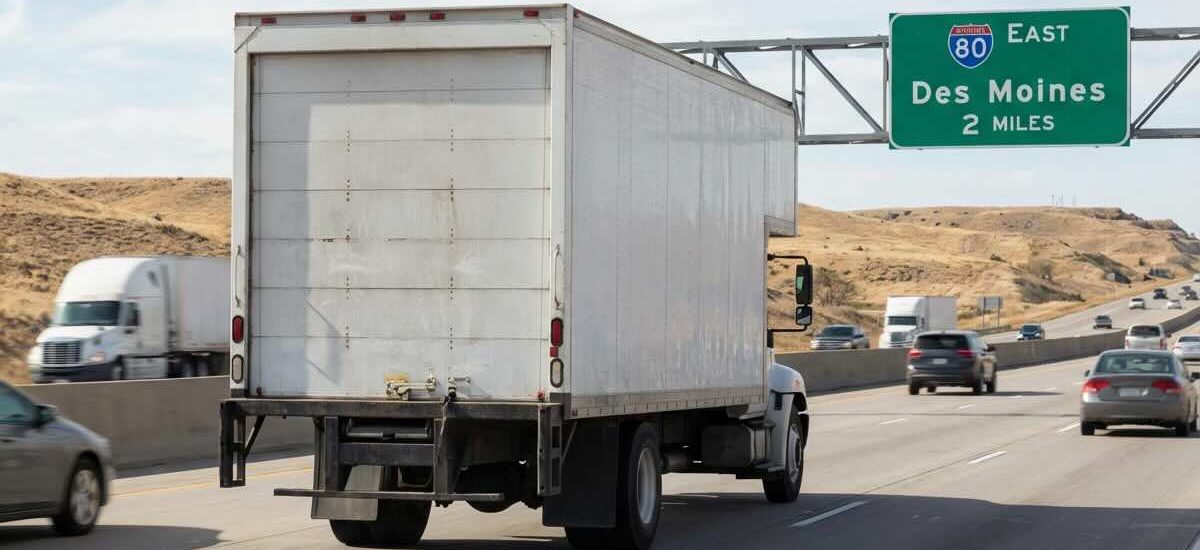
Crossing state lines transforms a move from a local logistics task into a federally regulated event and interstate moving regulations are in effect. In 2026, as interstate migration hits record levels, understanding the legal framework governing your relocation is the only way to ensure your household goods aren’t held hostage by predatory operators.
The “110% Rule” and mandatory USDOT registration are your federal protections under 49 CFR Part 375 designed to prevent the “hostage load” scams that still victimize thousands annually.
The Federal Motor Carrier Safety Administration (FMCSA) recently streamlined its oversight, phasing out legacy identifiers and introducing stricter enforcement through Operation Protect Your Move. This guide breaks down the essential federal regulations you must leverage, from verifying a carrier’s legitimacy to understanding why a written estimate is your only defense against hidden surcharges.
Avoid Rogue Movers: Work With a Vetted Brokerage
Don’t risk your belongings with unverified carriers. Coastal Moving Services acts as your consumer advocate, partnering exclusively with FMCSA-compliant, vetted interstate movers.
Talk to a Vetting Specialist
Key Points (2026)
- Federal USDOT registration mandatory: All interstate movers must hold a valid USDOT number and be registered with the Federal Motor Carrier Safety Administration (FMCSA). Verify legitimacy at protectyourmove.gov before booking.
- 110% pricing rule protects you: Under 49 CFR Part 375, customers cannot be charged more than 110% of non-binding estimates at delivery, with balance billed after 30 days. Binding estimates guarantee flat pricing if scope unchanged.
- Arbitration required for disputes: All interstate movers must offer neutral arbitration for loss, damage, and charge disputes. Claims of $10K or less are mandatory arbitration; above $10K movers can refuse (requiring legal action).
- Hostage load scams plague the industry: Over 3,000 people annually fall victim to scammers who load possessions then demand 2-3 times the estimate before delivery. FMCSA’s Operation Protect Your Move targets this most egregious violation.
- New consumer protection legislation pending: The Household Goods Shipping Consumer Protection Act (H.R. 880, introduced January 2025) strengthens FMCSA enforcement authority, requires physical principal place of business for all carriers, and allows state-level enforcement with federal funding.
What Federal Law Regulates Interstate Moving
When your belongings cross a state line, federal law takes over completely. The moment a moving truck leaves your home state with household goods, the Federal Motor Carrier Safety Administration and 49 CFR Part 375 become the governing authority. This federal oversight applies uniformly across all states and trumps any local or state-level requirements, creating a standardized framework that protects consumers nationwide.
Federal regulations establish mandatory licensing, pricing transparency, written documentation, insurance requirements, arbitration programs, and consumer protection standards that moving companies must follow without exception. Understanding these rules protects you from fraud, hidden fees, and unethical practices that plague the moving industry.
The Surface Transportation Board (STB) regulates moving company tariffs, ensuring published pricing is accurate and compliant. The FMCSA enforces these regulations through inspections, audits, and crash investigations. Together, these agencies create accountability that protects your move from start to finish.
Licensing and Registration: The USDOT Number Requirement
Every interstate household goods mover must register with the FMCSA and receive a USDOT number before legally operating. This unique identifier serves as proof that the company has met federal requirements for vehicle safety, driver qualifications, insurance, and compliance history. Without a valid USDOT number, a moving company is operating illegally.
The USDOT number is non-negotiable. Any company claiming to move your household goods across state lines while lacking this registration violates federal law and puts your belongings at legal risk. Unregistered movers operate outside federal oversight, meaning you forfeit consumer protections, arbitration rights, and legal recourse if something goes wrong.
How to Verify Legitimacy: Check the FMCSA’s official verification tool at protectyourmove.gov by entering the moving company’s USDOT number. This free tool reveals the company’s safety rating, complaint history, years in operation, and whether minimum insurance requirements are met. If the number returns no results, the company is not federally registered and should be avoided immediately.
Recent Change (October 2025): MC (Motor Carrier) numbers, previously required alongside USDOT numbers, were phased out in October 2025. All interstate carriers now use USDOT numbers exclusively as their federal identifier. If a mover mentions an MC number, verify they also have an active USDOT number.
Written Estimates and Pricing: The 110% Rule
Federal law distinguishes between binding and non-binding estimates, each with specific rules protecting your wallet. Understanding these differences prevents the most common moving scam: surcharges that double or triple your initial quote.
| Estimate Type | Your Cost at Delivery | Final Payment Timing | When to Choose |
|---|---|---|---|
| Binding Estimate (Guaranteed) | Exact amount shown (if scope unchanged) | Entire balance at delivery (additional charges billed 30 days later if scope changed) | You know exact household goods and services; want price certainty and budget predictability. |
| Non-Binding Estimate (Projection) | UP TO 110% of estimate (you do NOT have to pay over 110%) | Remaining balance billed 30 days after delivery | Inventory uncertain; want flexibility; are willing to accept weight-based final billing as long as it does not exceed 110% rule. |
Source: 49 CFR 375.401-375.405 Transportation of Household Goods (Pricing and Estimates); America First Moving Long-Distance Cost Guide (2025).
The 110% Rule Explained: If a mover provides a non-binding estimate of $5,000, you cannot be charged more than $5,500 ($5,000 × 1.10) at delivery time. If final charges exceed $5,500, the movers must release your belongings when you pay up to $5,500, then bill the remaining balance 30 days after delivery. This protects you from hostage scenarios where movers demand full payment of inflated charges before unloading.
How Estimates Work: Movers conduct a physical survey (on-site or virtual) to assess your belongings and provide an accurate estimate. This survey is required unless you explicitly waive it in writing. After the survey, the mover provides a written estimate specifying all services, accessorial charges (stairs, elevators, long carries), pickup date, and delivery window. Never accept verbal estimates; federal regulations require written documentation.
Required Documentation: Bill of Lading and Order for Service
When your move day arrives, your mover must provide two critical documents that become binding legal contracts.
Order for Service: This document lists every item being moved, itemizes estimated charges, notes any accessorial services (stairs, elevators, long carries), specifies pickup and delivery dates, and explains whether the estimate is binding or non-binding. The order for service becomes the foundation for your bill of lading and establishes what the mover promised to transport and for what price.
Bill of Lading: This contract itemizes your household goods, confirms pickup and delivery dates, specifies any guaranteed service with penalty/per diem terms, and includes the STB-required released rates valuation statement. The bill of lading is your receipt and evidence of what was loaded. Before signing, verify that all items listed match what is actually being loaded onto the truck. Once you sign, you are accepting the inventory and the terms.
Valuation and Insurance: Federal law establishes released value liability at 60 cents per pound ($1.32 per kilogram) as the default protection. This extremely limited coverage means a $1,000 stereo damaged in transit qualifies for only $6 compensation (10 pounds x $0.60). Full value replacement insurance is available for a fee, and you should purchase this if your belongings contain valuable items.
Movers cannot charge for released value liability, but they can offer full value replacement as an optional purchase. Always decline released value and purchase full value replacement protection for your peace of mind.
Logistics Managed by Experts
Navigating 49 CFR Part 375 is complex. Our relocation coordinators ensure your move adheres to all federal pricing and survey requirements, protecting you from hidden surcharges and “hostage load” scenarios.
Dispute Resolution: Arbitration and Your Rights
When disputes arise over charges, damage, or loss, federal law guarantees access to a neutral arbitration program before you must resort to court. Understanding how arbitration works protects your right to fair resolution without expensive litigation.
Arbitration Program Requirements: Every interstate mover must maintain a neutral arbitration program to resolve disputes concerning loss and damage claims and additional charges billed after delivery. This program must be neutral and fair to both customer and mover; the mover cannot have advantage due to the customer living far from the mover’s headquarters.
The $10,000 Threshold Rule: This rule determines whether arbitration is mandatory or optional for the moving company. If your claim for damages, loss, or additional charges is $10,000 or less, the mover must agree to arbitration if you request it. If your claim exceeds $10,000, the mover can refuse arbitration and force you to pursue legal action instead.
How Arbitration Works: Either you or the mover can initiate arbitration by submitting a claim to the company’s designated arbitration provider. Both parties then describe their positions and proposed resolutions. An arbitrator (neutral third party) reviews evidence and renders a decision that is final and binding on both sides. The arbitration fee is typically split between customer and mover, though the arbitrator determines final allocation.
FMCSA Limitations: Important reality: The FMCSA cannot resolve complaints, settle disputes, or obtain reimbursement for consumers. The FMCSA’s role is to ensure movers have arbitration programs in place, not to intervene in disputes. If arbitration fails or the mover refuses to comply with an arbitration award, you must pursue legal action independently.
Fraud Red Flags: Recognizing Moving Scams (2025-2026)
Moving fraud has evolved into a sophisticated criminal enterprise, with fraudulent companies operating multiple schemes to extract additional money from customers. Understanding these tactics prevents you from becoming one of the 3,000+ annual victims of hostage load scams alone.
The Hostage Load Scam (Most Egregious)
Fraudsters provide an unrealistically low estimate to secure your booking, then load your possessions onto a truck. Once your belongings are loaded, they refuse delivery unless you pay dramatically more (often double or triple the original quote). Your possessions are literally held hostage while they pressure you to pay. Many victims pay because they need their belongings urgently or due to family pressure.
Real example: Manhattan family hired “Big Apple Movers” for $900. After loading their 2-bedroom apartment, crew demanded $3,200, claiming additional stairs and heavy items. Children’s beds sat on truck for 6 hours until family scraped together extra money.
Bait-and-Switch Pricing
Fraudsters provide low initial quotes, then introduce hidden fees after loading: “extra heavy” items (books, clothes), “unexpected” stairs, “additional” packing materials, “long carry” fees for normal distances, surprise “fuel surcharges.” Once belongings are on the truck, customers have limited leverage to negotiate.
No-Show Scam
26% of reported moving fraud involves movers failing to appear on moving day entirely. Companies become unresponsive in days before the move, provide false excuses (truck breakdown, staffing shortage), and disappear with your payment. You are left stranded without alternatives on your move date.
DOT Number Fraud
Scammers steal or duplicate legitimate USDOT numbers to appear federally licensed. Because DOT numbers are public, criminals exploit this by using another company’s number. When victims verify at protectyourmove.gov, the number appears valid, but belongs to a different company. By then, it is too late.
Identity Reinvention
Fraudulent companies change their business name repeatedly to escape reputation damage and penalties. One particular carrier “reincarnated itself 11 times” to disassociate from negative reviews, enabling them to scam 2,000+ victims before federal action.
Fake Reviews and Accreditations
Scammers post fake positive reviews, falsely claim BBB membership or FMCSA certification, and misrepresent company history. Customers cannot distinguish legitimate reviews from fabricated ones without careful verification.
Fraud Statistics (2022-2025): The Better Business Bureau received 15,198 complaints against moving companies in 2022 alone, with consumers reporting $129,040+ in losses to the BBB Scam Tracker. Moving fraud is projected to increase 12-35% year-over-year. FMCSA launched “Operation Protect Your Move” specifically to combat hostage load and pricing fraud through nationwide investigations.
Regulatory Framework for Cross-Country Relocations
Federal oversight varies depending on the nature of your move and your point of origin. Understanding these distinctions helps you verify that your interstate relocation services are being handled by a provider with the correct legal authority. Below is a breakdown of how federal requirements apply to the most common search categories for moving companies from state to state.
| Search Category | Regulatory Context | Primary Compliance Requirement |
|---|---|---|
| Movers New York City | Metropolitan departures involve complex local parking permits in addition to federal long-haul rules. | NYDOT and USDOT active registration. |
| State to State Moving | Standard movers for state to state transitions must provide a physical or virtual survey. | 49 CFR Part 375 (Household Goods protections). |
| Cross State Moving Companies | Professional carriers or brokers facilitating moving company across states logistics. | Active FMCSA MC number and BMC-84 bond. |
Planning an interstate relocation? Ensure your provider is fully vetted.
How to Protect Yourself: Before, During, and After Moving
Before Booking:
- Verify USDOT number at protectyourmove.gov by searching the company name and number
- Call FMCSA directly at 202-366-9805 if verification tool is unclear
- Review complaint history, safety rating, and years in operation on protectyourmove.gov
- Never hire a mover without a valid USDOT registration
- Get written estimates from at least 3 different movers before deciding
- Request physical survey (on-site or virtual) for accurate estimates
- Ask explicitly whether estimate is binding or non-binding
- Get mover’s published tariff showing rates, rules, and accessorial charges
During Moving Day:
- Verify Bill of Lading lists all items accurately BEFORE signing
- Photograph all items being loaded to document condition
- Watch loading to ensure nothing is missed or damaged
- Request written explanation of any charges claimed
- Never sign blank bills of lading or agreements
- Do NOT pay more than 110% of non-binding estimate at delivery
- Use credit card for payment (enables chargebacks if fraud occurs)
After Delivery:
- Inspect all items immediately for damage and note on Bill of Lading
- Photograph damage before contacting mover
- File damage claim in writing within 30 days
- Request arbitration for unresolved disputes in writing
- Provide arbitration program details from your moving contract
- Document all communication with moving company (save emails, texts, photos)
- If arbitration fails and mover refuses to pay, consult an attorney
Move with Total Peace of Mind
Don’t let the stress of vetting weigh you down. We take the guesswork out of relocation by partnering exclusively with movers who meet every safety and compliance standard listed above. Your protection is our priority.
Skip the “rogue mover” risk—work with a brokerage that advocates for you.
Interstate Moving Regulation Changes: 2025-2026 Updates
MC Number Phase-Out (October 2025): All interstate moving carriers transitioned from MC (Motor Carrier) numbers to USDOT numbers as their sole federal identifier in October 2025. If a mover references an MC number, verify they also have a current USDOT registration. The elimination of dual numbering simplifies federal tracking and reduces registration burden on carriers, though consumer protections remain unchanged.
Speed Limiter Mandate Withdrawn (July 2025): The FMCSA withdrew a controversial proposed rule requiring speed-limiting devices on trucks over 26,000 pounds. This reversal eliminates $500-$1,500 per-vehicle installation costs that would have been passed to consumers. Individual carriers may still implement speed limiters voluntarily for safety and fuel efficiency.
Electronic Medical Certification (June 2025, with Extended Waiver): Certified medical examiners must now submit DOT physical exam results electronically to FMCSA within 24 hours. A temporary waiver allows carriers to use paper copies until January 10, 2026, providing transition time. This modernization improves safety monitoring and driver qualification tracking without changing consumer-facing requirements.
Household Goods Shipping Consumer Protection Act (H.R. 880, Introduced January 2025): This bipartisan legislation aims to strengthen FMCSA enforcement and state-level consumer protection. Key provisions include:
- Clarifying FMCSA authority to assess civil penalties for violations
- Requiring carriers to designate a single physical principal place of business (prevents fraud companies from operating anonymously)
- Requiring disclosure of common ownership, management, or familial relationships with other carriers (prevents shell companies)
- Allowing states to retain fines and penalties from enforcement actions (incentivizes state enforcement)
- Enabling states to access federal grant funds for household goods consumer protection enforcement
If enacted, H.R. 880 would significantly strengthen consumer protections by making it harder for fraudulent companies to operate and enabling state authorities to pursue enforcement actions with federal support.
Interstate vs. Intrastate: Why the Distinction Matters
When your belongings cross a state line, federal law applies. When your move stays within a single state, state law applies. This distinction fundamentally changes your protections, costs, and regulatory framework.
Interstate Moves (Cross State Lines): Governed by federal FMCSA regulations (49 CFR Part 375). All movers must have USDOT registration, provide written estimates, follow 110% pricing rule, offer arbitration programs, and comply with uniform national standards. Federal protections apply regardless of which states are involved.
Intrastate Moves (Within One State): Governed by individual state regulations. Requirements vary dramatically by state: some states require USDOT numbers for local moves, others do not; some states have minimal regulation, others have stringent requirements. The 12 states NOT requiring USDOT for local moves are: Alaska, Arizona, Delaware, DC, Maine, Maryland, Rhode Island, South Dakota, Utah, Vermont. Moving 500 miles within one state remains intrastate (state-regulated); moving 50 miles across a state line becomes interstate (federally-regulated).
Cost Difference: Interstate moves typically cost 40-67% more than intrastate moves for similar distances because federal compliance requirements, licensing costs, and mandatory insurance increase operational expenses.
FAQ
Can I verify a mover’s USDOT number myself?
Yes, absolutely. Go to protectyourmove.gov and search by company name or USDOT number. This free tool shows the company’s safety rating, complaint history, years in operation, whether minimum insurance requirements are met, and whether the company is actively registered. If no results appear, the company is not federally licensed and should be avoided.
What does the 110% rule protect me from?
The 110% rule prevents movers from holding your belongings hostage demanding full payment of inflated charges. If a non-binding estimate is $5,000, you can only be charged up to $5,500 at delivery. If charges exceed $5,500, movers must release your belongings when you pay $5,500, then bill the remainder 30 days later. This prevents the most egregious moving scam.
Is arbitration legally binding?
Yes, arbitration awards are final and binding on both customer and mover. However, if a mover refuses to comply with an arbitration award, you must pursue legal action to enforce it. The FMCSA has no authority to force compliance; that responsibility falls on you.
What should I do if a mover holds my belongings hostage?
Document everything in writing. Do NOT sign new contracts under pressure. Contact the FMCSA’s Operation Protect Your Move investigators at the number on your moving contract. File a complaint with your state attorney general. If necessary, pay only the amount owed (or 110% of non-binding estimate) and pursue recovery through arbitration or court. Call law enforcement if threats or violence are involved.
What is released value liability and why is it terrible?
Released value is the federal default insurance covering only 60 cents per pound ($1.32 per kg). A $1,000 stereo damaged in transit qualifies for only $6 compensation (10 pounds x $0.60). Always decline released value and purchase full value replacement protection for your belongings.
Are intrastate moves regulated the same as interstate moves?
No. Interstate moves (across state lines) follow federal FMCSA regulations uniformly nationwide. Intrastate moves (within one state) follow that state’s specific rules, which vary dramatically. Verify your state’s requirements if your move stays within one state.
What if a mover demands cash payment before unloading?
Refuse and use credit card instead. Fraudulent movers demand cash specifically because credit card charges can be disputed and reversed. If movers refuse to unload until you pay more than 110% of your estimate, pay by credit card, demand a written receipt, and file a chargeback dispute the same day. This paper trail protects your rights.
How do I know if a USDOT number is legitimate?
Use protectyourmove.gov and verify the number. Check that the company name, address, and phone number match what the mover provided. Scammers steal legitimate USDOT numbers from other companies, so a valid number does NOT necessarily mean the company using it is honest. Always verify the company details match official records.
Secure Your Interstate Move for 2026
Ready to transition? Let Coastal Moving Services coordinate your relocation using our network of high-authority, vetted carriers. We bridge the gap between federal law and a stress-free move.
Get Your Vetted Carrier Quote
FMCSA Compliant & Vetted
Data Glossary
- USDOT Number: Unique federal identifier for all interstate movers, assigned by the Federal Motor Carrier Safety Administration. Required for legal operation across state lines.
- 49 CFR Part 375: Federal regulations governing household goods transportation across state lines, covering estimates, pricing, documentation, insurance, and consumer protections.
- Binding Estimate: Written guarantee of total moving cost based on inventory and services listed. You pay this amount at delivery if scope does not change.
- Non-Binding Estimate: Projection of likely cost based on estimated weight and services. Final charge reflects actual weight but cannot exceed 110% of estimate at delivery.
- 110% Rule: Federal regulation limiting charges at delivery to maximum 110% of non-binding estimate. Balance billed 30 days after delivery.
- Released Value Liability: Default insurance at 60 cents per pound, providing extremely limited coverage. Optional full value replacement insurance available for additional cost.
- Arbitration: Neutral third-party dispute resolution required for moving disputes under $10K. Mandatory if customer requests; mover can refuse for claims over $10K.
- Interstate Move: Any relocation crossing state lines, subject to federal FMCSA regulation regardless of distance.
- Intrastate Move: Relocation entirely within one state, subject to that state’s individual regulations which vary dramatically.
Reporting Violations and Fraud
FMCSA Complaints: File complaints about federal violations (missing USDOT number, hostage loads, pricing violations, damage claims) at protectyourmove.gov or call 202-366-9805. FMCSA uses complaints to investigate egregious violations and pursue enforcement actions against bad actors.
State Attorney General: Report moving fraud to your state attorney general’s consumer protection division. H.R. 880 legislation encourages state enforcement with federal funding, making state-level complaints increasingly impactful as enforcement infrastructure expands.
Better Business Bureau: File complaints with BBB, which publishes complaint data used by journalists, regulators, and researchers to identify fraud trends and patterns.
Law Enforcement: If hostage loads, threats, or violence occur, contact local police immediately. Hostage load situations may qualify as extortion or theft crimes.
Bottom Line: Protect Yourself with Knowledge
Interstate moving is heavily regulated, giving you substantial legal protections. The problem is not regulations but knowledge: most consumers do not understand their rights, do not verify mover credentials, and do not leverage federal protections available to them.
Before hiring any interstate mover, verify their USDOT number at protectyourmove.gov. Get written binding or non-binding estimates explaining exactly what you will pay. Understand the 110% rule and the arbitration process. Know that 26% of moving fraud involves no-shows and hostage loads—be vigilant against these scams. Remember that the FMCSA cannot resolve disputes for you; arbitration and legal action are your responsibility.
Federal law gives you powerful protections. Using them prevents becoming one of the thousands of annual moving fraud victims.
Planning Your Interstate Move: Our Services
Our long-distance moving guide walks through carrier selection, valuation protection, and cost structures for interstate relocation. Our packing services overview explains professional packing benefits and proper documentation during transit.
References
- FMCSA: Do I Need a USDOT Number? (2025)
- Congress.gov: H.R.880 – Consumer Protection Act (2025)
- USMPO: Rising Crisis of Interstate Moving Fraud (2025)
- FMCSA: Handling Disputes with Your Mover (2024)
- Boston 25 News: Arbitration Requirements for Movers (2025)
- PFA Protects: 2025 Trucking Laws & Updates (2025)
- ABS Tag Title: Complete Guide to Regulatory Changes (2025)
- FMCSA: Arbitration Program Brochure
- Coastal Moving Services: Interstate vs Intrastate (2026)
- Truckstop: Household Goods Shipping Consumer Act (2025)
- LinkedIn: 5 Red Flags Of A Moving Scam