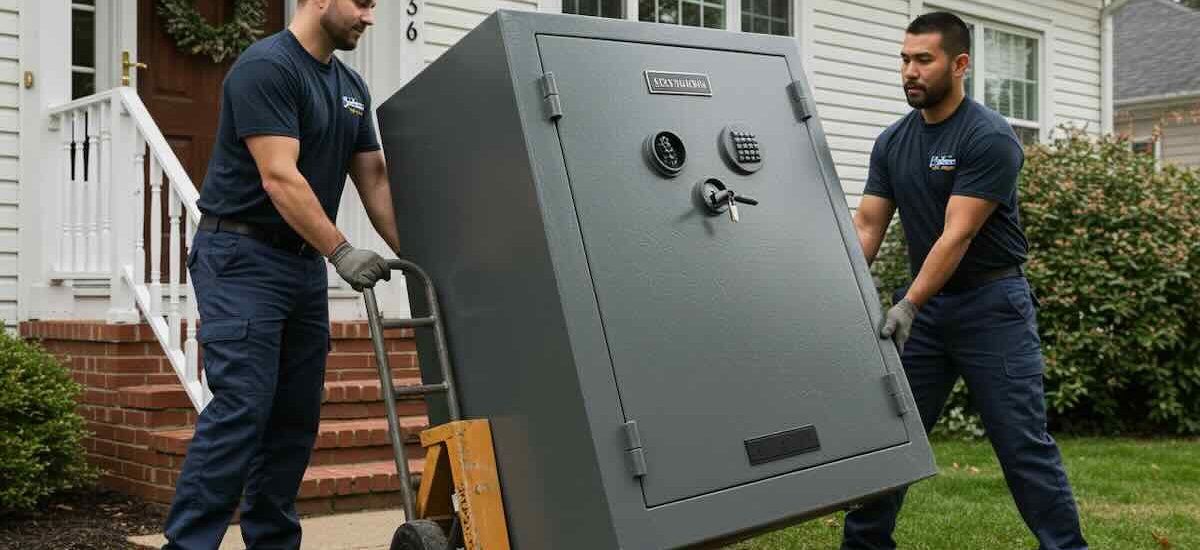
Gun safe moving is one of those situations where you quickly realize you can’t just throw it in the back of a truck with your couch and hope for the best. These things weigh anywhere from 500 to 1,500+ pounds depending on the model and features, they’re awkward to maneuver through doorways and down stairs, and if you drop one or damage the locking mechanism, you’re looking at thousands in repairs or total replacement that your standard homeowner’s insurance probably won’t cover. Knowing how to handle a gun safe move, finding someone who actually knows what they’re doing, understanding what could go wrong, and preparing properly helps you protect your investment while avoiding the kind of relocation disaster that happens when people try to save money by moving a safe themselves or trusting standard moving companies that have absolutely no business handling something this heavy, valuable, and temperamental.
Key Points
- You need specialized equipment: A standard furniture dolly won’t cut it. Gun safes need proper heavy equipment rated for thousands of pounds, moving straps engineered for extreme weight, and sometimes actual machinery just to get them up stairs or navigate tight passages without destroying your doorframes, walls, and flooring.
- Insurance gets incredibly complicated: Your homeowner’s policy probably doesn’t cover gun safes during moves, and most standard moving companies explicitly exclude them from their insurance coverage creating coverage gaps nobody discovers until damage happens and claims get denied.
- You absolutely can’t use regular movers: General moving companies will look at your safe, realize they’re not equipped for it, and either refuse the job or attempt it anyway and cause thousands in damage you end up paying for yourself with no insurance recovery.
Why Gun Safe Moving Creates Such Complicated Logistics
Here’s the thing about gun safes that makes them such a nightmare to move: they’re incredibly heavy but also incredibly fragile despite being constructed from solid steel and reinforced materials. Most safes weigh between 500 and 1,500 pounds depending on the model, size, and security features, creating weight that standard moving equipment simply cannot handle safely without specialized machinery designed specifically for heavy valuables. If you drop one during transport or damage it while maneuvering through tight spaces, the locking mechanism can break and suddenly you’re paying a locksmith or manufacturer thousands of dollars for repairs or complete safe replacement that quickly exceeds the original purchase price.
The physical damage scenarios play out in predictable ways that create nightmares during moves. If you drag a 1,200-pound safe across your hardwood floors trying to position it properly, you’re looking at damage that destroys the wood finish and structural integrity requiring expensive floor refinishing or replacement. If you bang it against a doorframe while trying to get it through a narrow passage, you damage both the safe’s exterior finish and your home’s door frame requiring expensive repairs to both items. If you attempt to maneuver it around a tight corner and the safe rubs against walls, you’re creating drywall damage that requires patching and repainting before you can leave your current residence.
Beyond the physical challenges sits the liability nightmare that keeps homeowners up at night with stress and regret. If a general moving company attempts to move your safe, damages it during the process, and then you discover their insurance explicitly excludes safes from coverage, you’re stuck paying for everything out of your own pocket with absolutely zero recourse against the contractor. Your homeowner’s policy might technically cover the safe itself as a possession, but the damage caused during moving often falls into gray areas where neither the movers nor your insurer wants to claim responsibility. You end up caught between two parties with insurance companies arguing about who’s liable while you’re out thousands in repair costs nobody’s willing to cover.
The weight estimation problem that derails countless moves starts with homeowners guessing incorrectly about what their safes actually weigh. Most people don’t bother checking the manual or calling the manufacturer because they think they know or remember from when they originally purchased it. Movers show up with standard equipment expecting to move 800 pounds, discover the actual weight is dramatically higher at 1,200 pounds or more, realize they cannot safely accomplish the move with their current equipment, and suddenly you’re facing delayed moves, emergency contractor calls at triple premium prices, and complete logistical chaos that disrupts your entire relocation schedule.
The legal complications surrounding firearms transportation add another layer of complexity that most homeowners don’t anticipate before scheduling moves. Different states have different regulations about transporting firearms and safes containing weapons, creating specific legal requirements that general moving companies may not understand or comply with, potentially exposing you to liability if something goes wrong during transport across state lines. Some states require licensed contractors exclusively for firearms transport, making non-specialized movers unable to legally move your safe if it contains weapons without violating state law.
Getting Your Safe Properly Prepared for the Move
Start by getting the exact weight and dimensions from your safe’s manufacturer or documentation rather than guessing or relying on memory. Don’t estimate. Call the maker directly if you have to. Contact their customer service line and get specific numbers because this matters more than you realize. Miscalculations about size or weight cascade into everything else going wrong during your move, from movers arriving with insufficient equipment to discovering the safe doesn’t fit through doorways you thought it would easily navigate.
Measure every doorway, hallway, and staircase your safe needs to pass through in both your current home and your destination. Use an actual tape measure, not eyeballing or pacing it off. Take detailed photographs from multiple angles. Seriously, pull out a tape measure and confirm that your 1,200-pound safe actually fits through your 32-inch doorway before contractors show up and discover it doesn’t fit, forcing expensive modifications or alternative logistics you didn’t anticipate.
Empty everything out of your safe completely before anyone touches it because this isn’t optional and represents absolute priority. Move your firearms yourself in your own vehicle. Don’t let movers transport weapons under any circumstances. Their insurance won’t cover it, there are serious legal complications in most states, and you don’t want any ambiguity about where your guns are during the relocation process. Take out jewelry, important documents, cash, retirement papers, everything that holds value or sentimental importance. Transport it yourself in your vehicle on your timeline.
Document what was inside your safe for insurance purposes even though you’re moving everything separately. Take photographs and video of your safe’s contents before emptying it. Even though you’re moving firearms yourself, you might have jewelry, important documents, rare coins, collectibles, or other valuable items inside the safe that could theoretically go missing during moving. Documenting exactly what was in there provides critical evidence for insurance claims if anything somehow goes missing despite all your precautions and careful handling by professionals.
Wrap your safe with quality moving blankets to protect the finish from scratching, denting, and damage that rough handling inevitably causes. Protect all corners and edges with extra padding since these areas get banged against doorframes and walls during transport. The exterior is going to get marked up no matter what happens, but quality padding and blankets reduce how badly it gets damaged and preserve resale value if you ever need to sell the safe.
Take extensive photos and video of your safe’s condition before anyone moves it anywhere. Photograph the locking mechanism working properly so you have proof it functioned correctly before movers touched it. Document the exterior from all angles. Get it all on record before anyone moves anything because if damage happens, you need photographic evidence proving the damage happened during the move and wasn’t pre-existing. This documentation becomes essential for insurance claims and contractor accountability.
Call your homeowner’s insurance company and ask directly what they cover during moving for safes containing firearms or valuable contents. Don’t assume anything. Don’t rely on what you think you remember from reading your policy six years ago. Get the current answer in writing through email so you have documentation. Some insurers require specialty moving companies exclusively for safes. Some demand you increase your coverage temporarily during the moving period. Some exclude gun safes entirely from coverage, requiring completely separate specialty insurance. You need to know this before moving day not after damage happens and claims get denied.
Finding Movers Who Actually Specialize in Gun Safes
Don’t call your regular moving company and ask if they can move a gun safe because you’ll almost certainly hear yes even if they shouldn’t be saying yes. They’ll tell you yes because they need the business, because the dispatcher didn’t understand the complication, or because they overestimate their capabilities. Then you’ll have a problem when their crew shows up with inadequate equipment and causes damage you’ll pay for. Especially if you are moving cross-country, you can’t rely on a company that really doesnt know what to do.
Read detailed reviews from people who actually had safes moved by these contractors. As Coastal we will specifically feedback about gun safe moves. What do actual customers say about their experience? Did the safe arrive at the destination undamaged? Did the company show up with the right equipment and tools? Were there unexpected complications that created additional costs? Did contractors communicate clearly about what was happening? Were there surprises on moving day? We check in our internal database to find out real customer reviews from people who had similar work done tell you infinitely more than marketing material, website copy, or promises from company representatives.
We will get detailed quotes from at least three different contractors before committing to anyone. Not phone estimates or rough guesses. We will get written quotes that specify your safe’s exact weight and dimensions, the origin and destination addresses with building type information, whether stairs or tight passages are involved in getting the safe out and in, how many labor hours they estimate the job will require, what specific equipment they’re bringing to handle the move safely, their insurance coverage types and limits, and the complete total cost with no hidden fees or surprise additions.
If a quote seems vague or the contractor seems unwilling to provide detailed written documentation, keep looking for someone else. Professional contractors who specialize in gun safes know exactly what they’re moving and can give you precise estimates based on clear specifications. They understand the complications and can explain exactly how they’ll handle your specific safe and your specific situation. Vague estimates from contractors who seem unsure create risk you don’t need.
Check their insurance credentials thoroughly and request physical proof of coverage. Ask specifically to see liability coverage documentation and specialty coverage for high-value items like safes. Make sure the documentation specifically mentions gun safes and valuables explicitly. Vague references to “valuable items” or “antiques” in their insurance policy might not actually cover safes when claims need to be filed. You need explicit coverage in writing that specifically addresses gun safes. If contractors can’t provide this documentation or seem evasive about their insurance, move on to the next contractor immediately.
What Actually Happens on Gun Safe Moving Day
Be home when contractors arrive. Don’t schedule a gun safe move and then leave for the day or assume everything will be fine without your supervision. You need to be there to authorize anything that happens, confirm exactly where the safe goes in your new home, and document the entire process from start to finish. Walk contractors through your home before they touch anything. Show them the current safe location, the exact route they’ll take to remove it, any tight spots, stairs, doorways, low ceilings, corners, whatever might present challenges during the actual moving process.
Understand what they might realistically need to do to accomplish the move successfully. Sometimes moving a safe through a tight doorway requires removing the door frame temporarily then reinstalling it after the safe passes through. Sometimes accessing upstairs bedrooms means removing the door itself and possibly enlarging passages by temporarily removing baseboards or trim. Sometimes the only viable option involves moving the safe through a window or exterior entrance requiring temporary modifications. Know that these interventions might become necessary and understand that they might cost more than the base moving price you initially agreed to. Discuss every possibility up front so there are no surprises mid-move when contractors ask if they can proceed with modifications and you’re not prepared for the decision.
Take extensive photos and video of your safe at both the origin and destination locations before and after the move. Document its condition thoroughly. Get contractors to document the condition too. This creates a detailed record of what happened and when it happened. If damage somehow occurred during transport, you have clear evidence documenting when the damage happened and you can file insurance claims with actual photographic documentation backing your claim rather than relying on descriptions.
Plan exactly where the safe goes in your new home before moving day arrives because this is not something you figure out while movers are standing in your living room waiting for direction and billing you hourly. Think about electricity if you have an electronic locking mechanism requiring power charging. Think about ventilation and humidity control so moisture doesn’t accumulate inside the safe and damage your firearms or valuables. Make sure the floor can actually support the weight of your safe without bowing, settling, or creating structural problems that trigger insurance complications or safety hazards. Make sure the safe fits properly in the space and won’t need relocation after contractors leave and you discover it looks wrong or disrupts room functionality.
What Gun Safe Moving Actually Costs in Real Dollars
Local moves usually run $500 to $2,000 depending on how heavy your safe is and how far from the truck to the final location within your same city. Long-distance moves across multiple states typically cost $2,000 to $5,000 or more depending on the actual distance, safe weight, accessibility complications, and equipment requirements. These numbers sound expensive until you realize what happens if you try to save money and end up damaging a $3,000 or $5,000 safe trying to move it yourself or trusting general movers who don’t have the equipment or expertise to handle something this valuable.
Additional costs pop up depending on your specific situation and what contractors discover during the actual move. If you need door frames removed and reinstalled to create passage for your safe, that costs extra money on top of the base moving charge. If you need floor protection because you’re worried about hardwood damage or scratching, that’s additional expense. If your safe needs to go through a tight stairwell requiring creative angles, temporary wall modifications, or exterior removal through windows, the costs increase substantially. Get everything listed specifically in your written quote so you know exactly what you’re paying for and what might trigger additional charges.
Specialty insurance coverage sometimes costs more than standard moving insurance depending on your safe’s value and what your insurer requires for adequate protection. This expense gets added into your total relocation budget. It’s not free, but it’s absolutely worth it for the protection and peace of mind knowing that damage is actually covered if something goes wrong despite all precautions.
Think about it from a financial perspective this way: if you’re saving $1,000 by hiring the cheapest contractor and they drop your safe causing $5,000 in damage, you just lost $6,000 total plus the stress of dealing with damage and repair logistics. Professional specialty movers cost significantly more because they have the right equipment specifically designed for heavy safe transport, the extensive experience handling thousands of these moves, the insurance coverage protecting you if anything goes wrong, and the expertise to move your safe without damage despite challenges. That’s not a luxury cost, that’s actual insurance and protection of your significant investment.
Insurance and Legal Considerations You Need to Address
Different states have different rules about moving firearms and safes containing weapons that directly affect how your relocation can legally proceed. Some states require licensed contractors exclusively to transport weapons and firearms-containing safes across state lines. Some have specific regulations about how safes containing firearms need to be handled, stored, and transported during moves. Research your specific state’s requirements and your destination state’s requirements before booking movers. You want contractors who understand the legal landscape in both locations and operate within all applicable regulations without putting you at legal risk.
Document everything with your insurance company thoroughly and get written confirmation of what’s covered, what requires specialty coverage, and what documentation you need to provide if you file a claim after damage occurs. Don’t rely on phone conversations or email exchanges with your agent that you don’t save. Get written confirmation through email of what you discussed so you have documentation proving what your insurer said. Insurance claims are infinitely easier to resolve when everyone understands expectations beforehand and has agreed to everything in writing rather than relying on memory of phone conversations weeks or months later.
Create a detailed written agreement with your moving contractor specifying the safe’s weight, exact dimensions, current condition before moving, what’s inside or not inside, insurance coverage details, liability limits, damage responsibility, and exactly how you’ll handle it if damage occurs during transport. This protects both you and the contractor by establishing crystal clear expectations in advance before anyone touches your safe. Professional contractors experienced with safes expect to provide written agreements. If they resist providing detailed written documentation or seem evasive about what they’ll commit to in writing, that’s a major red flag suggesting you should hire someone else.
Photograph your safe’s contents before emptying it if it contains valuable items you’re transporting separately rather than having movers move them. Even though you’re moving firearms yourself, you might have jewelry, important documents, rare collectibles, or other valuables inside that technically don’t need moving but you want documented. Photographing everything inside provides evidence for insurance purposes if anything somehow goes missing during your move despite all your precautions and professional contractor care.
States Where Gun Safe Moving Gets Asked About Most Frequently
Texas – Everyone’s Moving There and They All Have Guns
Texas is booming with people relocating from California, New York, and other expensive states, and a huge percentage of those people own guns and have safes protecting their firearms. They’re moving to Austin, Dallas, Houston, San Antonio for jobs and cheaper housing, and they’re bringing their gun safes with them because they prioritize personal security and firearm protection. The combination of constant population influx plus strong gun culture throughout Texas creates steady demand for specialty safe movers. If you’re moving to Texas with a gun safe, you’ll have no trouble finding contractors who do this dozens of times every single month.
Florida – Retirees With Safes and Multiple Properties
Florida attracts retirees from cold states, many of whom own guns and have safes for personal security in their new homes as they settle into retirement communities. People relocating to Miami, Tampa, Orlando, and Jacksonville frequently move gun safes as part of their retirement transition. You also get snowbirds maintaining multiple properties who move safes seasonally between their permanent home and their Florida winter place every year. It’s a constant flow of gun safe relocations happening year-round, so specialty movers are well-established throughout Florida with extensive experience.
Colorado – Outdoor Culture Means Strong Gun Ownership
Colorado’s hunting and outdoor recreation culture creates widespread gun ownership and safe use throughout the state. Denver, Boulder, Colorado Springs, and mountain communities have lots of people with gun safes protecting valuable firearms. When people relocate to Colorado from coastal states, they frequently bring safes with them. Mountain home logistics create unique challenges with tight passages and difficult floor plans, so contractors throughout Colorado have extensive experience handling those specific complications.
Arizona – Desert Growth and Strong Gun Culture
Phoenix and Scottsdale are growing rapidly with people relocating from California and other expensive states bringing their belongings including gun safes. Arizona’s emphasis on personal security and self-reliance creates widespread gun safe ownership throughout the state. Specialty movers throughout Arizona understand desert heat considerations for safe storage and climate control, and are experienced with the rapid growth creating constant relocation demand among people bringing safes into the state.
North Carolina – Tech Hub Attracting California Workers
North Carolina’s Research Triangle and Charlotte tech sectors are booming with people relocating from California and other expensive states for career advancement. Corporate relocations bring workers with gun safes and firearms. The combination of tech growth, outdoor recreation culture emphasis, and strong gun ownership means there’s consistent demand for specialty safe movers throughout the state. If you’re moving to North Carolina for a tech job with a gun safe, you’ll find experienced contractors readily available.
Making Your Gun Safe Move Actually Work Successfully
You can’t DIY this. You can’t trust general movers. You need specialty contractors who understand gun safes intimately, have the right equipment specifically designed for heavy safe transport, carry proper insurance covering safes explicitly, and know how to handle thousands of pounds of steel without destroying your home or your safe. It costs more than you’d like to spend initially, but it’s infinitely cheaper than dealing with damage repair or complete safe replacement.
long distance moves
as low as $1748
Long-distance moving all across the United States. Experienced and insured, residential and commercial.
4.9/5 AVERAGE RATING
Our team coordinates gun safe moves through specialty contractors we trust and have worked with for years. We handle the logistics, arrange the right movers, coordinate insurance requirements, and oversee the whole process so you don’t have to manage complicated details during an already stressful move.
Call (334) 659-1878 to talk about your gun safe move. We’ll discuss your specific situation, connect you with contractors experienced with safes like yours, handle insurance coordination, answer your questions about the process, and make sure your safe arrives at your new home without damage.
Common Questions About Moving Gun Safes
What’s the actual cost to move a gun safe?
Local moves usually run $500-$2,000. Long-distance moves typically cost $2,000-$5,000+ depending on the safe’s weight and distance traveled. Get detailed quotes from multiple specialists before deciding since prices vary based on your specific situation.
Can my regular moving company handle this?
No. General movers lack the equipment, expertise, and insurance for safes. They’ll either refuse the job or damage your safe. Specialty contractors are the only sensible choice.
Do I need to empty my safe before the move?
Absolutely yes. Remove all firearms, ammunition, jewelry, documents, and valuables. Transport firearms yourself in your own vehicle. Movers shouldn’t handle weapons under any circumstances.
What if the safe doesn’t fit through my doorway?
Specialty movers assess this during consultation and propose solutions like removing door frames or accessing through alternative routes. These interventions cost extra but enable safe relocation despite tight passages.
Does my homeowner’s insurance cover safe moving?
Contact your insurer directly. Many policies exclude safes or require specialty coverage. Get written confirmation of coverage before moving day arrives.
How do I document my safe’s condition?
Take photos and video of all sides of the safe before anyone touches it. Document the locking mechanism working properly. Create a detailed record for insurance purposes.
Is DIY moving with friends safe?
No. The weight and awkward shape create serious injury risk and damage risk to both your safe and your home. Professional movers exist specifically for this reason.
How do I find trustworthy specialty safe movers?
Search specifically for “gun safe movers” in your area, read customer reviews about safe moves specifically, get detailed written quotes from multiple contractors, and verify their insurance covers safes explicitly.
How long does a gun safe move take?
Local moves typically complete in one day. Long-distance moves take multiple days depending on distance. Timing depends on access challenges and destination setup requirements.