Parking & Access
Pittsburgh Moving Parking & Access Guide
Pittsburgh presents a mix of downtown, historic-neighborhood, hillside, river-adjacent, and suburban access conditions. Moving trucks can face real challenges in Downtown, Strip District, Lawrenceville, Oakland, Shadyside, Squirrel Hill, South Side, Mount Washington, Bloomfield, and managed apartment or condo buildings. Getting access confirmed before move day is the most effective way to prevent delays, long carries, tickets, or last-minute rescheduling.
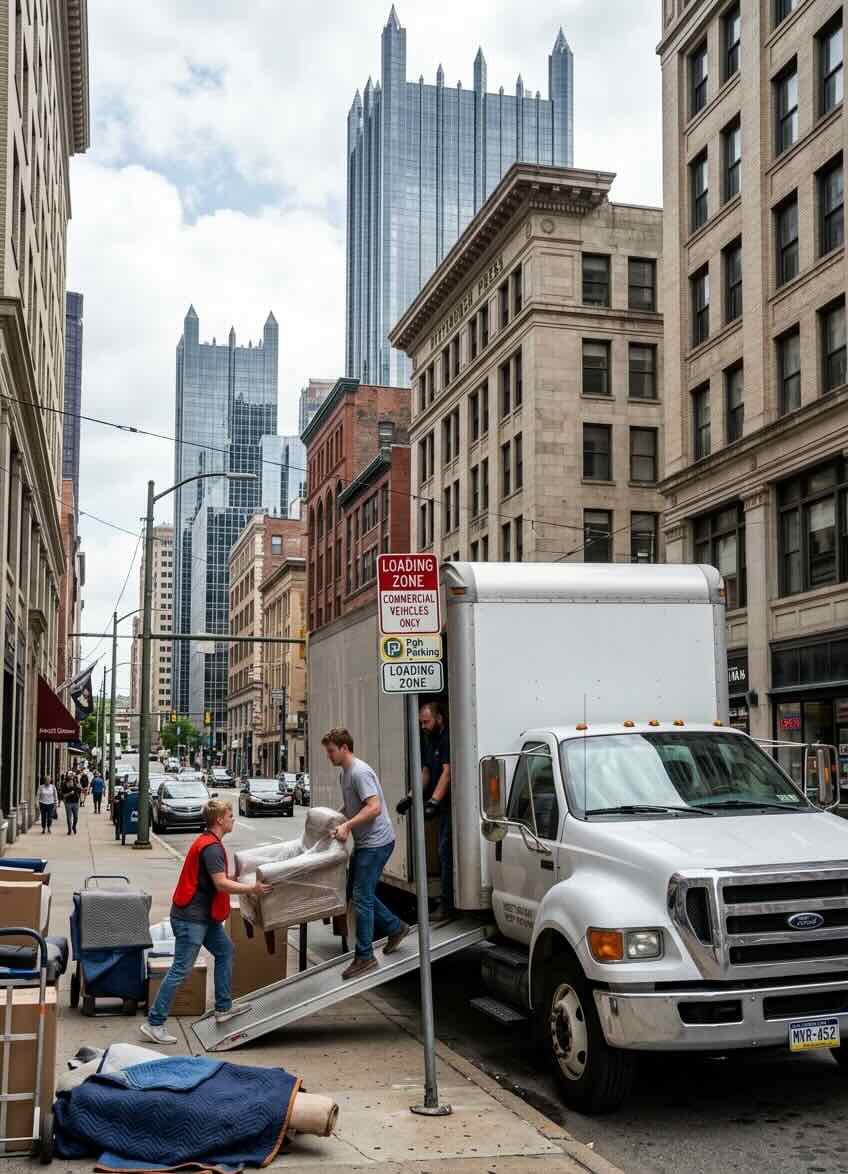
When a moving truck needs to reserve curb space, occupy a restricted parking area, use a loading zone, enter a garage, block access, or stage near a managed building, additional coordination may be required. Building rules, meters, alleys, garage clearances, construction activity, steep grades, narrow streets, bridges, tunnels, and limited loading areas can all affect where the truck can legally and safely stage during loading or unloading.
🏙
Downtown Pittsburgh and Apartment Buildings
Downtown Pittsburgh, Strip District, Oakland, North Shore, and apartment-heavy buildings often require advance elevator reservations, loading dock scheduling, move-hour restrictions, garage clearance checks, and Certificate of Insurance paperwork. Contact your property manager at least two weeks before your Pittsburgh move date to confirm the service entrance, elevator window, loading location, and insurance requirements your assigned carrier must satisfy.
⛰
Lawrenceville, South Side, Mount Washington, and Hill Streets
Lawrenceville, South Side, Mount Washington, Polish Hill, Troy Hill, Bloomfield, Squirrel Hill, and Greenfield include older homes, apartment buildings, narrow streets, steep grades, alleys, and limited curb space. A full-size moving truck may not be able to stage directly in front of the home or building. Confirm truck access early and ask whether your landlord, property manager, or HOA has rules for commercial vehicles, driveways, alleys, or loading areas.
🛣
Pittsburgh Bridges, Tunnels, and Regional Routing
Pittsburgh moves often rely on I-376, I-279, I-579, I-79, Route 28, Route 51, PA-885, and bridge or tunnel routes. Routes between the city, North Hills, South Hills, East End, Airport corridor, Monroeville, Cranberry Township, and Wexford can involve rush-hour congestion, construction, steep grades, and tunnel delays. Confirm pickup and delivery addresses carefully so the assigned carrier can plan the right truck, crew size, and timing.
🏡
Pittsburgh Suburbs and Western Pennsylvania Communities
Suburbs and nearby communities including Mt. Lebanon, Bethel Park, Upper St. Clair, Cranberry Township, Wexford, Monroeville, Penn Hills, Fox Chapel, Sewickley, Robinson Township, Moon Township, and Murrysville may have HOA rules, apartment move procedures, narrow private drives, or community restrictions on commercial vehicles. Contact your HOA or property management company several weeks before your move date to confirm move hours, truck staging, and any access requirements.
Pro tip: For Pittsburgh moves, confirm three things before move day: where the truck can legally stage, whether the building or HOA requires a COI, and whether elevator, loading dock, garage, curb access, or a Pittsburgh moving permit must be arranged. For Downtown, Strip District, Oakland, Lawrenceville, South Side, Shadyside, Squirrel Hill, Mount Washington, and managed apartment moves, two weeks of lead time is strongly recommended.