
Cubic Feet Calculator: Moving Volume, Weight & Truck Size
Not sure how much space your move will take up? Add the furniture, boxes and other items you’re bringing, and the cubic feet calculator will help you to get an estimate of your total moving volume, shipment weight and the truck size you may need.
Sizes are length × width × height in inches. Weight is per item.
Something not on the list?
How to Calculate Cubic Feet for a Move

Moving Volume in Cubic Feet
Every item on the list has a standard size, and the moving volume calculator adds them up for you. It counts the room each piece takes on the truck, not just its measurements, because a sofa or a dresser can’t be packed edge to edge against the next item. The total in cubic feet is what decides how big a truck you need.
Moving Weight Calculator: Estimated Shipment Weight
Each item also carries a typical weight, and every box is weighed for what goes in it, since a box of books weighs far more than a box of pillows. Carriers price long distance moves on weight, volume or both, so it helps to have both numbers before you ask for quotes. Anything you add yourself is estimated at 7 pounds per cubic foot unless you enter its real weight.
What Size Moving Truck Do I Need?
The calculator names the smallest box truck your total fits in. These are the usable capacities it works from:
- 10 ft400 cu ft
- 15 ft760 cu ft
- 20 ft1,015 cu ft
- 26 ft1,680 cu ft
If your total lands close to a limit, go up a size, because a truck is never packed perfectly. Anything over 1,680 cubic feet needs more than one truck or a tractor-trailer.
How to Calculate Cubic Feet of a Room
Room Volume Formula
To find the cubic feet of a room, multiply its length, width and height in feet. A room that is 12 ft by 10 ft with 8 ft ceilings comes to 960 cubic feet, and if you measured in inches, divide each measurement by 12 first.
Room Volume vs. Moving Volume
A room’s volume counts all the empty space in it, and your furniture only fills part of that space. A furnished room usually ships far fewer cubic feet than the room itself, so use the inventory list for your moving total and use room volume only as a rough check.
Average Cubic Feet by Home Size
Use this to check your list. If your total is far from the range for your home, you have probably missed a room or counted something twice.
| Home size | Cubic feet | Approx. weight |
|---|---|---|
| Studio or 1 bedroom | 800 to 1,200 | 5,600 to 8,400 lb |
| 2 bedroom | 1,200 to 1,800 | 8,400 to 12,600 lb |
| 3 bedroom | 1,800 to 2,500 | 12,600 to 17,500 lb |
| 4 bedroom | 2,500 to 3,500 | 17,500 to 24,500 lb |
| 5+ bedroom | 3,500 to 5,000 | 24,500 to 35,000 lb |
Weights use 7 pounds per cubic foot. Want a price range instead? Try the moving cost calculator.

How to Build an Accurate Moving Inventory List
- Go room by room, and include closets, the garage, the attic, the balcony and the storage unit.
- Decide what you are selling or donating before you count. Every item you drop shrinks the shipment.
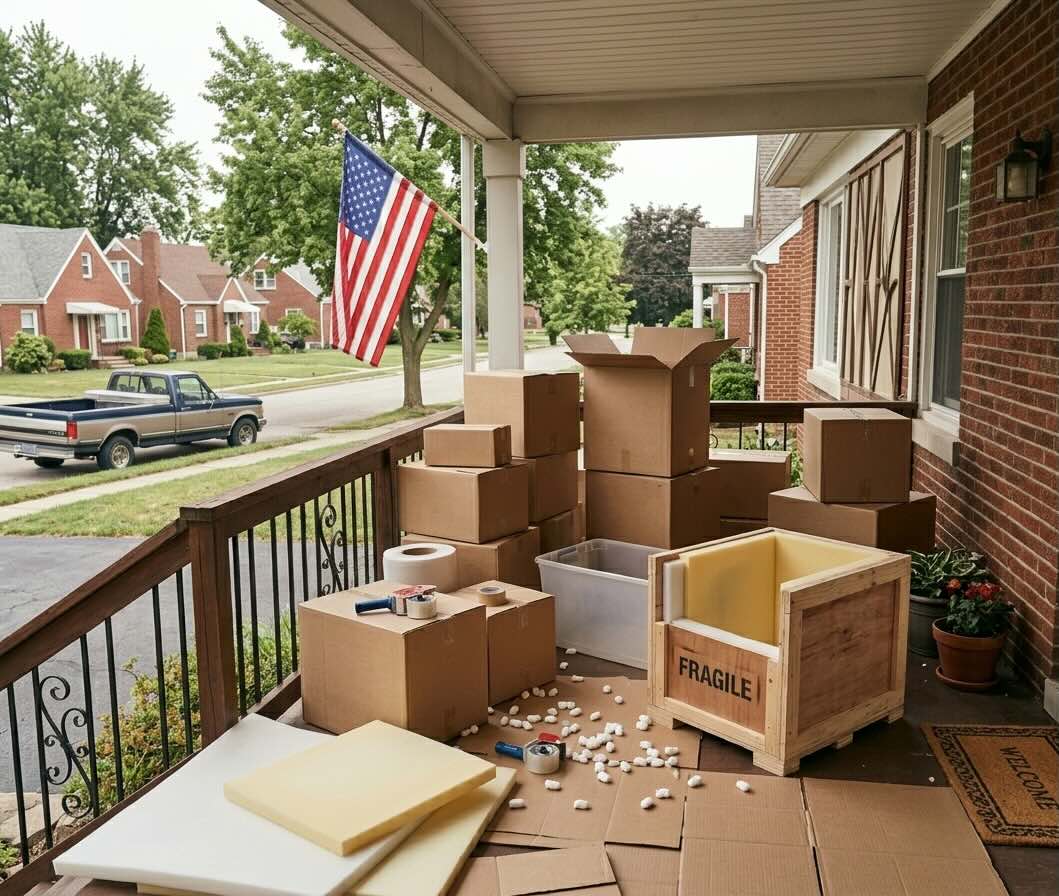
- Add boxes for anything still unpacked. If you have not started, guess by room and come back to adjust.
- Use the form under the list for anything unusual, like a drum kit or a kayak.
- Tell us about stairs, elevators and long carries at both addresses. Access can change the price as much as the inventory does.
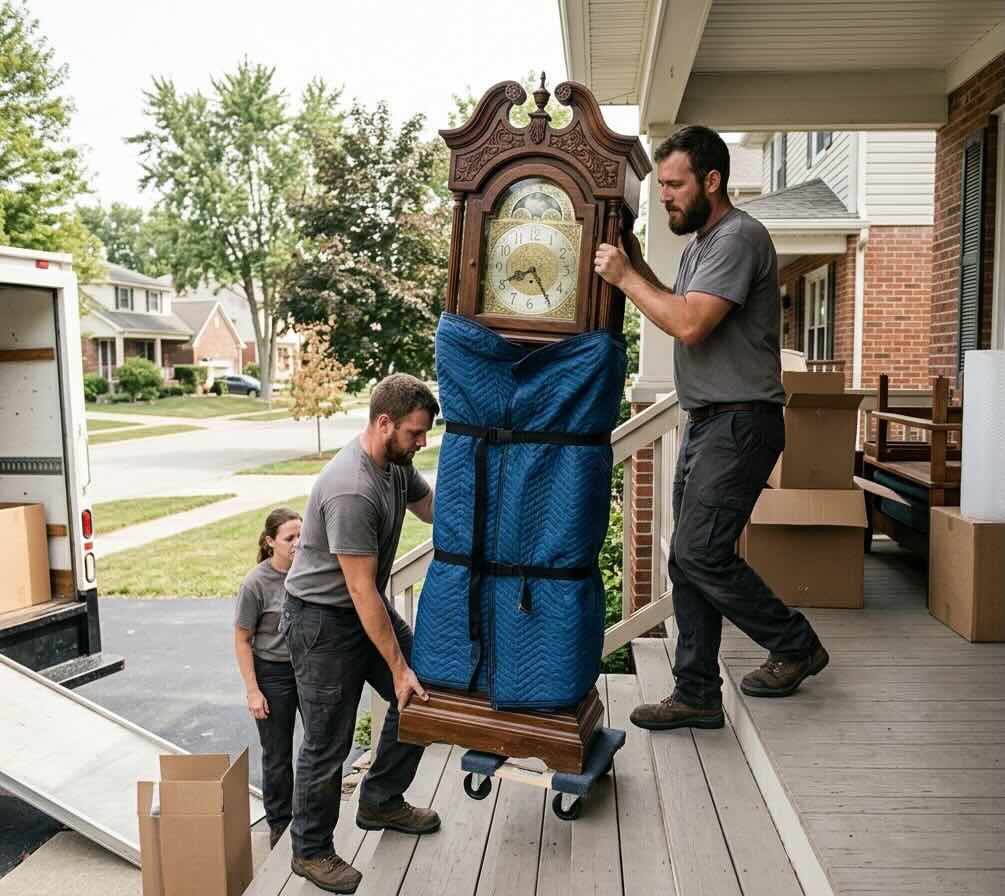
- Pianos, safes, hot tubs and heavy gym equipment need special handling, so mention them early.
Moving Truck Size and Cubic Feet Questions
How do I calculate cubic feet for moving?
Add up the cubic feet of every item you are moving, including furniture, appliances and boxes. To size one item, multiply its length, width and height in feet, or add your items to the calculator above and it will do the math for you using standard sizes.
What size moving truck do I need?
Use the total cubic feet from your moving inventory, then choose a truck with usable capacity above that number. As a rough guide, this calculator uses about 400 cubic feet for a 10 ft truck, 760 for a 15 ft truck, 1,015 for a 20 ft truck and 1,680 for a 26 ft truck.
How big of a moving truck do I need for 1,000 cubic feet?
About 1,000 cubic feet is close to the usable space of a 20 ft box truck on this calculator, which is roughly 1,015 cubic feet. If your total is near the limit or includes bulky items, choose the next size up rather than planning for a completely full truck.
How many cubic feet fit in a 26-foot moving truck?
A 26 ft box truck has roughly 1,680 cubic feet of usable space on this calculator. Actual capacity varies by truck body, loading method and how much space bulky or fragile items require.
Do moving companies charge by weight or cubic feet?
Both can matter. Cubic feet shows how much truck space the shipment needs, while many long distance carriers use shipment weight when calculating transportation charges. Ask how your estimate is calculated before booking so you know which measurement controls the price.
How much does a move weigh per cubic foot?
The calculator uses 7 pounds per cubic foot for items you add yourself, so a 1,000 cubic foot move comes to about 7,000 pounds. Your real weight depends on what you own, so enter an item’s actual weight if you know it.
Cubic Feet Calculator for Moving FAQs
Is this a quote?
No. It is a planning tool. The carrier confirms the final volume and weight from a survey or a certified scale, and a binding or not-to-exceed estimate is based on that confirmed inventory.
Why do cubic feet and weight both matter?
Cubic feet decide how much truck space you need. Weight is what many long distance carriers charge on. A load of books and appliances can be heavy but small, while a load of light furniture can fill a truck without weighing much.
My list is saved. Where is it stored?
Only in your own browser, so you can close the page and come back on the same device. We do not receive it until you send it to us.
How do I send my list to a coordinator?
Press Copy list in the summary and paste it into the quote request, or print it and read it out over the phone.
What if an item is bigger or heavier than the one listed?
Add it with the form under the list and enter its length, width, height and weight. That figure is used in the totals instead of the average.
Turn Your Moving Inventory Into a Written Quote
Send us your inventory and a coordinator will match you with licensed carriers for your route.

Coastal Moving Services is an FMCSA-licensed moving broker, USDOT# 4090919, MC# 1558401. Verify on FMCSA SAFER. Figures on this page are estimates for planning and are not a binding quote.