Vacuum seal bags have become one of the most useful packing tools for people preparing for a move. They allow you to compress soft, bulky items, like bedding, towels, and seasonal clothing, into a fraction of their original size. For long-distance or full-home relocations, this can save time, money, and effort. But like any tool, they only help if used correctly.
How They Work
These bags are made from heavy-duty plastic with a one-way valve. Once you place your items inside and seal the zipper closure, you use a standard vacuum cleaner or included hand pump to remove the air. The result is a flat, compressed bag that can slide neatly into boxes, bins, or tight corners of a moving truck.
The appeal goes beyond space savings. The airtight seal also helps protect fabrics from moisture, dust, and pests. This is especially useful if your belongings will be in transit or storage for more than a few days.
What Should You Use Them For?
Vacuum seal bags are ideal for compressing textiles that aren’t fragile or shape-sensitive. Most people use them for comforters, blankets, bulky jackets, off-season clothes, and pillows. These items shrink down dramatically and don’t suffer damage from the pressure. Cotton, polyester, fleece, and synthetics all handle compression well.
However, some items should stay out. Down-filled bedding or jackets can lose loft permanently when compressed. Leather and suede risk moisture retention, and memory foam products can deform if sealed too tightly for too long. The same applies to delicate fabrics like silk or anything sentimental that could be ruined if creased.
1. Choose the Right Bag Size
Select vacuum bags that match the items you’re packing. Use larger ones for bulky bedding and smaller ones for clothing. Avoid overstuffing, bags work best when filled to around 80% of their capacity to ensure a strong seal.
2. Fold Items Neatly
Fold clothes, linens, and soft goods neatly to create flat surfaces that compress evenly. This also improves stackability and reduces stress on bag seams during vacuuming and transport.
3. Load Items into the Bag
Place folded items into the center of the vacuum bag. Make sure zippers, hooks, or other hard elements don’t press against the plastic where they might puncture it. Distribute weight evenly inside the bag.
4. Seal the Bag
Use the provided slider to zip the bag shut, then press the seal area with your fingers to double-check for any gaps. A perfect seal ensures the vacuum process won’t fail later.
5. Vacuum Out the Air
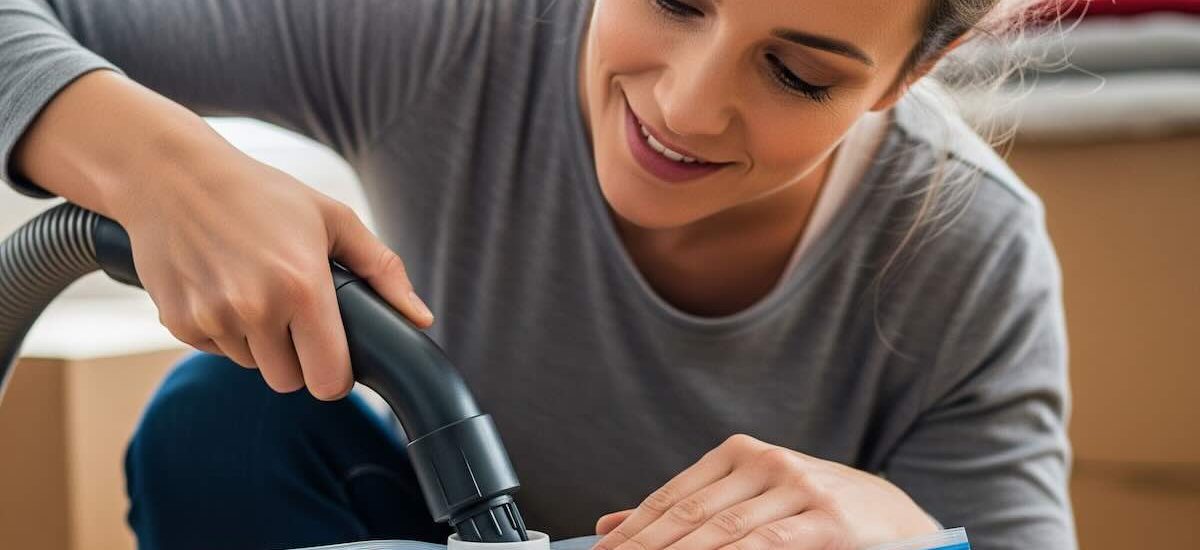
Place the vacuum hose over the valve and turn it on. Most bags will compress in 10–20 seconds. Once fully compressed, seal the valve tightly according to the manufacturer’s instructions to lock in the vacuum effect.
6. Inspect the Bag
Once sealed, inspect the bag for bulging or air leaks. If you notice puffing after a few minutes, the seal may not be airtight. Re-seal and vacuum again if needed to ensure space savings hold during the move.
7. Label and Pack
Use permanent markers or adhesive labels to tag each bag by contents. Lay the compressed bags flat in moving boxes or plastic bins to protect the seals and maximize space inside the moving vehicle.
Vacuum Seal Bags – Where They Help
Consider someone moving from NYC to Austin in the middle of summer. They won’t need their winter coats and thick blankets immediately, so vacuum bags let them shrink those items and store them in just one or two bins. Similarly, college students moving into dorms with limited space can use them to compress extra bedding, towels, or seasonal gear.
Even small apartments benefit. Downsizing from a two-bedroom to a studio? Vacuum bags make it easier to fit everything into a single U-Haul or shipping container. Many movers report needing fewer boxes when using vacuum-sealed packaging.
Are They Worth the Cost?
Most vacuum bag kits cost between $15 and $35 depending on brand and number of bags included. Considering how much space and hassle they save, they usually pay for themselves in one move, especially for families or anyone shipping items long distance.
Premium kits often include multiple sizes and a hand pump, while budget versions may only work well with vacuum cleaners. For large households, having both options helps maintain flexibility throughout the packing process.
Product Options Compared
| Product | Bag Sizes | Includes Pump | Average Price |
|---|---|---|---|
| Storage Master | S, M, L, XL | Yes | $25.99 |
| Cozy Essentials 12-Pack | Mix: M to Jumbo | No | $22.50 |
| Mavigadget Set | Travel/Household Sizes | Yes | $27.95 |
Final Word
Vacuum seal bags are not a cure-all, but for the right items, they’re one of the most useful moving supplies you can buy. They help you pack smarter, cleaner, and lighter. If your move involves bulky soft goods, unpredictable weather, or limited space, vacuum bags should be on your packing list. Picking supplies? “Box Size Cheat Sheet For Moving” helps.
long distance moves
as low as $1748
Long-distance moving all across the United States. Experienced and insured, residential and commercial.
4.9/5 AVERAGE RATING
Need help planning a long-distance or cross-country move? Coastal Moving Services can supply vacuum bags and expert packing services. Call us now at +1‑334‑659‑1878.