

Why Cleaning a New Home Before Unpacking Matters for Health and Comfort
The strongest reason to clean before unpacking is bacterial and allergen contamination on surfaces that received no attention between the previous occupant’s departure and your arrival. A 2022 study published in the journal Indoor Air found that allergen levels in residential carpeting from pet dander, dust mites, and mold spores persist for months after the animal or moisture source has been removed, because these particles bind to fibers and are not removed by routine vacuuming. Upholstered surfaces, carpets, and soft flooring in a previously occupied home should be treated as contaminated until professionally cleaned or replaced.
Kitchen and bathroom surfaces present separate concerns. The average kitchen countertop harbors more bacteria per square inch than a toilet seat, according to research from the University of Arizona’s Department of Soil, Water, and Environmental Science, because kitchens are cleaned less rigorously than bathrooms despite more frequent direct food contact. Disinfecting these surfaces before any food preparation takes place removes the previous household’s bacterial load rather than building on top of it with new kitchen activity.
New construction homes are not automatically cleaner than previously occupied ones. Construction dust contains silica particles, drywall compounds, and wood particulates that irritate respiratory systems and settle across every horizontal surface including inside HVAC ducts. Paint, adhesives, and flooring materials in new builds off-gas volatile organic compounds for weeks to months after installation. Thorough cleaning, ventilation, and HVAC filter replacement before moving in reduce the initial VOC concentration and particulate load that new occupants are otherwise exposed to during the first weeks in the home.
How Long Does It Take to Clean a New House Before Moving In?
Cleaning time depends on home size, the condition left by previous occupants, and whether professional help is involved. The estimates below reflect a thorough move-in clean by two adults working together:
| Home Size | DIY Time (2 People) | Professional Clean Time |
|---|---|---|
| Studio / 1-Bedroom | 2 – 4 hours | 1.5 – 2.5 hours |
| 2-Bedroom Home | 4 – 6 hours | 2.5 – 4 hours |
| 3-Bedroom Home | 6 – 9 hours | 3 – 5 hours |
| 4+ Bedroom Home | 9 – 14+ hours | 4 – 7 hours |
Estimates assume standard condition. Homes with significant grime, mold, or pest evidence require additional time regardless of size.
Scheduling this cleaning on the day before the moving truck arrives, rather than on the same day as unpacking, produces a noticeably better result because there is no foot traffic from movers re-depositing dust and debris onto freshly cleaned floors.
The Right Order to Clean a New House: Why Sequence Matters
Cleaning rooms in the wrong order creates repeat work. Cleaning from high to low (ceilings, fixtures, counters, then floors) and from the most-used rooms outward toward lower-priority utility spaces ensures that each cleaned surface stays clean while the rest of the house is being done. The five-stage sequence below reflects how professional move-in cleaners approach the job.
Kitchen First
The kitchen is the highest priority for sanitation because it involves direct food contact surfaces. Completing it first also gives it maximum drying and off-gassing time before any food is stored or prepared.
Bathrooms Second
Bathrooms are the second hygiene priority and the space your household will need access to throughout the entire move-in process. Completing them early means toiletries and towels can be unpacked and the room is usable all day.
Bedrooms Third
Clean bedroom floors, closets, and window treatments before any furniture is positioned. Assembling beds in a clean room means the sleeping environment is ready before exhaustion sets in at the end of move-in day.
Living Areas and Hallways Fourth
Common areas accumulate the most foot traffic during a move, so cleaning them after the main furniture placement is complete eliminates the need to re-clean floors that were just walked over by a moving crew.
Laundry Rooms, Garages, and Utility Spaces Last
Utility and storage areas do not require the same sanitation level as living spaces. A basic wipe-down of appliances and shelving is adequate on move-in day, with a more thorough clean scheduled once the main living areas are fully organized.
What Cleaning Supplies to Bring on Move-In Day: Complete Supply List
Arriving at a new home without the right supplies turns a manageable cleaning process into a series of trips to the nearest store. The following categories cover every surface type encountered in a standard residential move-in clean. Organizing these items in a labeled bin or caddy makes it easier to carry room to room without losing track of what has been used or where it was left.
- Surface disinfection: Disinfecting spray, disinfecting wipes, all-purpose cleaner, and hydrogen peroxide solution for high-touch surfaces
- Cleaning tools: Microfiber cloths (at least 12, separated by room), scrub brushes, grout brush, sponges, mop and bucket, broom and dustpan, and a vacuum with attachments for baseboards and upholstery
- Specialty appliance cleaners: Oven cleaner, stovetop degreaser, dishwasher cleaner tablets, garbage disposal cleaner or a baking soda and hot vinegar combination
- Natural cleaning agents: White vinegar, baking soda, dish soap, and hydrogen peroxide — these three cover most bathroom, kitchen, and odor situations and are safe to mix in the combinations described in this guide
- Drain care: A drain snake for hair and debris, liquid drain cleaner for slow drains, and a kettle for boiling water flushes
- Glass and floor: Glass cleaner, streak-free cloths or newspaper for mirrors, appropriate floor cleaner for the surface type (hardwood, tile, vinyl, or laminate), and a carpet cleaner or deodorizing powder for soft flooring
- Protective gear: Rubber or nitrile gloves, a face mask for dusty or moldy conditions, and knee pads for bathroom floor scrubbing
- Replacement items to bring: New HVAC filters in the correct size for the home, fresh toilet seats if replacing the existing ones, shelf liner paper for kitchen cabinets and drawers, and extra garbage bags
Step 1: Do a Full Home Walkthrough Before Touching Anything
Walking through the entire home before cleaning begins serves two purposes: it identifies problem areas that need special attention or professional remediation, and it creates a documented record of the home’s condition at the time of taking possession. This documentation matters significantly for renters, who need to distinguish between pre-existing damage and any damage that occurs after move-in when the time comes to recover a security deposit.
During the walkthrough, note the condition of every wall surface, ceiling, floor, window, and appliance. Water stains on ceilings indicate past or active roof or plumbing leaks. Dark spotting on grout lines, caulk, or window frames may be mold rather than ordinary grime and warrants a closer inspection before cleaning begins. A musty smell concentrated in a specific area (under a sink cabinet, in a basement corner, or near an exterior wall) suggests moisture intrusion that cleaning alone will not resolve.
Pest evidence, including droppings, nesting material, or insects in cabinet corners and behind appliances, should be photographed and reported to the landlord or property manager before cleaning so that professional extermination can be arranged. Cleaning around active pest activity without addressing the source simply relocates the problem rather than eliminating it.
Any pre-existing damage, visible mold, or deferred maintenance items should be photographed with timestamps and communicated to the seller or landlord in writing before unpacking begins. Waiting until move-out to raise these issues puts the tenant or buyer at a significant evidentiary disadvantage.
Step 2: How to Deep Clean a Kitchen in a New House
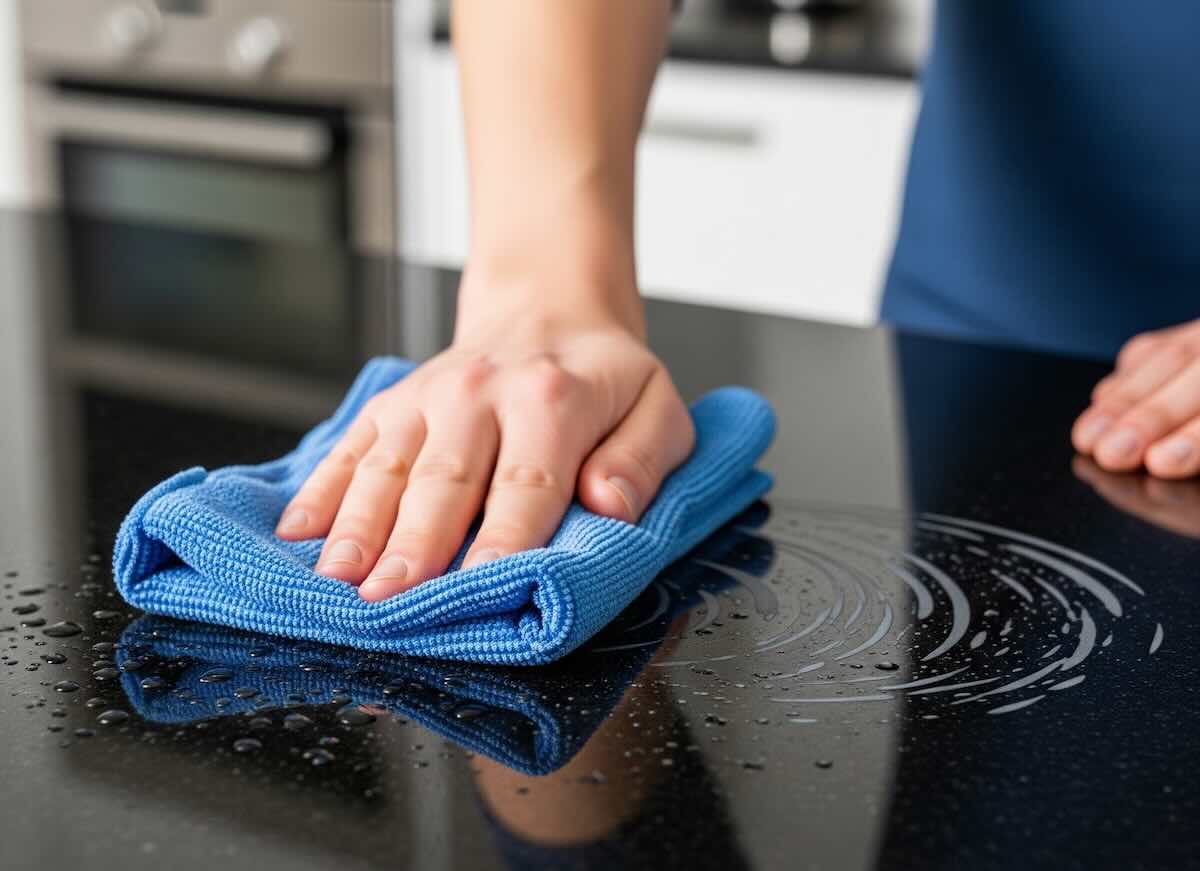
The kitchen requires the most thorough disinfection of any room in the house because contamination here has direct implications for food safety. Previous occupants’ cooking habits, food spills, and general cleanliness determine how intensive this process needs to be, but starting from the assumption that all surfaces need full disinfection rather than visual tidying is the approach that produces a genuinely safe cooking environment.
Refrigerator and Freezer
- Remove all shelves and drawers; wash in hot soapy water and disinfect before returning them to position
- Wipe all interior walls and door gaskets with a diluted white vinegar solution, which eliminates odors and sanitizes without leaving chemical residue near food contact surfaces
- Vacuum the condenser coils at the back or beneath the unit; dust-clogged coils reduce efficiency by up to 30 percent and are rarely cleaned by previous occupants
- Wipe exterior surfaces including handles, top panel, and water or ice dispenser if present
Oven, Stovetop, and Microwave
- Apply oven cleaner to the interior and allow it to sit for the full manufacturer-recommended dwell time before wiping; heavy grease buildup in a used oven requires a second application
- Remove stovetop grates and burner caps on gas ranges and soak them in hot water with dish soap while the oven interior soaks; scrub and rinse before replacing
- Heat the microwave for two minutes with a bowl of water and white vinegar inside; the steam loosens baked-on residue and the vinegar neutralizes odors, making the wipe-down significantly easier
- Clean the range hood filter by soaking in hot water with baking soda and dish soap; grease-clogged range hood filters are a fire risk as well as an air quality concern
Dishwasher
- Remove and rinse the filter at the bottom of the dishwasher tub; a clogged dishwasher filter circulates food particles and bacteria back over dishes during every cycle
- Run an empty cycle with two cups of white vinegar in a bowl on the top rack, followed by a second empty cycle with half a cup of baking soda sprinkled on the bottom; this combination sanitizes the interior and removes hard water deposits and odors
- Wipe down the door gasket and outer panel; gaskets trap food residue and develop mold in their folds if not cleaned regularly
Cabinets, Drawers, Countertops, and Sink
- Wipe the interior of every cabinet and drawer with a disinfecting solution before lining with shelf paper; this removes crumbs, spills, and pest droppings that accumulate in cabinet corners over time
- Clean cabinet exteriors and hardware with an all-purpose cleaner; grease from cooking builds up on cabinet faces adjacent to the stove even when the cabinet interiors look clean
- Disinfect all countertop surfaces regardless of material, then apply an appropriate sealant or conditioner if the surface is natural stone, which is porous and absorbs bacteria without a proper seal
- Clean the sink basin, faucet, and handles with disinfectant; pour a mixture of baking soda followed by hot vinegar down the garbage disposal drain, wait five minutes, then flush with boiling water to eliminate odors and organic buildup in the drain line
- Sweep, then mop kitchen floors with an appropriate cleaner for the floor material; pay attention to the area behind and beneath the refrigerator and stove, which accumulate years of debris in previously occupied homes
Step 3: How to Deep Clean Bathrooms in a New House Before Moving In
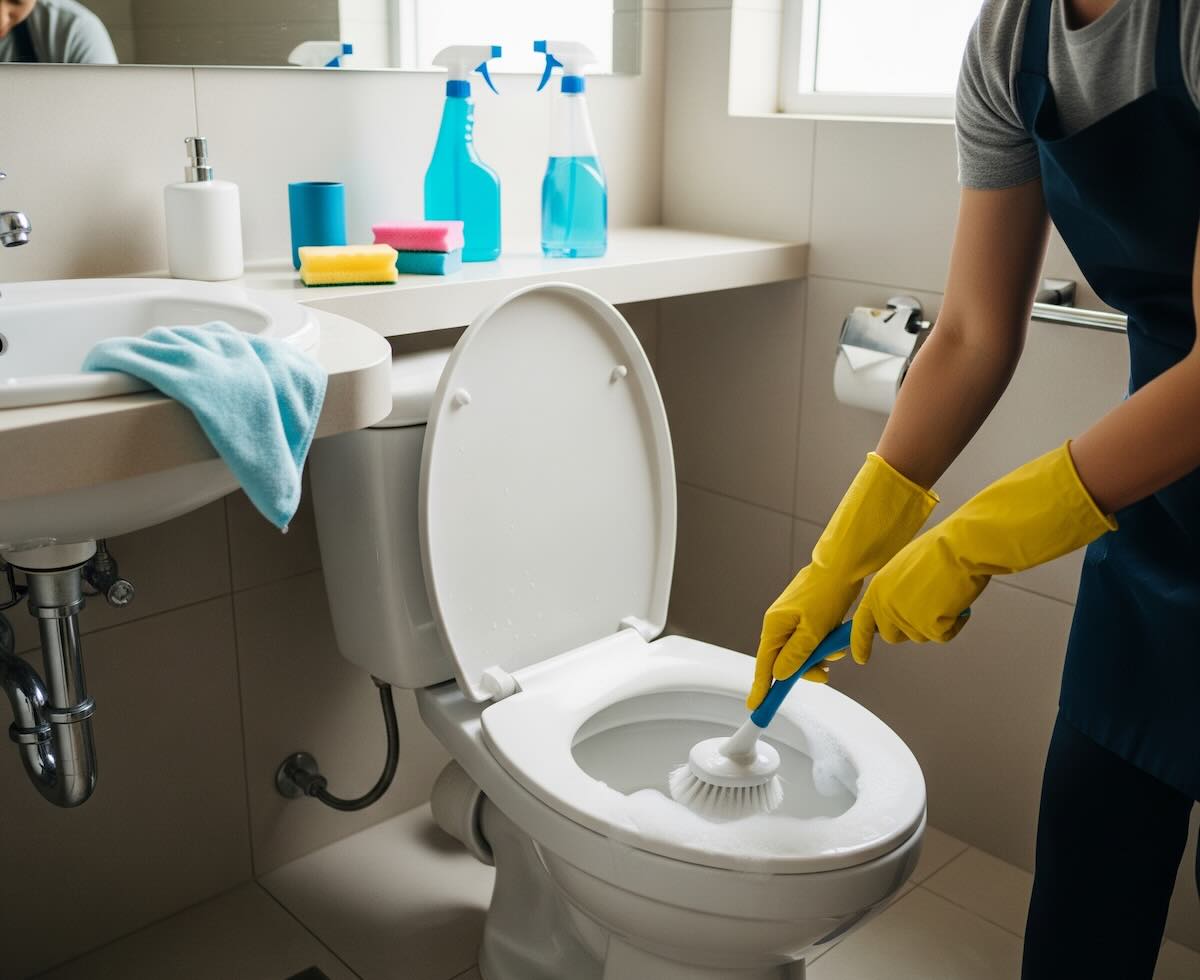
Bathrooms accumulate microbial contamination on surfaces that receive direct skin contact every day. A WebMD analysis of bathroom germ research notes that fecal bacteria can spread to toothbrush holders, faucet handles, and countertops through flushing aerosol, making thorough disinfection of every surface rather than visual cleaning a genuine health consideration. Replacing toilet seats is an inexpensive step (typically $25 to $60) that eliminates the most bacteria-dense surface in the room outright.
Toilet, Tub, and Shower
- Apply toilet bowl cleaner inside the bowl and let it sit while cleaning the exterior; wipe the tank, lid, seat, base, and all exterior surfaces including the floor around the base with disinfectant
- Replace the toilet seat entirely or disinfect the existing one thoroughly under the hinges and along the underside of the seat where cleaning is typically skipped by previous occupants
- Scrub the bathtub and shower walls with a tile and grout cleaner; apply grout cleaner to discolored grout lines and allow dwell time before scrubbing with a grout brush to restore grout to its original color
- Inspect caulk lines around the tub, shower base, and shower door frame for mold or separation; discolored or separating caulk should be removed and reapplied before the shower is used
- Clean shower doors with a diluted white vinegar solution to remove hard water deposits; for glass shower doors, a squeegee finish leaves the surface streak-free
Sinks, Mirrors, Counters, and Storage
- Use a drain snake to clear any hair or debris from the bathroom sink drain before running water; slow drains in previously occupied homes are almost always caused by hair and soap accumulation that can be cleared mechanically
- Disinfect sink basins, faucets, and handles; bacteria accumulate in the aerator screen at the tip of the faucet and can be cleared by unscrewing and soaking the aerator in vinegar for 20 minutes
- Clean mirrors with glass cleaner; wipe down all countertop and cabinet surfaces, including the interior of under-sink cabinets where cleaning products and moisture create conditions favorable for mold
- Sweep and mop floors with a disinfecting floor cleaner; pay attention to the area around and behind the toilet base and along baseboards where dust and grime accumulate in corners
Step 4: Cleaning the Laundry Room and Utility Spaces
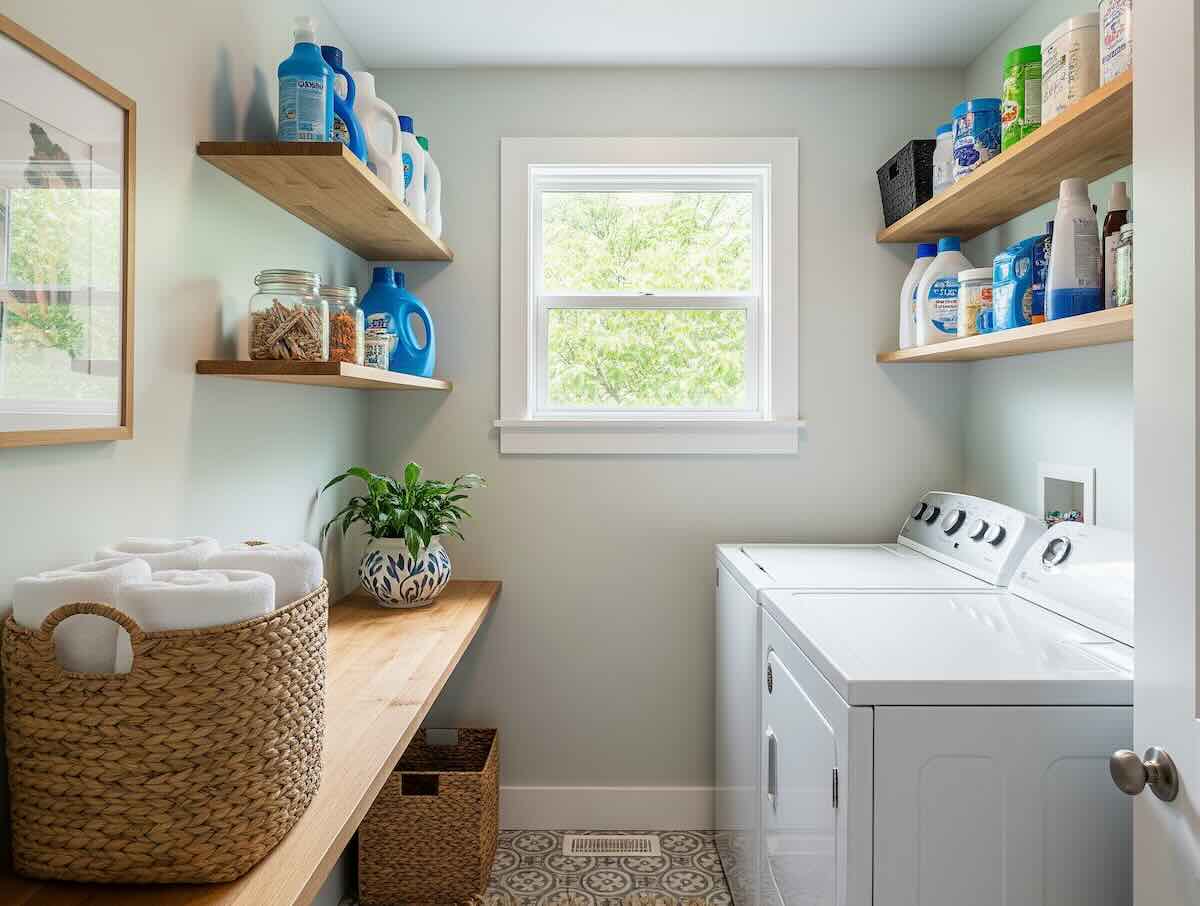
Laundry appliances in previously occupied homes harbor mildew, detergent residue, and lint accumulation that affects both cleaning performance and indoor air quality. A dryer vent clogged with lint from a previous occupant is also a documented fire risk; the US Fire Administration attributes approximately 2,900 residential fires annually to failure to clean dryer vents.
- Run the washing machine on its hottest water setting with two cups of white vinegar or a commercial washer cleaning tablet and no laundry; this sanitizes the drum and breaks down detergent and mildew buildup that causes musty laundry odors
- For front-loading machines, pull back the door gasket and wipe the folds with a diluted bleach solution; the gasket folds in front-loaders are the primary location for mold growth in this appliance type
- Remove the lint trap from the dryer and vacuum the trap housing with a narrow attachment; then disconnect the dryer vent duct from the back of the appliance and vacuum the interior of the duct before reconnecting
- Wipe the dryer drum interior with a cloth dampened with rubbing alcohol; this removes residue from dryer sheets and fabric softener that builds up over time
- Wipe appliance exteriors, clean laundry sink bowls if present, and sweep and mop the floor
Step 5: How to Clean Bedrooms in a New House Before Setting Up Furniture
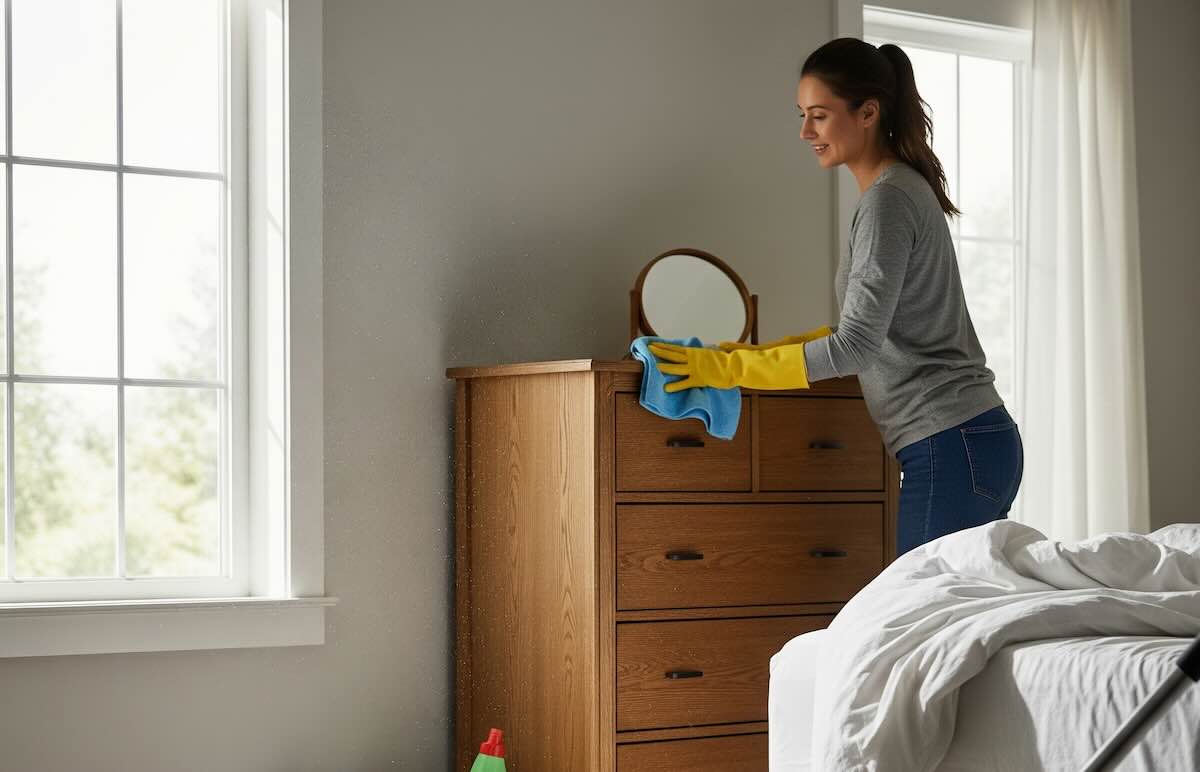
Bedrooms in previously occupied homes retain allergens from previous occupants’ personal care products, pet dander if animals were present, and dust mite populations in carpeting and soft surfaces. Cleaning before any furniture is brought in maximizes access to floors, baseboards, and closets, all of which are significantly harder to clean after a bed frame, dresser, and wardrobe are in position.
- Clean windows inside and out, then wipe down or launder window blinds and curtain rods; fabric curtains left by a previous occupant should be laundered before use, as they retain odors and allergens from the previous household
- Dust ceiling fans, light fixtures, and ceiling corners; ceiling fan blades collect dust on their upper surface that is not visible from below and is distributed into the room’s air every time the fan runs
- Wipe down all walls, baseboards, and trim; walls in bedrooms collect handprints, scuff marks, and general grime near doorways and light switches that is less visible in photographs than in person
- Clean closet shelving, hanging rods, and the closet floor; closets are often skipped during routine cleaning by previous occupants and accumulate debris in corners and on shelf surfaces
- Vacuum carpets thoroughly with attention to corners and along baseboards; apply a carpet deodorizing powder if the room has any residual odor, allow it to sit for 15 minutes, then vacuum again
- Mop hard floors before furniture placement; this is the last opportunity for unrestricted floor access until the next major furniture rearrangement
Step 6: Cleaning Living Rooms, Hallways, and Entryways in a New House
Living areas and high-traffic corridors accumulate more airborne dust than any other room type because they function as the circulation spaces through which all household movement flows. These spaces also tend to have more complex surface types to address, including trim work, light fixtures, ceiling fans, baseboards, and sometimes fireplaces, all of which require different cleaning approaches and tools.
- Dust and wipe all ceiling fixtures, light fittings, ceiling fan blades, and crown molding before addressing lower surfaces; dust dislodged from fixtures falls onto counters and floors that have not yet been cleaned
- Clean all windows, sills, and blinds; living room windows typically have more surface area than bedroom windows and take more time to do thoroughly
- Wipe walls, baseboards, and trim throughout all living and hallway spaces; pay particular attention to entryway walls, which sustain the highest contact from hands and bags of any interior wall surface
- Disinfect all light switches and doorknobs throughout the home; these are touched hundreds of times per week and rarely receive focused disinfection during routine cleaning by any household
- If the home has a fireplace, clean the firebox and check that the flue damper opens and closes properly before the first use; a closed damper on a burning fire pushes smoke back into the living space and is a carbon monoxide risk
- Vacuum carpets and clean all hard floors last, working from the far end of each room toward the exit to avoid stepping on freshly cleaned surfaces
Step 7: HVAC, Air Quality, and Utility Checks Every New Homeowner Should Complete
The HVAC system is the most commonly overlooked component of a move-in clean, yet it directly affects air quality throughout every room in the house from the moment it is turned on. The ducts, filter, and air handler in a previously occupied home contain accumulated dust, pet dander, mold spores, and debris from years of use, and none of this is visible during a standard walkthrough.
- Replace the air filter immediately: A clogged or dirty air filter from the previous occupant reduces system efficiency and circulates their accumulated dust and allergens through the home. Replacing it before the system runs for the first time costs $10 to $30 and takes five minutes
- Consider professional duct cleaning for homes with evidence of pets or mold: HVAC duct cleaning by a licensed technician costs $300 to $500 for an average home and removes the accumulated allergen load that a new filter alone cannot address once it has built up inside the ductwork over years of occupancy
- Test smoke and carbon monoxide detectors: Replace batteries in all units on move-in day and note the installation date on the back; most smoke detectors have a 10-year service life after which the sensing element degrades regardless of battery condition
- Run an air purifier with a HEPA filter in each main living area for the first 24 to 48 hours after cleaning; this captures the fine particulate dust dislodged during the cleaning process that remains airborne after surfaces have been wiped and floors have been swept
- Ventilate during cleaning: Open windows in each room while it is being cleaned to provide fresh air exchange and reduce the concentration of cleaning product fumes, VOCs from the home’s surfaces, and airborne dust particles generated by sweeping and wiping
Post-Cleaning Essentials to Complete Before Unpacking Begins
Several practical tasks are best handled after the deep clean is complete but before boxes are opened and items placed on surfaces. Completing these steps in the window between a clean home and a full one avoids doing them later around furniture and unpacked belongings.
- Change all locks or rekey: The previous occupant, their family members, contractors, and anyone else with a copy of the existing key can access the home until the locks are changed. Rekeying by a locksmith costs $25 to $50 per lock and is significantly cheaper than replacing hardware entirely
- Install shelf liners in kitchen cabinets and bathroom vanities: Shelf liner paper is easiest to cut and install in an empty cabinet before anything is stored in it
- Locate and label the main water shutoff, electrical panel breakers, and gas shutoff: Knowing where these controls are before an emergency is a basic safety requirement that new occupants frequently overlook in the rush to settle in
- Set mouse or insect traps in kitchen cabinets and utility areas as a precaution, even if no evidence of pests was found during the walkthrough; newly vacated homes often attract pests during the transition period before a new household’s regular activity and cleaning routines are established
- Photograph the clean state of each room as a timestamped record before any furniture or boxes are moved in; for renters, this documentation establishes the baseline condition for the deposit dispute process if one ever arises
When to Hire a Professional Move-In Cleaning Service Instead of Cleaning Yourself
Professional move-in cleaning services make financial and practical sense in several specific situations, and the cost comparison with DIY is more favorable than many people assume when labor time is factored honestly.
A professional cleaning crew for a three-bedroom home typically costs $200 to $500 depending on market and the scope of work. When two adults spend a full day cleaning that same home themselves, the economic value of that time, even at a modest hourly rate, approaches or exceeds the professional cost while also arriving at moving day more fatigued. Professional cleaners also bring industrial equipment, including steam cleaners, commercial-grade disinfectants, and HEPA-filtered vacuums, that outperforms consumer-grade tools on carpet, grout, and upholstery.
Situations where professional cleaning clearly justifies the cost include:
- Homes where evidence of pets, smoking, or mold was found during the walkthrough; these conditions require treatment that exceeds what standard consumer cleaning products can accomplish
- Households with members who have asthma, allergies, or respiratory sensitivities, where the thoroughness and equipment quality of professional cleaning meaningfully reduces the allergen load compared to a DIY clean
- Long-distance moves where the new home cannot be pre-cleaned before the moving truck arrives; in this case, a professional cleaner can complete the job on the day before delivery rather than requiring the household to arrive early for cleaning
- Large homes (4 bedrooms or more) where a DIY clean would require 10 or more hours of physical labor on top of an already demanding moving day or moving week
When requesting professional move-in cleaning quotes, specifying that it is a move-in clean (empty home, full deep clean of appliances and cabinets) rather than a standard recurring clean ensures the service scope and price reflect the more intensive work the job actually involves.
FAQ: New House Cleaning Questions Answered
Do I need to clean a brand-new construction home before moving in?
Yes, new construction homes require a thorough cleaning before move-in even though they have never been occupied. Construction dust containing silica, drywall particles, and wood debris settles on every surface and inside HVAC ducts during building. Paint, adhesive, caulk, and new flooring materials off-gas VOCs for weeks after installation. HVAC filter replacement and surface cleaning before running the system prevents construction debris from circulating through every room on day one.
Is it better to clean before or after the movers arrive?
Cleaning before the movers arrive is consistently better. An empty home allows unrestricted access to all floor surfaces, closets, under-sink cabinets, and appliance interiors. Movers tracking in and out with furniture and boxes re-deposits dust and debris onto freshly cleaned floors, meaning any cleaning done during or after unloading must be partially repeated. Scheduling the move-in clean a day before the truck arrives is the most efficient sequence.
What is the hardest room to clean in a new house?
The kitchen is consistently the most labor-intensive room in a move-in clean because it involves the most surface types, the most appliances, and the highest bacterial load. Oven interiors, refrigerator coil areas, dishwasher filters, and cabinet interiors all require specific products and dwell times that make the kitchen genuinely more complex than the bathroom despite the bathroom’s reputation as the hygiene priority.
How do I remove odors from a new rental home?
Odors in a previously occupied home typically come from carpets (the primary reservoir for cooking, pet, and cigarette odors), HVAC ducts distributing trapped smells throughout the home, and porous surfaces in kitchens and bathrooms. Thorough carpet cleaning with a hot-water extraction machine removes embedded odors more effectively than surface-level deodorizing powder. HVAC filter replacement addresses duct-distributed odors. For persistent odors from smoking, an ozone generator treatment by a professional odor remediation service is the most effective solution available and is worth requesting from the landlord before move-in.
Should I clean the inside of cabinets and closets in a new house?
Yes, always. Cabinet and closet interiors in previously occupied homes contain crumbs, spilled liquids, pest droppings, and general debris in corners and along the back wall that are invisible without a flashlight. Wiping these surfaces before lining them with shelf paper and storing food, dishes, clothing, or linens is a direct hygiene step. It is also the last time these surfaces will be as accessible for cleaning until the contents are fully removed again.
Moving soon and need a reliable long-distance or local crew?
Coastal Moving Services handles residential moves of all sizes with licensed, insured crews and transparent pricing. Call us at +1-334-659-1878 or request a free quote and we will provide a fully itemized estimate based on your specific move details.
References
- WebMD – Bathroom Germs: What Lives in Your Bathroom
- US Fire Administration – Dryer Fire Prevention
- University of Arizona Extension – Microbial Contamination in the Home Environment
- EPA – Volatile Organic Compounds and Indoor Air Quality
- CDC – Indoor Environmental Quality: Mold Prevention and Control